HEALTH / MENTAL HEALTH SUPPORT
ASO FOR
MENTAL HEALTH SUPPORT APPS.
A therapist, a listener, an AI chat and a thought journal are different kinds of support. Your store page should make the difference obvious.
MAKE THE SUPPORT MODEL CLEAR ↓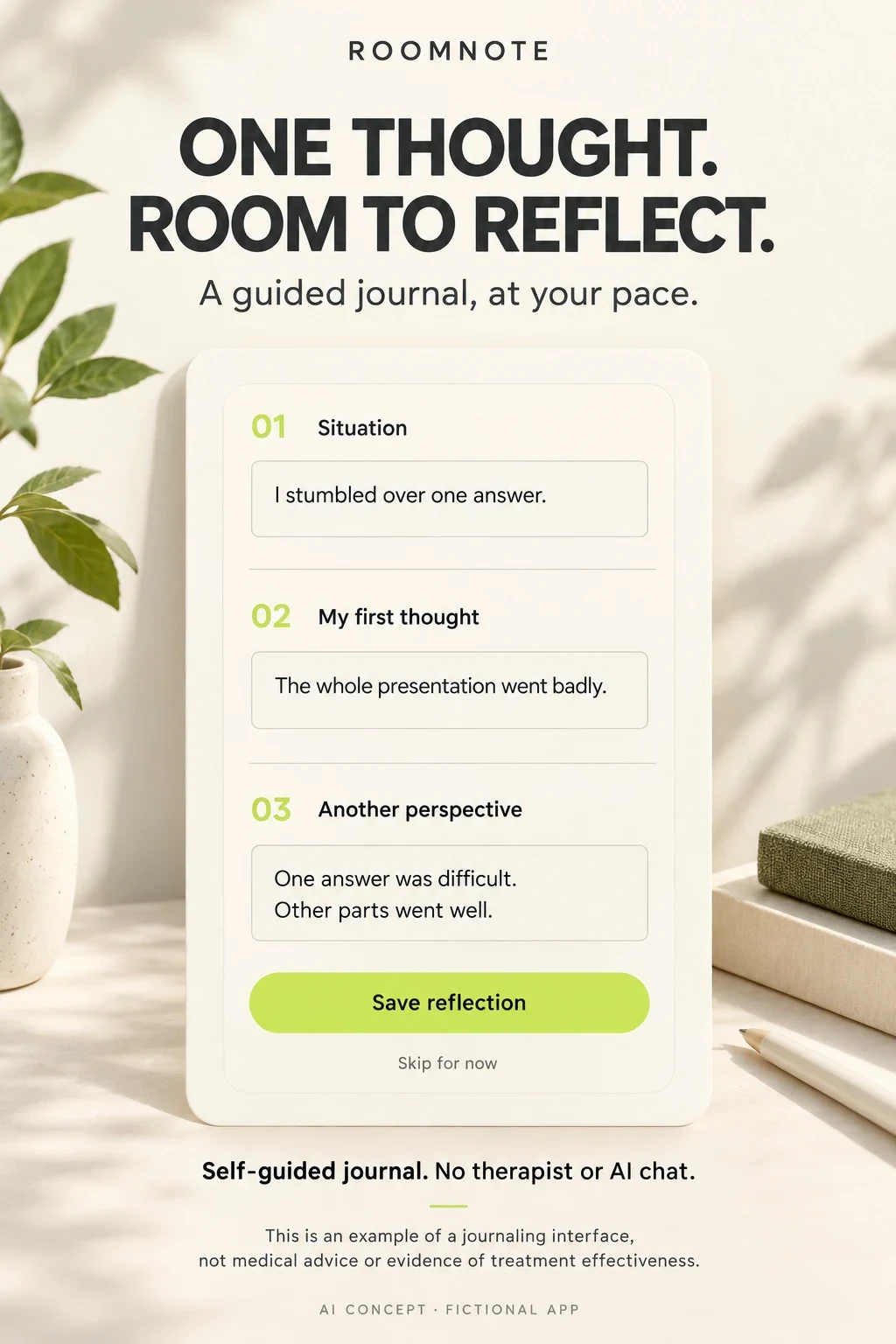
MENTAL HEALTH SUPPORT APP ASO
The first promise is the kind of support—not a better future.
The most consequential ASO decision in this category is not which shade of blue looks reassuring. It is whether a visitor understands the support being offered. Someone searching for a licensed therapist should not install an automated journal believing that a clinician will read it. Someone wanting a simple reflection tool may not want a matching questionnaire and a subscription for sessions.
This report examines app-store communication and acquisition. It does not recommend mental-health products or treatment. The category includes meaningful alternatives, not interchangeable services. Keep that distinction throughout metadata, screenshots, pricing, onboarding and measurement.
Potential audiences · 100 keyword candidates · Narrow opportunities · Eight competitors · Real screenshots · Worked copy · Apple Ads
Swipe horizontally to compare all columns →
| Support model | What the visitor needs to know | Useful product proof | Do not imply |
|---|---|---|---|
| Licensed therapy access | Who provides care, eligibility, format, billing and response arrangements | Real matching, booking or therapist-message workflow | Every message receives an instant reply |
| Peer or volunteer listening | The responder role, availability, community rules and boundaries | Role-labeled listener profile and conversation setting | A listener is necessarily a licensed therapist |
| AI-guided reflection | The responder is automated; explain capabilities and limits | Clearly labeled AI interaction and real controls | A human is reading or monitoring every conversation |
| Self-guided journal or workbook | The task, how it is saved and what the tool does not do | One readable exercise with editable fields | Completing an exercise establishes a diagnosis or cure |
| Mood records and summaries | What was entered, how it is summarized and what is missing | Dated records with explained labels | A chart proves improvement or identifies a cause |
| Gamified self-care | What action earns a reward and whether participation is optional | A manageable task and actual progress mechanics | Pet rewards measure mental-health recovery |
A broad app can offer several routes. Give each route a name and explain what changes when the user moves between them. A custom page for a thought-journal query should not lead with a clinician portrait unless an actual clinician service is the product being advertised. Define the promise using ASO strategy and the health-app category guide.
The National Institute of Mental Health distinguishes several kinds of digital support and highlights questions about effectiveness, audience, privacy and guidance. The practical ASO implication is to explain the actual function and evidence. A familiar therapy acronym or friendly character is not enough to establish what a product can do.
- SELF-GUIDEDPrompts and exercises the user completes
- AIAutomated conversation with visible limits
- PEERA listener or community member with a stated role
- CLINICIANA licensed professional within an eligible service
MENTAL HEALTH SUPPORT APP ASO
Research expectations, access and disclosure—not assumed diagnoses.
The audiences below are research hypotheses, not measured shares of the category. Recruit by the job people want to do and their real access constraints. Compare ages, devices, language preferences, experience with support and comfort with disclosure without assuming that any demographic group has one diagnosis, one budget or one preferred format. Do not infer a mental-health condition from a keyword.
Swipe horizontally to compare all columns →
| Potential audience | Main question | Research variation | Comprehension test | Proof to show |
|---|---|---|---|---|
| Adults considering therapy for the first time | Understand matching, credentials, format and cost | Different ages, prior care experience, languages and payment routes | Can they describe who will respond and how a session starts? | Real matching or appointment flow |
| People seeking a self-guided first step | Try a manageable exercise without booking a clinician | Different comfort with writing, audio and structured prompts | Do they understand that the tool is self-guided? | One complete, readable task |
| Adults looking for peer conversation | Find a listener or community without confusing it with treatment | Different social contexts, languages and preferences for public or private spaces | Can they identify the responder role and audience for a post? | Listener role and conversation setting |
| People returning after a gap | Restart without a backlog or guilt | Different reasons for interruption; avoid assuming poor motivation | Does the listing make restarting seem manageable? | A small optional next action |
| People keeping notes between appointments | Remember questions and observations for a conversation | Existing care arrangements and different record-sharing preferences | Does saving a note imply anyone is monitoring it? | Dated notes and an explicit sharing choice |
| People who prefer speaking or listening | Use supported formats when typing is difficult or undesirable | Language, literacy, motor access and environment | Is audio input private enough in the real context? | Actual input options and controls |
| Benefit-eligible employees or members | Understand what their plan includes | Employer and insurer variations; shared devices and privacy concerns | Can they distinguish benefit verification from workplace access to content? | Eligibility and accurate data explanation |
| People sharing a phone or living space | Control notifications, access and disclosure | Device sharing, lock-screen exposure and available private space | What appears outside the app, and can it be changed? | Actual notification preview and access controls |
| People wanting structured reflection | Understand the steps without clinical jargon | First-time and experienced journal users; different education levels | Can they complete the example in their own words? | Plain-language prompts with skip or edit |
| Adults comparing AI support | Know that a response is automated and what it can do | Different AI familiarity and expectations about memory or human review | Do they mistake a friendly name or avatar for a person? | Prominent AI label and clear scope |
For an initial qualitative review, show the first three screenshots without a verbal explanation. Ask: “Who or what would respond?”, “What could you do first?”, “What would you pay for?”, and “Who could see what you write?” If answers conflict with the product, correct the story before optimizing button color. Record uncertainty instead of turning a small interview sample into market statistics.
Recruitment and research involving younger users require the appropriate permissions and safeguards. An app-store age rating is not the same as eligibility for a specific clinical or community service. Start the worked acquisition examples here with adults; verify any additional population separately.
Use search intent to distinguish therapy, conversation and journaling requests. Use readability checks to test whether role and price qualifications survive at store size. Never use private journal text or therapy messages as ad-audience material.
MENTAL HEALTH SUPPORT APP ASO
100 keyword candidates with a support-model check built in.
These 100 candidates cover ten distinct intent clusters. They are editorial ideas derived from the reviewed product models and workflows, not measured search-volume or difficulty data. A phrase is eligible for research only when the app actually serves it. A self-guided journal should not target therapist-access terms by pretending it offers clinical care.
Self-guided support
Product requirement: Self-guided wellbeing tools, accurately distinguished from clinical care
Swipe horizontally to compare all columns →
| Keyword candidate | Research decision |
|---|---|
| mental health self help | Unmeasured · validate intent, product support and local wording |
| mental wellbeing app | Unmeasured · validate intent, product support and local wording |
| emotional wellbeing app | Unmeasured · validate intent, product support and local wording |
| self care tools | Unmeasured · validate intent, product support and local wording |
| mental wellness exercises | Unmeasured · validate intent, product support and local wording |
| daily emotional check in | Unmeasured · validate intent, product support and local wording |
| self guided wellbeing | Unmeasured · validate intent, product support and local wording |
| mental health workbook | Unmeasured · validate intent, product support and local wording |
| everyday wellbeing support | Unmeasured · validate intent, product support and local wording |
| emotional self care app | Unmeasured · validate intent, product support and local wording |
Mood records
Product requirement: Editable records with honest pattern and missing-data labels
Swipe horizontally to compare all columns →
| Keyword candidate | Research decision |
|---|---|
| mood tracker | Unmeasured · validate intent, product support and local wording |
| mood diary | Unmeasured · validate intent, product support and local wording |
| emotion tracker | Unmeasured · validate intent, product support and local wording |
| daily mood log | Unmeasured · validate intent, product support and local wording |
| mood journal app | Unmeasured · validate intent, product support and local wording |
| emotional check in journal | Unmeasured · validate intent, product support and local wording |
| mood history app | Unmeasured · validate intent, product support and local wording |
| mood tracker with notes | Unmeasured · validate intent, product support and local wording |
| feelings journal | Unmeasured · validate intent, product support and local wording |
| mood calendar | Unmeasured · validate intent, product support and local wording |
Thought journals
Product requirement: Actual structured reflection; method labels supported by reviewed content
Swipe horizontally to compare all columns →
| Keyword candidate | Research decision |
|---|---|
| thought diary | Unmeasured · validate intent, product support and local wording |
| thought record app | Unmeasured · validate intent, product support and local wording |
| CBT journal | Unmeasured · validate intent, product support and local wording |
| guided thought journal | Unmeasured · validate intent, product support and local wording |
| reflection prompts app | Unmeasured · validate intent, product support and local wording |
| thought reframing journal | Unmeasured · validate intent, product support and local wording |
| structured self help journal | Unmeasured · validate intent, product support and local wording |
| daily reflection journal | Unmeasured · validate intent, product support and local wording |
| thinking patterns journal | Unmeasured · validate intent, product support and local wording |
| journal for difficult thoughts | Unmeasured · validate intent, product support and local wording |
Gentle routines
Product requirement: User-chosen activities, pause controls and accurate reminder behavior
Swipe horizontally to compare all columns →
| Keyword candidate | Research decision |
|---|---|
| gentle self care app | Unmeasured · validate intent, product support and local wording |
| small daily goals | Unmeasured · validate intent, product support and local wording |
| self care checklist | Unmeasured · validate intent, product support and local wording |
| self care habit tracker | Unmeasured · validate intent, product support and local wording |
| restart self care routine | Unmeasured · validate intent, product support and local wording |
| self care reminders | Unmeasured · validate intent, product support and local wording |
| daily wellbeing plan | Unmeasured · validate intent, product support and local wording |
| flexible self care goals | Unmeasured · validate intent, product support and local wording |
| self care without streaks | Unmeasured · validate intent, product support and local wording |
| one minute reflection | Unmeasured · validate intent, product support and local wording |
AI conversation
Product requirement: Clearly labeled automated reflection; no implied human therapist or emergency service
Swipe horizontally to compare all columns →
| Keyword candidate | Research decision |
|---|---|
| AI wellbeing chat | Unmeasured · validate intent, product support and local wording |
| AI self reflection | Unmeasured · validate intent, product support and local wording |
| AI journaling assistant | Unmeasured · validate intent, product support and local wording |
| automated reflection prompts | Unmeasured · validate intent, product support and local wording |
| AI thought journal | Unmeasured · validate intent, product support and local wording |
| wellbeing chatbot | Unmeasured · validate intent, product support and local wording |
| AI emotional check in | Unmeasured · validate intent, product support and local wording |
| AI guided journal | Unmeasured · validate intent, product support and local wording |
| self care chatbot | Unmeasured · validate intent, product support and local wording |
| AI conversation for reflection | Unmeasured · validate intent, product support and local wording |
Peer listening
Product requirement: Actual peer or volunteer service with scope availability and moderation explained
Swipe horizontally to compare all columns →
| Keyword candidate | Research decision |
|---|---|
| peer support chat | Unmeasured · validate intent, product support and local wording |
| emotional support chat | Unmeasured · validate intent, product support and local wording |
| volunteer listener app | Unmeasured · validate intent, product support and local wording |
| talk to a listener | Unmeasured · validate intent, product support and local wording |
| mental health peer community | Unmeasured · validate intent, product support and local wording |
| online support community | Unmeasured · validate intent, product support and local wording |
| moderated support groups | Unmeasured · validate intent, product support and local wording |
| peer listening app | Unmeasured · validate intent, product support and local wording |
| anonymous listener chat | Unmeasured · validate intent, product support and local wording |
| private peer conversation | Unmeasured · validate intent, product support and local wording |
Licensed therapist access
Product requirement: Real licensed service and individual eligibility; not a self-help keyword bundle
Swipe horizontally to compare all columns →
| Keyword candidate | Research decision |
|---|---|
| online therapy app | Unmeasured · validate intent, product support and local wording |
| licensed therapist online | Unmeasured · validate intent, product support and local wording |
| video therapy appointment | Unmeasured · validate intent, product support and local wording |
| message a therapist | Unmeasured · validate intent, product support and local wording |
| online counseling app | Unmeasured · validate intent, product support and local wording |
| therapist matching app | Unmeasured · validate intent, product support and local wording |
| book therapy online | Unmeasured · validate intent, product support and local wording |
| virtual therapy sessions | Unmeasured · validate intent, product support and local wording |
| online talk therapy | Unmeasured · validate intent, product support and local wording |
| therapy appointment app | Unmeasured · validate intent, product support and local wording |
Payment and eligibility
Product requirement: Verified payment path, billing period and service availability
Swipe horizontally to compare all columns →
| Keyword candidate | Research decision |
|---|---|
| therapy insurance check | Unmeasured · validate intent, product support and local wording |
| online therapy with insurance | Unmeasured · validate intent, product support and local wording |
| self pay therapy app | Unmeasured · validate intent, product support and local wording |
| online therapy cost | Unmeasured · validate intent, product support and local wording |
| therapy employee benefits | Unmeasured · validate intent, product support and local wording |
| therapy copay check | Unmeasured · validate intent, product support and local wording |
| therapy plan comparison | Unmeasured · validate intent, product support and local wording |
| mental health benefit app | Unmeasured · validate intent, product support and local wording |
| online counseling price | Unmeasured · validate intent, product support and local wording |
| therapy without insurance | Unmeasured · validate intent, product support and local wording |
Control and accessibility
Product requirement: Verify exact data handling and access features; do not infer from a badge
Swipe horizontally to compare all columns →
| Keyword candidate | Research decision |
|---|---|
| private mood journal | Unmeasured · validate intent, product support and local wording |
| offline thought diary | Unmeasured · validate intent, product support and local wording |
| journal without account | Unmeasured · validate intent, product support and local wording |
| mood journal export | Unmeasured · validate intent, product support and local wording |
| delete journal entries | Unmeasured · validate intent, product support and local wording |
| discreet self care reminders | Unmeasured · validate intent, product support and local wording |
| large text mood journal | Unmeasured · validate intent, product support and local wording |
| VoiceOver thought journal | Unmeasured · validate intent, product support and local wording |
| audio reflection journal | Unmeasured · validate intent, product support and local wording |
| notification privacy journal | Unmeasured · validate intent, product support and local wording |
Between-session preparation
Product requirement: Personal preparation and controlled sharing; no clinician-monitoring implication
Swipe horizontally to compare all columns →
| Keyword candidate | Research decision |
|---|---|
| therapy notes journal | Unmeasured · validate intent, product support and local wording |
| questions for therapy app | Unmeasured · validate intent, product support and local wording |
| between session journal | Unmeasured · validate intent, product support and local wording |
| appointment reflection notes | Unmeasured · validate intent, product support and local wording |
| mood summary for therapist | Unmeasured · validate intent, product support and local wording |
| thought diary PDF | Unmeasured · validate intent, product support and local wording |
| therapy session planner | Unmeasured · validate intent, product support and local wording |
| journal sharing preview | Unmeasured · validate intent, product support and local wording |
| weekly reflection summary | Unmeasured · validate intent, product support and local wording |
| personal coping tools list | Unmeasured · validate intent, product support and local wording |
Start with the research process: choose the support model, check real search results, compare relevant listing language and review permitted aggregate search-term data. Score relevance before looking at volume estimates. Do not keep a high-demand term that requires a different service.
“Anonymous,” “offline” and “without account” describe different implementation choices. Treat them as feature conditions, not attractive synonyms. Likewise, “message a therapist” is different from “AI wellbeing chat.” Use prioritization to build a short validated target set and iOS keyword-field guidance to distribute the language without repetition.
MENTAL HEALTH SUPPORT APP ASO
Specific constraints can create a credible niche.
Swipe horizontally to compare all columns →
| Narrow opportunity | Intent behind it | Proof the product needs | What to test |
|---|---|---|---|
| Thought journal without AI responses | The person wants prompts and control, not generated interpretation | A genuinely self-guided mode with editable prompts | Can the user tell that no automated reply is being generated? |
| Mood diary that works offline | The person wants access without a connection | Actual offline behavior and clear synchronization rules | What stays on device and what syncs later? |
| Online therapist with messaging between sessions | The person wants a specific communication arrangement | Licensed service, message entitlement and real response expectations | Does the viewer confuse send-anytime with reply-anytime? |
| Peer listener in a preferred language | The person wants an understandable conversation | Verified listener availability and language, not just translated menus | Is the responder role and availability clear? |
| Self-care routine without streak pressure | The person wants a manageable return after a gap | Optional goals and genuine no-penalty behavior | Does the message make a first action easier to understand? |
| Personal notes for a therapy appointment | The person wants preparation, not an alternative clinician | Dated notes, questions and voluntary export | Does saving a note incorrectly imply the therapist receives it? |
| Discreet reminders on a shared phone | The person wants control over visible notifications | Actual reminder wording and lock-screen behavior | Can they preview and change what others might see? |
| Therapy through an employee benefit | The person needs eligibility and included-service information | Real benefit verification and accurate privacy explanation | Are entitlement and workplace visibility being confused? |
A longer phrase is not automatically less competitive or cheaper. Its value is a clearer job that a product can prove. Research each phrase and its variants in the target market. Do not build duplicate pages around every condition name when the actual tool and evidence remain identical.
Use long-tail research and gap analysis to distinguish a useful unanswered question from a keyword variation. For therapist-access positioning, the telehealth guide goes deeper into eligibility, appointment choice and billing.
MENTAL HEALTH SUPPORT APP ASO
Eight verified apps with fundamentally different offers.
These eight relevant apps were checked through Apple’s US listing pages and lookup data on 27 October 2026. They represent several kinds of mental-health support; they are not a ranked list of the best clinical products. The seller field identifies the listed legal seller, which can differ from the brand shown elsewhere. Titles and subtitles are reproduced as captured.
Swipe horizontally to compare all columns →
| App and primary source | Listed seller | Current title | Current subtitle |
|---|---|---|---|
| BetterHelp ↗ | Compile, Inc. | BetterHelp - Therapy | #1 Therapy Platform |
| Talkspace ↗ | Groop Internet Platform inc. | Talkspace: Virtual Therapy App | Online Mental Health Support |
| Wysa ↗ | Touchkin eServices Private Limited | Wysa: Mental Wellbeing AI | Selfcare for anxiety, low mood |
| Clarity ↗ | Inquiry Health LLC | Clarity: CBT Self Help Journal | Mood Tracker & Thought Diary |
| MindDoc ↗ | MindDoc Health GmbH | MindDoc: Mental Health Support | Daily self-care & well-being |
| Moodfit ↗ | Roble Ridge Software LLC | Moodfit: Mental Health Tools | Mood Tracker, CBT, Mindfulness |
| Finch ↗ | Finch Care Public Benefit Corporation | Finch: Self-Care Pet | Daily Journal & Habit Tracker |
| 7 Cups ↗ | 7 Cups of Tea, Co. | 7 Cups: Online Therapy & Chat | Mental Health Help & Support |
Swipe horizontally to compare all columns →
| App | What the app promises | What you can learn |
|---|---|---|
| BetterHelp | Connects people to licensed therapists, with messaging, scheduled live sessions and payment routes subject to eligibility. | Explain the match, session format and actual plan. The description now distinguishes insurance-dependent access from self-pay features. |
| Talkspace | Licensed therapy with message and live-session formats; also describes other clinical services and benefit access. | Separate sending a message from the response schedule. The listing distinguishes clinician-delivered care from AI tools that support it. |
| Wysa | AI conversation and self-help tools for everyday wellbeing, with additional human-support options described separately. | Make the automated role visible in the creative. The description explicitly excludes diagnostic measurements and treatment advice. |
| Clarity | Guided journals, mood records, educational exercises and optional AI features. | The description explicitly identifies self-help and education rather than licensed therapy. Carry that distinction into the first screenshot. |
| MindDoc | Mood and symptom records, feedback, downloadable summaries and courses, with a stated intended medical purpose. | Explain the exact function and its limits. Its listing says it can prepare and support access to care, not replace assessment or treatment. |
| Moodfit | A toolbox of mood records, thought exercises, goals, journaling and other self-management activities. | A large toolkit needs one visible first task. A screen showing a record is different from proof that a tool improves a clinical outcome. |
| Finch | Uses a virtual pet, goals, reflection and other self-care activities to make a daily routine more approachable. | Show the task behind the reward. A friendly character explains tone, while a completed action explains the product. |
| 7 Cups | Combines volunteer listener support, community features, self-help tools and a separate licensed-therapy offer. | Distinguish listeners, community members and clinicians. Availability and pricing statements need to identify which route they describe. |
BetterHelp’s subtitle contains a leadership claim. It is quoted as publisher wording, not independently endorsed. MindDoc’s description includes regulatory and intended-use language specific to that product; this review does not validate those claims or transfer them to a generic journal. Publisher privacy and effectiveness statements have not been independently audited here.
The comparison suggests four different competitive sets. Therapy services compete on access and fit. Listener platforms explain roles and community participation. Journals and toolkits explain useful self-guided tasks. AI products must make automation understandable. Finch adds a distinctive motivation layer. Copying all of their keywords into one app would erase the distinctions that make the research useful.
Keep the numeric app ID, locale, version context and capture date in your competitor research. The screenshot feed may retain older artwork even when description copy has changed; inspect the actual slot you plan to compare before preparing a launch brief.
MENTAL HEALTH SUPPORT APP ASO
Give each store field a clear and accurate job.
Swipe horizontally to compare all columns →
| Decision | iOS | Google Play | Implication for this category |
|---|---|---|---|
| Product identity | Name: 30 characters | Title: 30 characters | Name a journal, therapy service or AI tool accurately |
| Supporting message | Subtitle: 30; keyword field: 100 characters | Short description: 80; full description: 4,000 characters | Explain the support model without promising a clinical outcome |
| Creative experiment | Product Page Optimization for eligible creative treatments | Store listing experiments for eligible variants | Test task-first versus reassurance-first with stable remaining assets |
| Different intent | Custom product pages with supported configuration | Custom store listings with supported targeting | A mood-record story should not inherit a therapist-booking promise |
| Sensitive features | Review medical-function and data-handling requirements | Check health declaration and health-content requirements | Match the declared function, public claims and actual behavior |
Official field and creative references: Apple product pages, Product Page Optimization, custom product pages, Google Play listing fields, listing experiments and custom listings.
Review the applicable Apple review guidelines, Google health declaration and health-content policy. Calling a product “wellness” does not by itself establish its classification. Have the appropriate product and review owners check the actual functions and claims. Do not borrow another app’s regulatory language.
For a journal, describe recording and reflection. For a licensed service, verify the care format, eligible audience, location and payment path. For AI, keep the automated role clear in the title or supporting message and in the visible interaction. A friendly mascot must not be the only explanation of who responds.
Use the iOS name, subtitle, keyword field, Play title and short-description guides to make the limited space work. This competitor review is US iOS only; the Android column provides platform guidance, not an Android competitor audit.
MENTAL HEALTH SUPPORT APP ASO
Five real screenshot teardowns and eight visual lessons.
These are the first four original iPhone screenshot assets returned by Apple’s US lookup feed for each of five apps, captured and visually inspected on 27 October 2026. The live store can vary its device slots and sequence. An asset’s capture date does not establish its creation date. Publisher awards, privacy statements, availability and outcome claims inside the artwork are not independently verified here. Open each image at full size to inspect it.
BetterHelp: Booking shows the product more clearly than a logo screen.

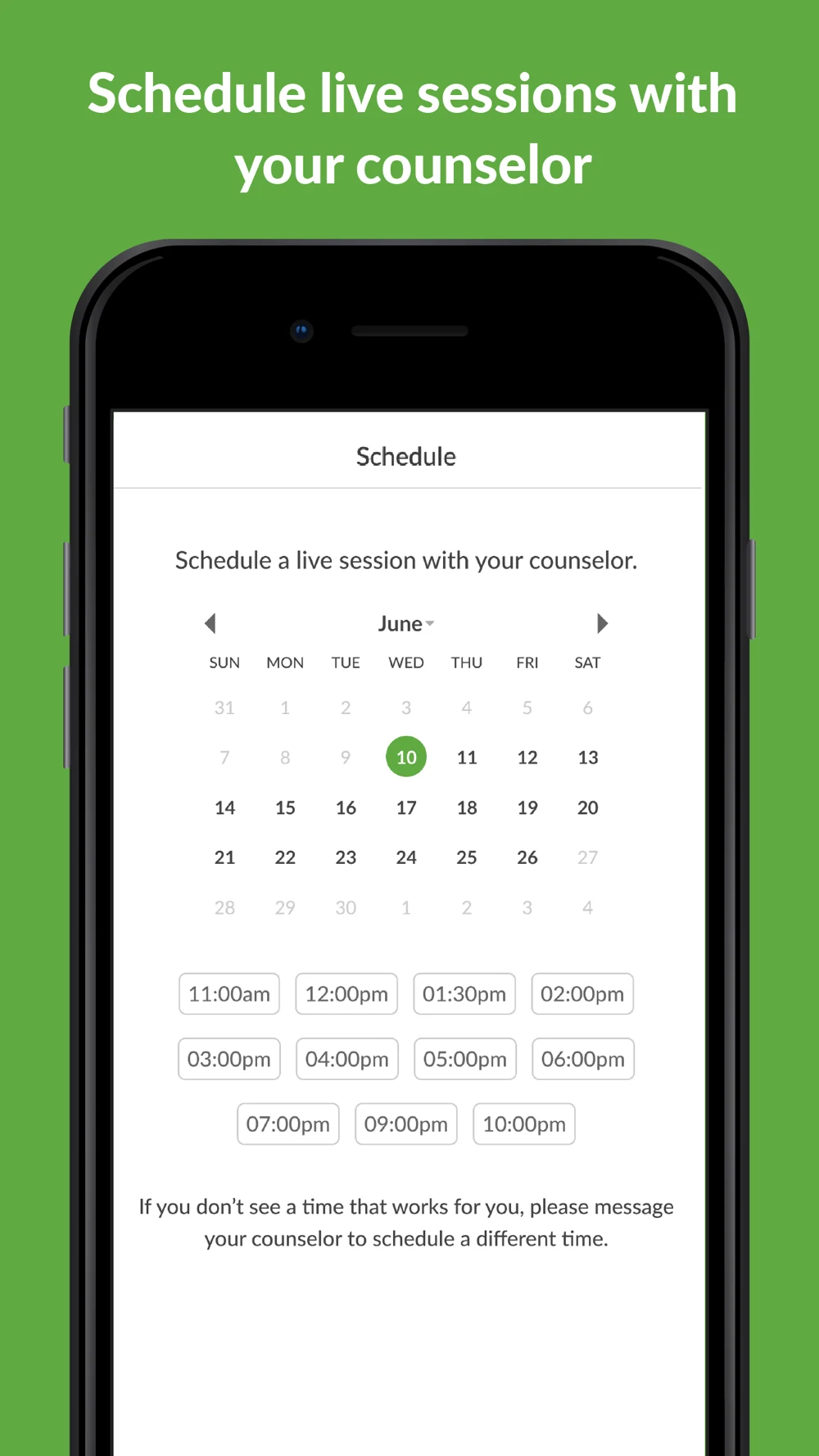
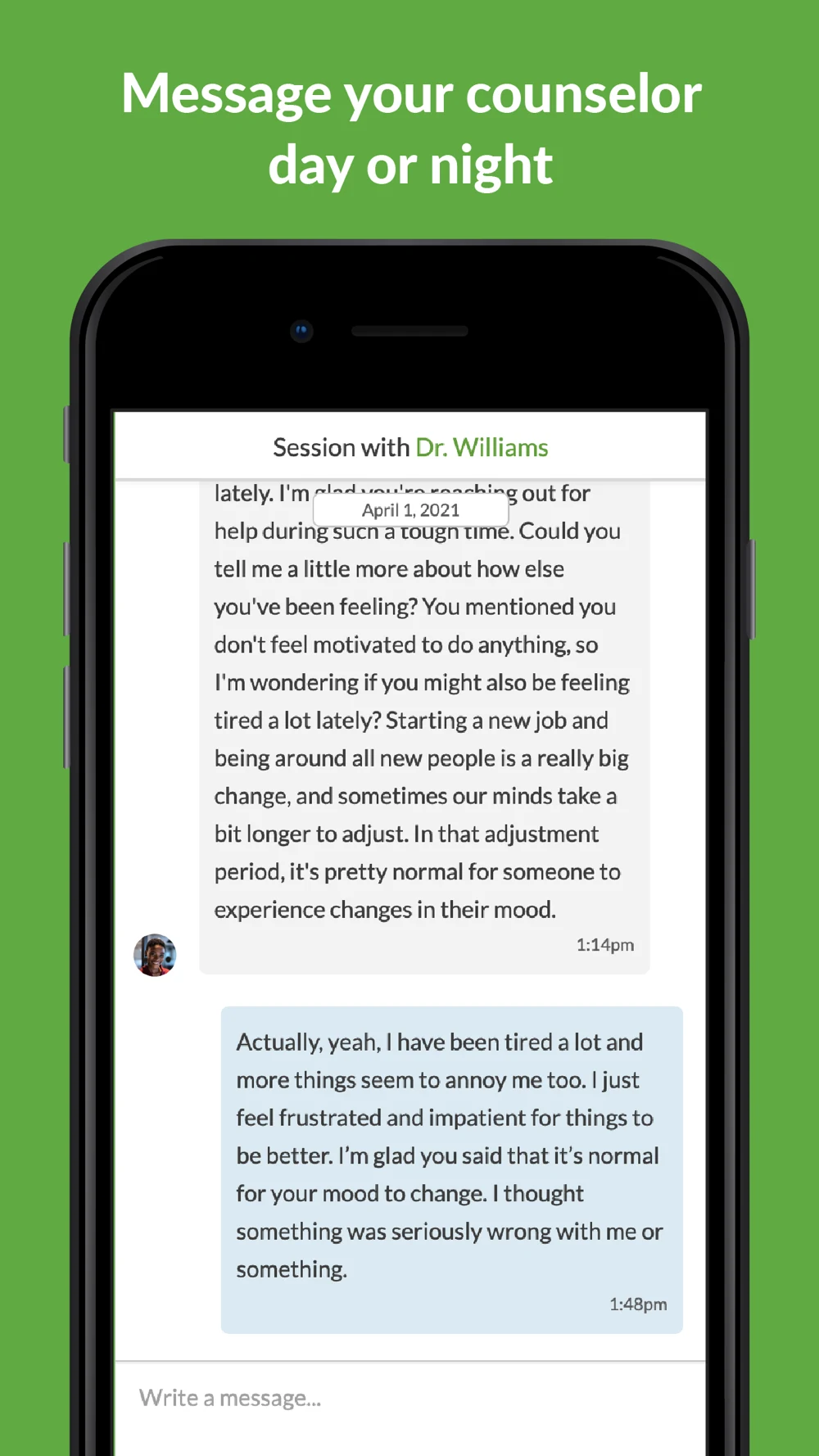
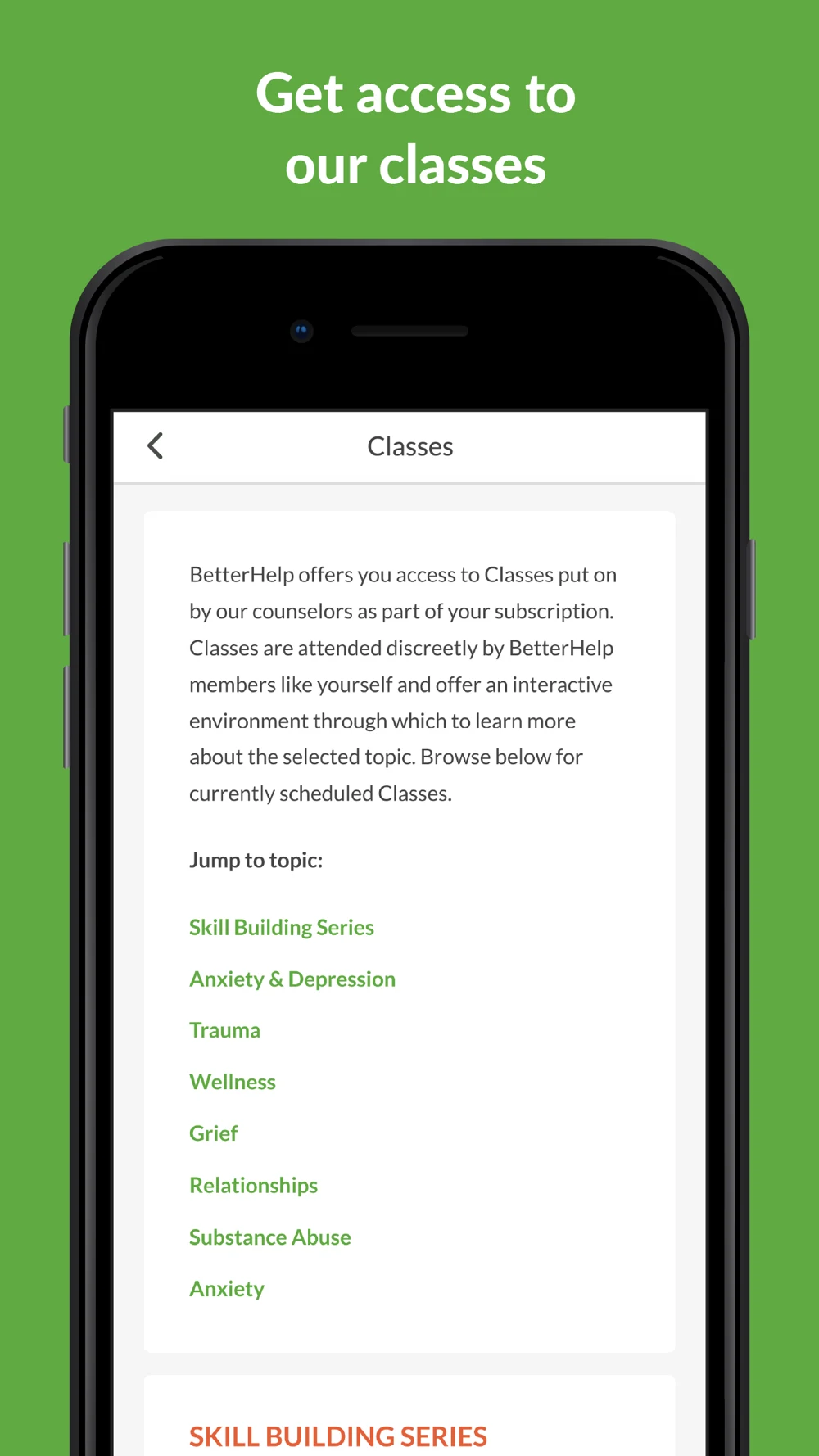
Source: BetterHelp on the US App Store · captured 27 October 2026.
What the screenshots show: The opening pairs a broad professional-and-affordable message with a large branded phone and a dated press quotation. Panel two shows a calendar and appointment slots. Panel three shows a dense therapist conversation. Panel four lists classes. Headings are readable, but the calendar labels and conversation text are much smaller. The opening establishes reassurance before showing what the visitor can do.
What I would test: For appointment searches, test matching or a readable booking state first. Include a date and time zone. For messaging searches, enlarge one neutral exchange and explain the actual response arrangement. The current description distinguishes insurance-dependent features from self-pay features, so do not present classes as universally included. Artwork with an older date is not evidence of a broken current app. Performance remains unknown until tested.
Wysa: The mascot is distinctive; the support model needs equal prominence.

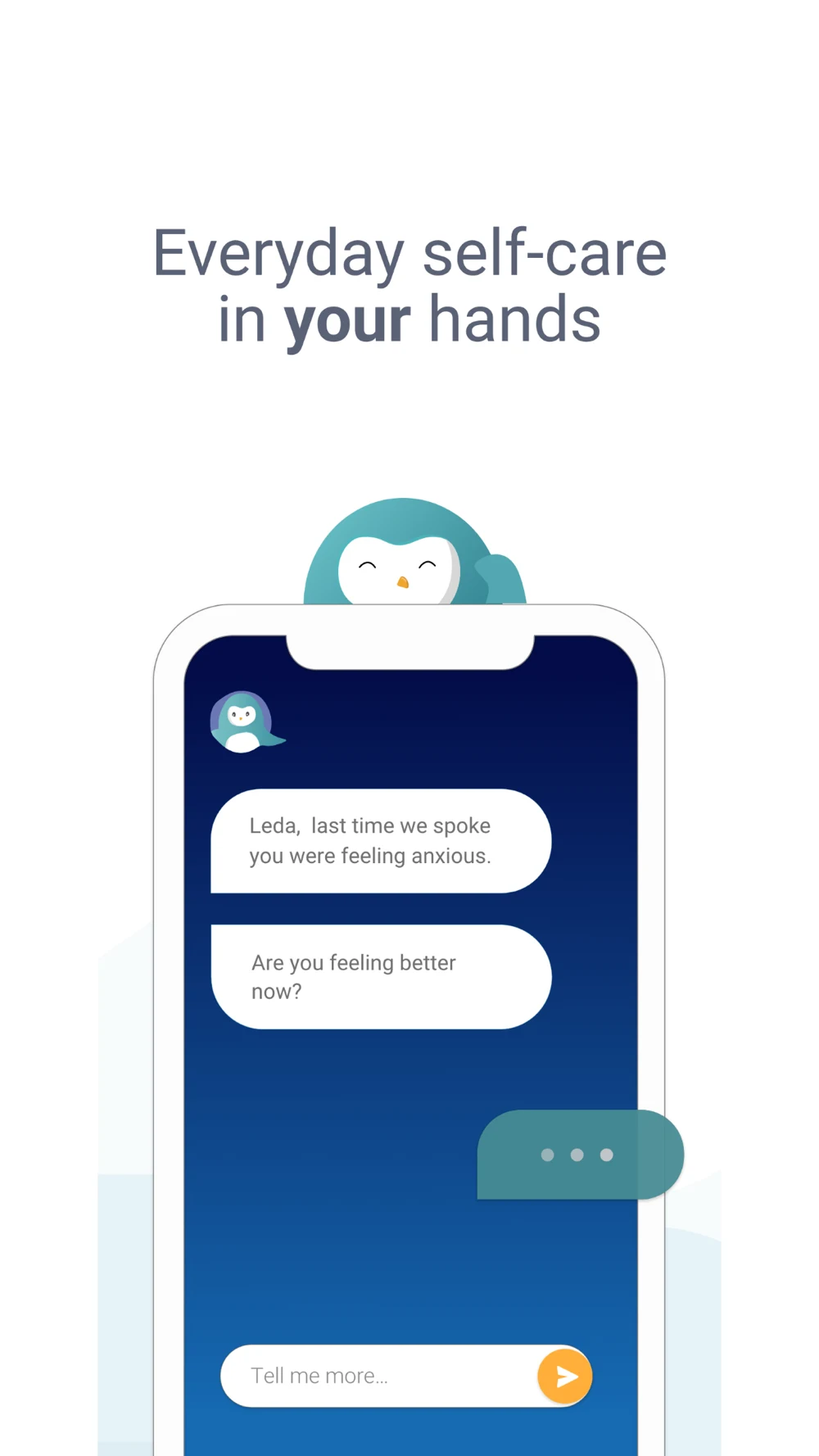

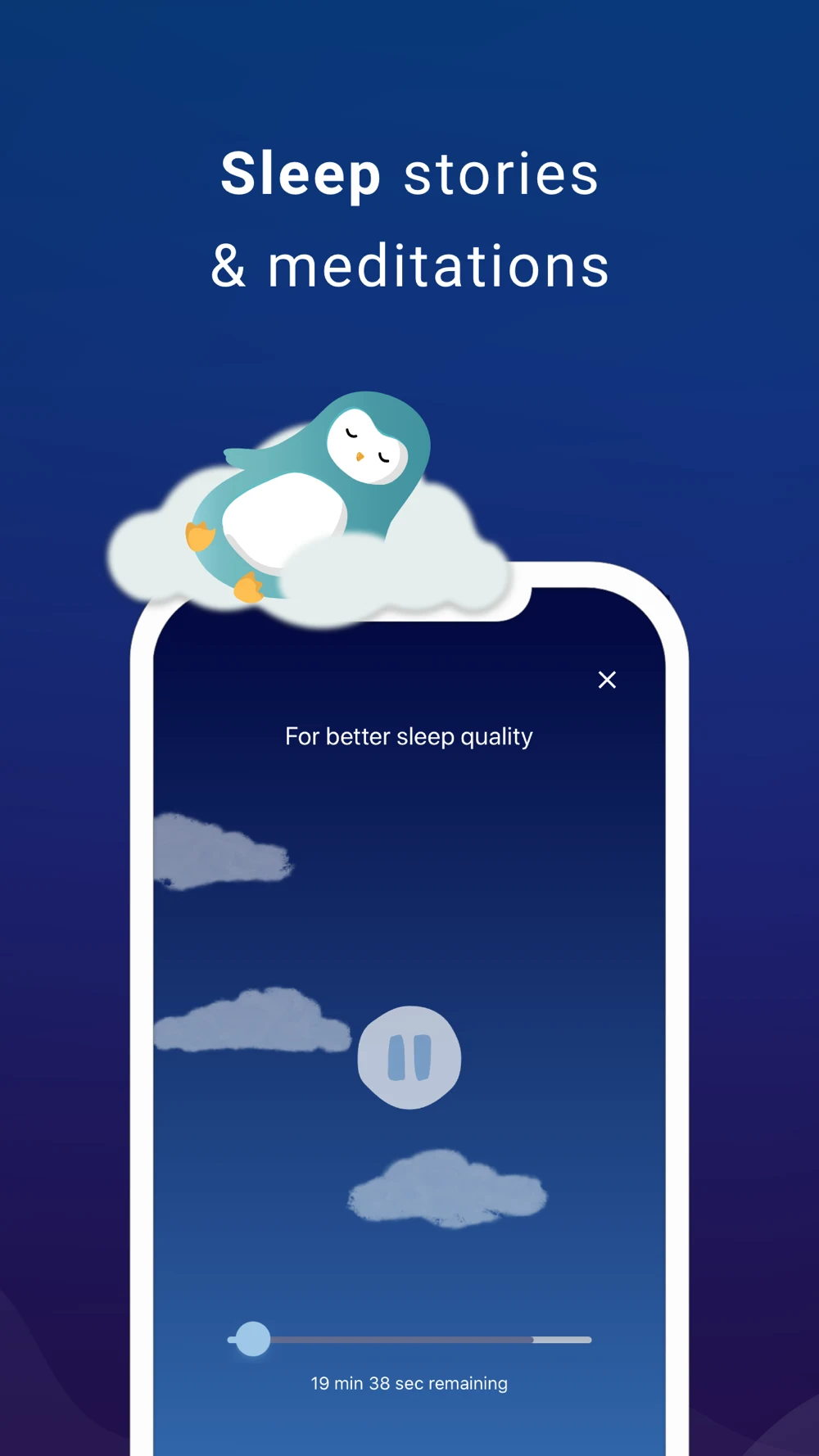
Source: Wysa on the US App Store · captured 27 October 2026.
What the screenshots show: Panel one introduces the penguin without an obvious AI role label. Panel two shows a conversational exchange with a typing indicator. Panel three uses a lock and mascot to communicate privacy. Panel four switches to a sleep-audio player. The sequence moves from identity to chat to reassurance to a separate tool; the role and a single useful task compete for attention.
What I would test: Place a visible AI label beside one actual reflection task. Explain optional human services separately. Replace an abstract lock promise with an accurate, readable control or concise explanation of data handling. An audio-led search can use its own sequence. Do not infer that an animated character is misleading to every viewer; test whether people correctly identify the responder and supported task. Performance remains unknown until tested.
Clarity: The structured exercise deserves the space occupied by overlapping phones.
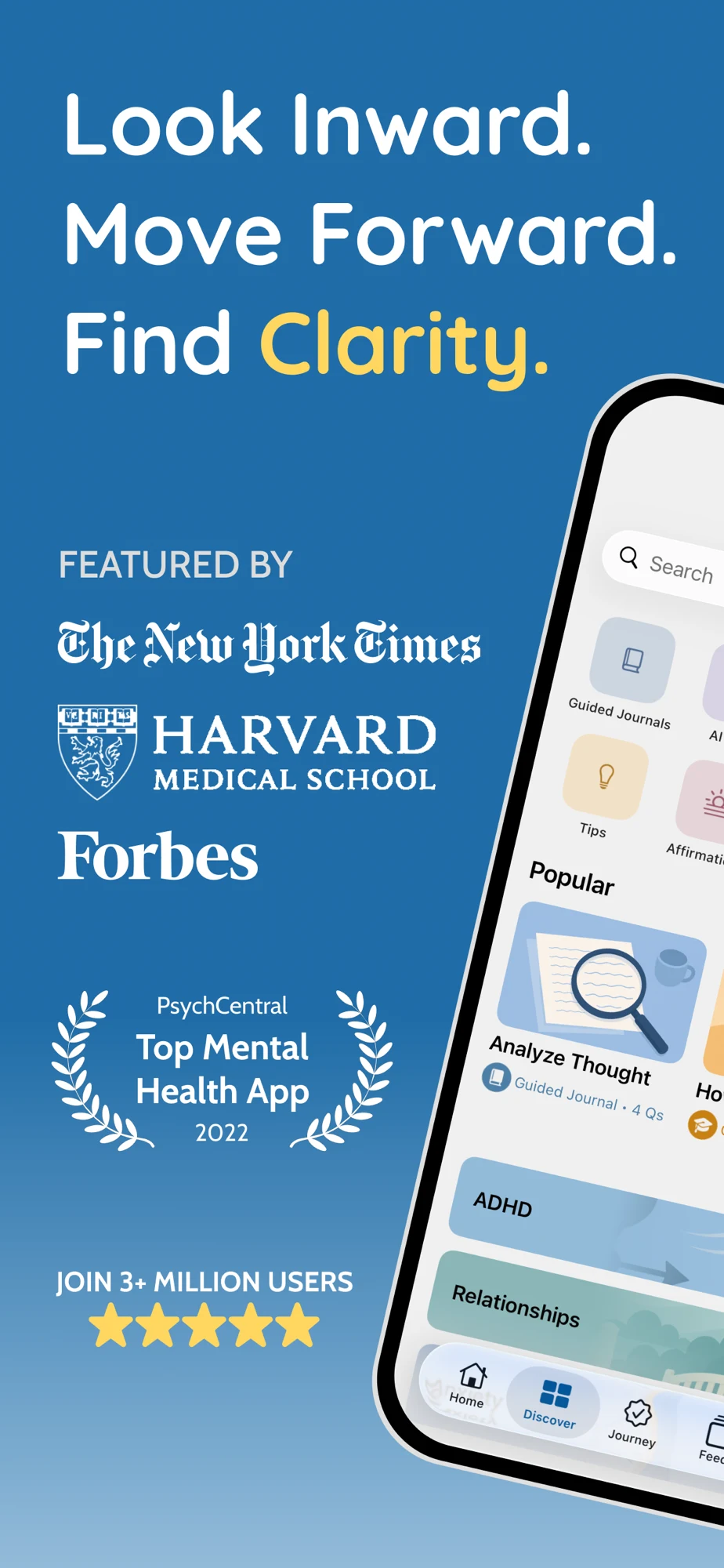
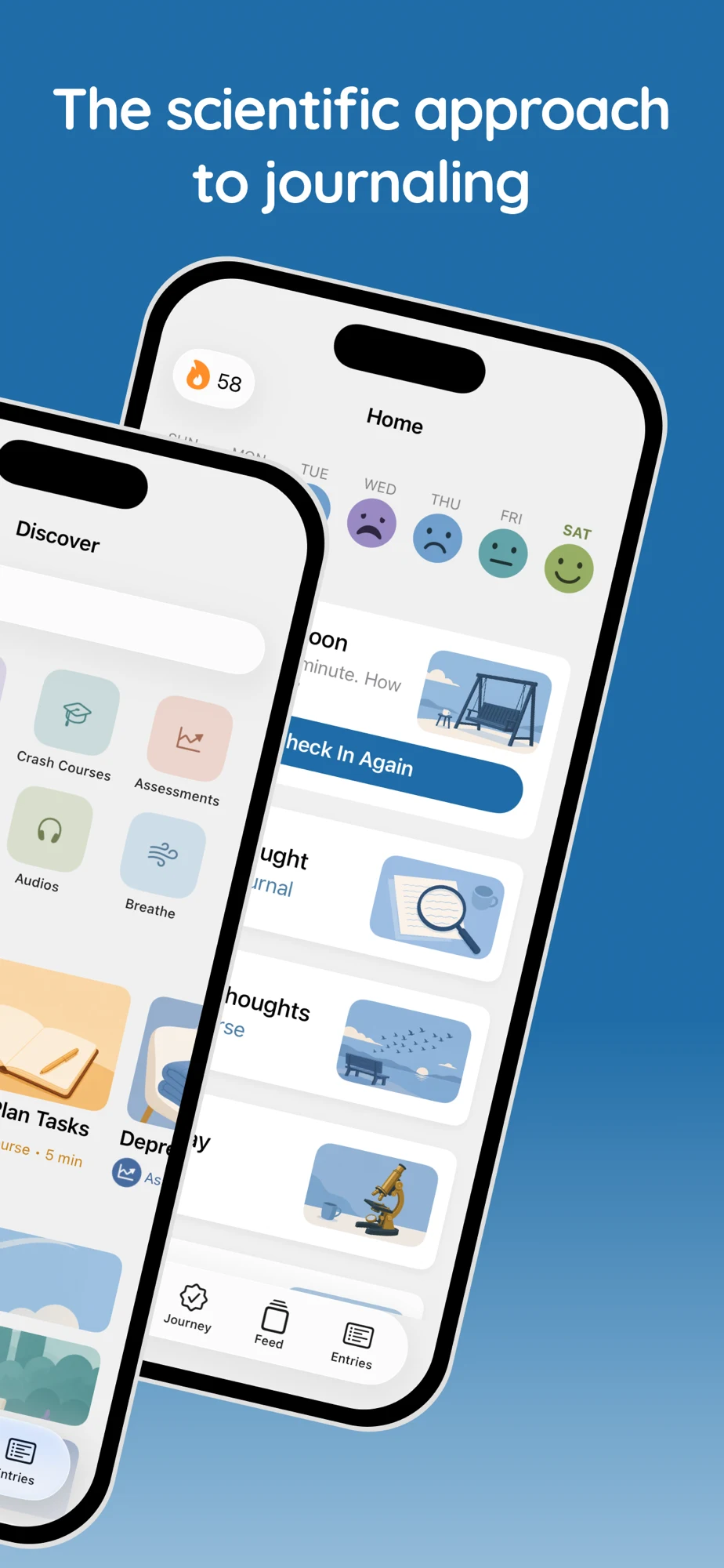
Source: Clarity on the US App Store · captured 27 October 2026.
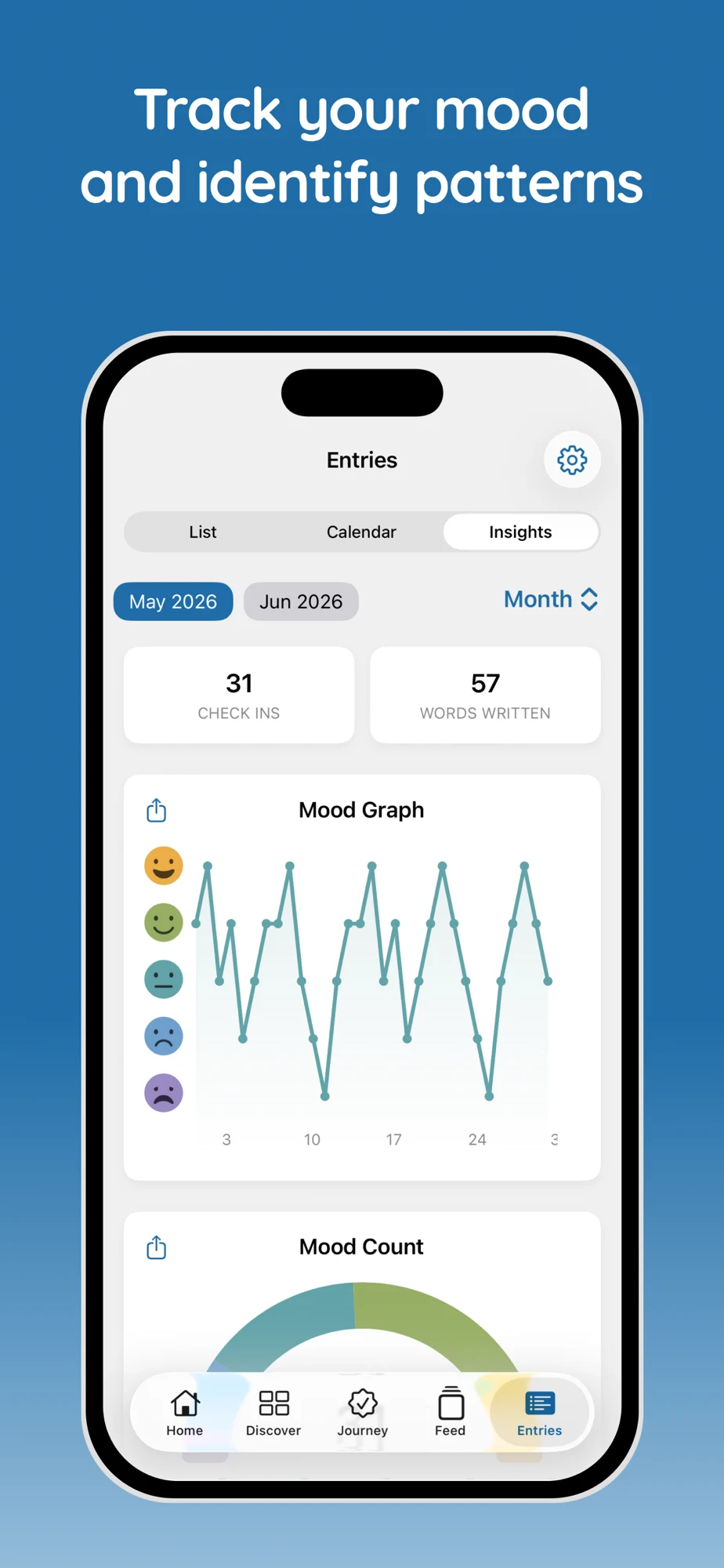
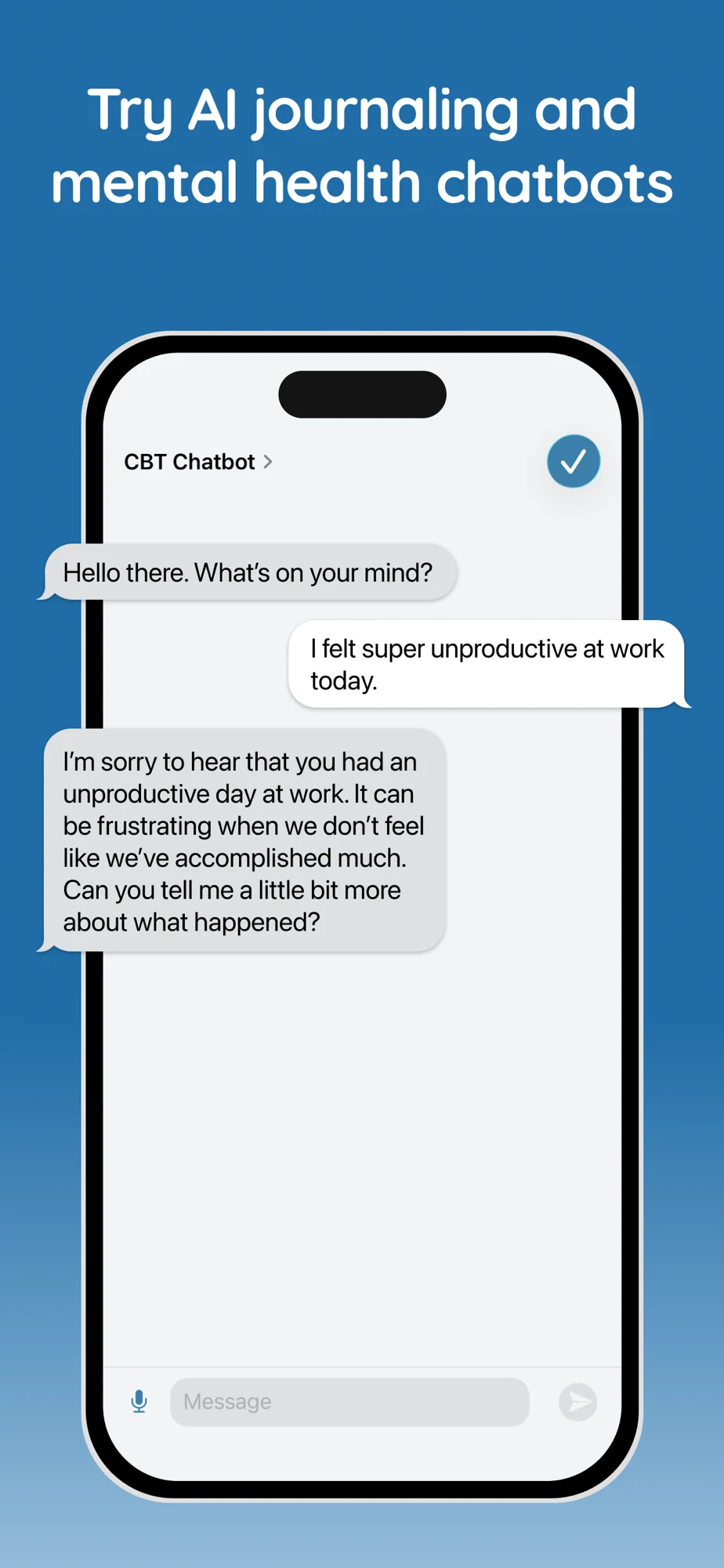
What the screenshots show: The first panel mixes a large wellbeing headline with media or popularity signals and a cropped interface. Panel two uses overlapping tilted phones to show several journaling options. Panel three presents mood history and activity counts. Panel four clearly labels an AI feature and enlarges chat bubbles. AI is more explicit here, while the opening journal task is harder to inspect.
What I would test: Test one upright thought record with readable prompts before the dashboard. Explain what a mood history summarizes, including gaps. Counts of check-ins and words are activity measures, not evidence of recovery. Keep the visible AI role when showing the automated feature, and distinguish it from a self-guided exercise. Use neutral demonstration entries rather than emotionally intense testimony. Performance remains unknown until tested.
Finch: The pet becomes useful when the visitor can see the next small action.

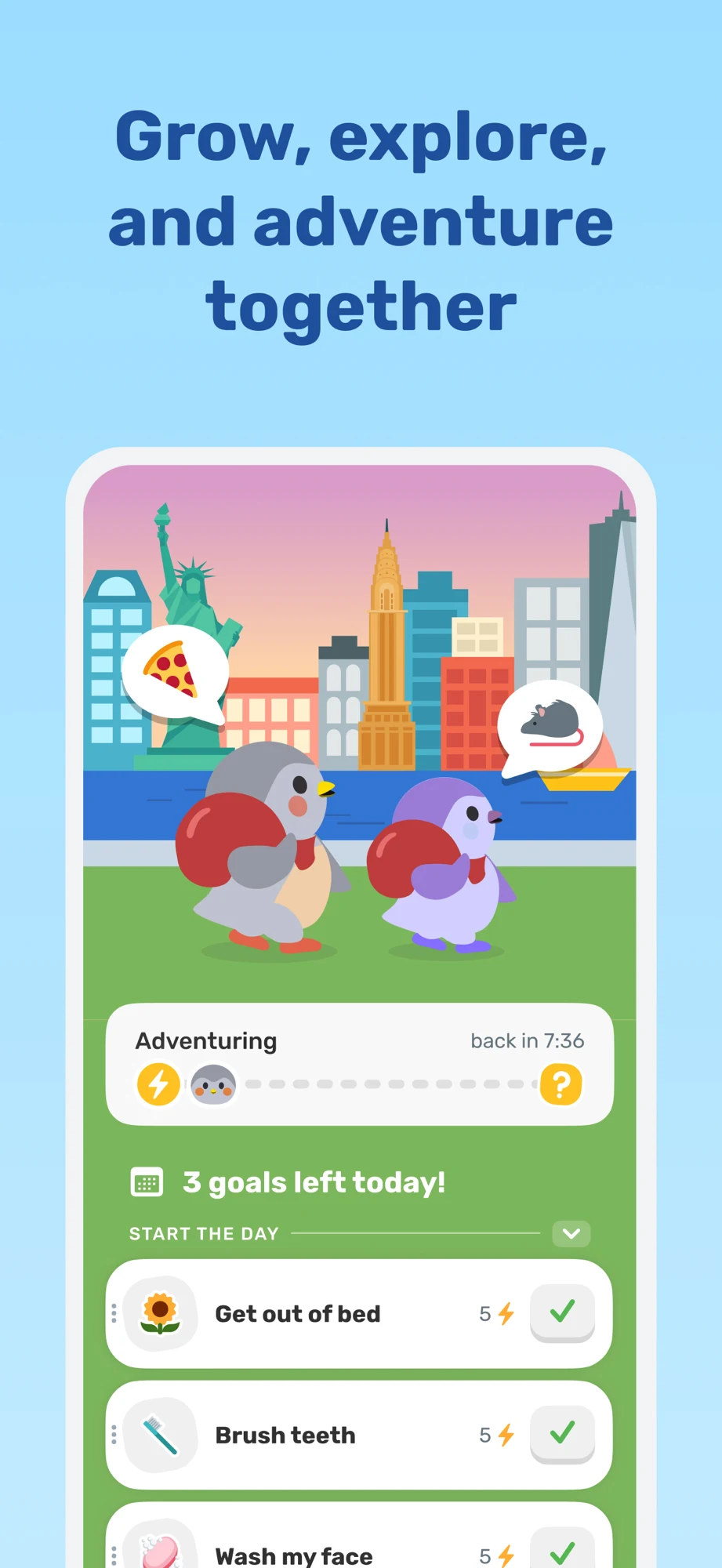
Source: Finch on the US App Store · captured 27 October 2026.
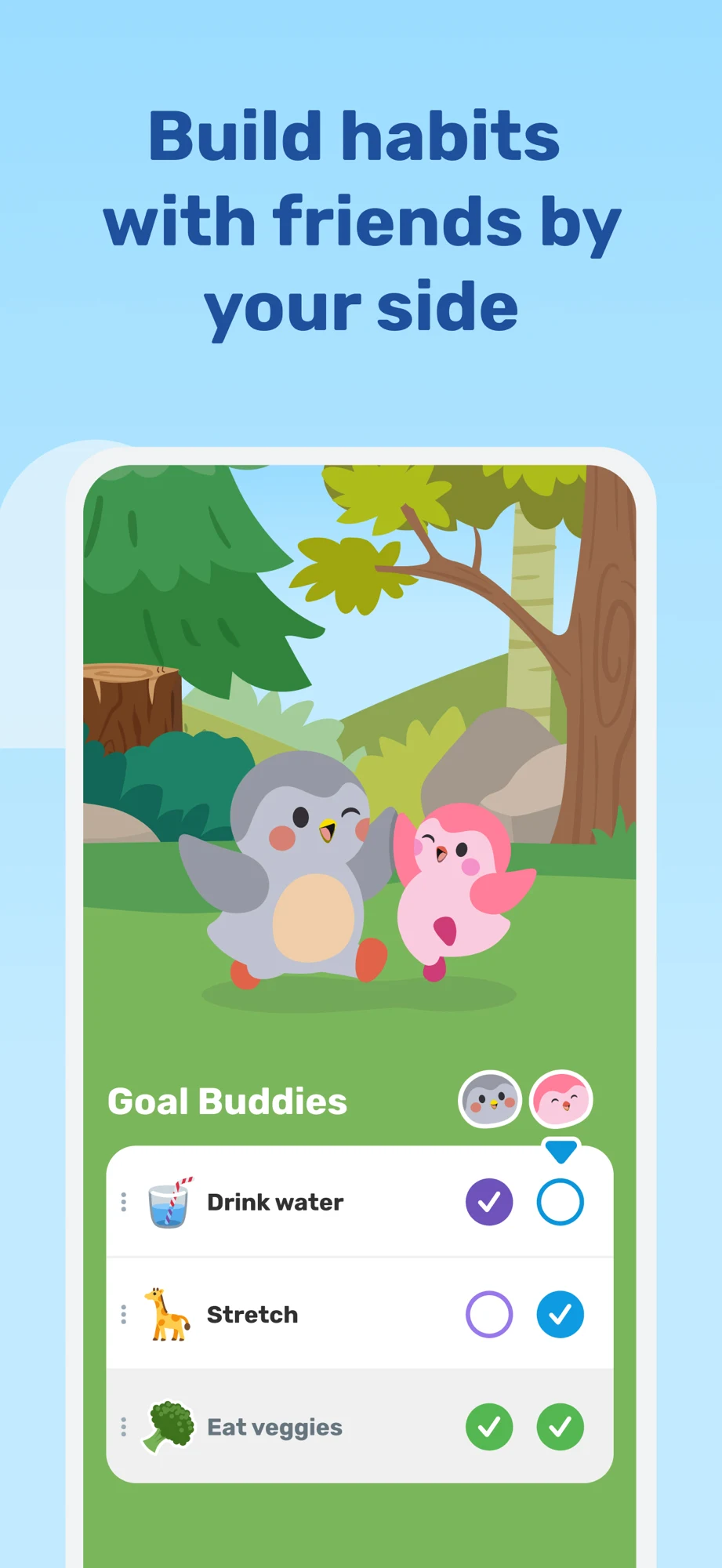
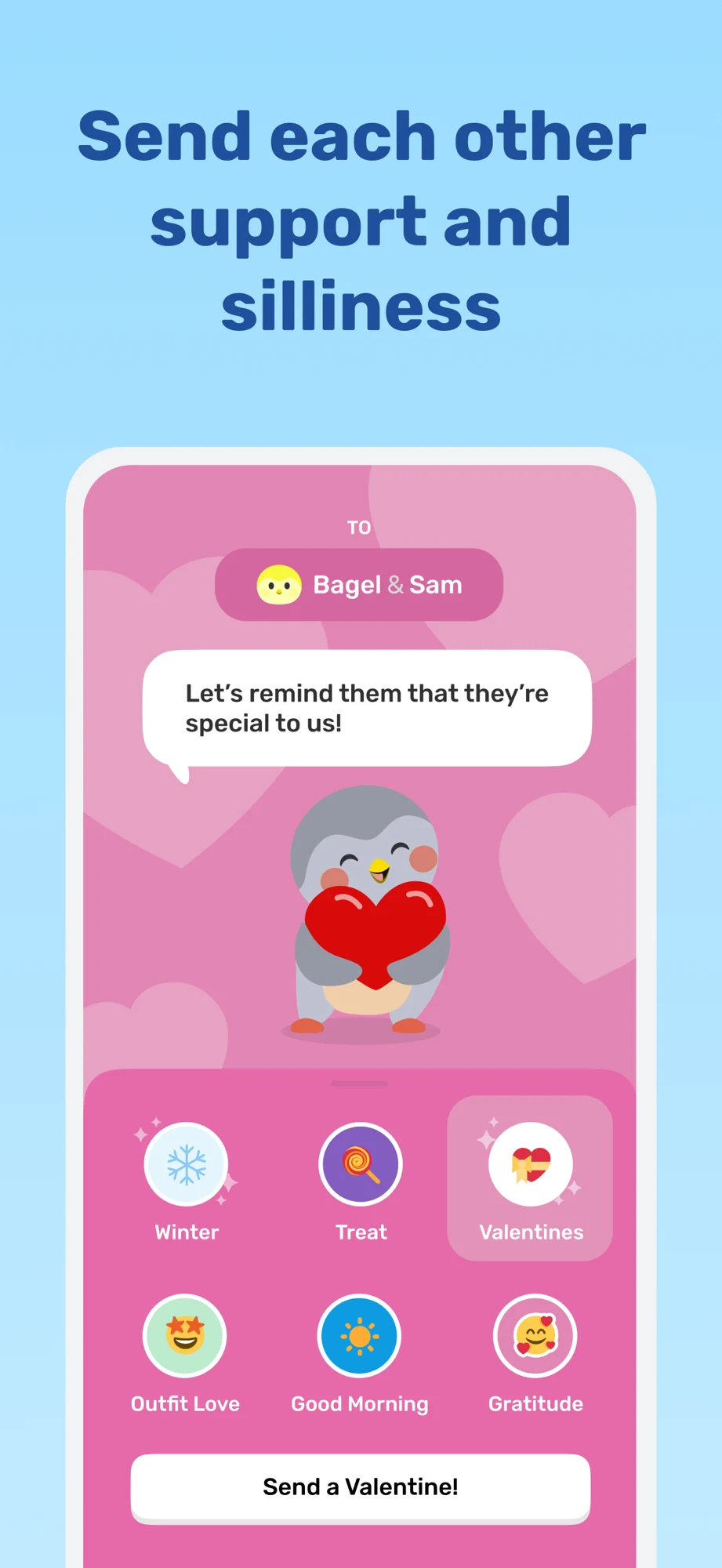
What the screenshots show: The opening shows two birds and social self-care language. The next panel makes cooperation tangible through shared goal checks. A friend-appreciation card follows. Panel four shows small daily tasks beside adventure progress. Large characters make the brand memorable, but the practical solo task arrives after the social story.
What I would test: For solo self-care or journal searches, test the manageable task first. For social intent, retain the friend story and explain what is actually shared. Friend actions do not establish that private journals are shared. Pet progress should remain a motivation mechanism rather than a clinical outcome. Test whether returning after a gap feels possible without adding guilt, mandatory social participation or streak pressure. Performance remains unknown until tested.
7 Cups: Listener, community and therapist are three stories to separate.

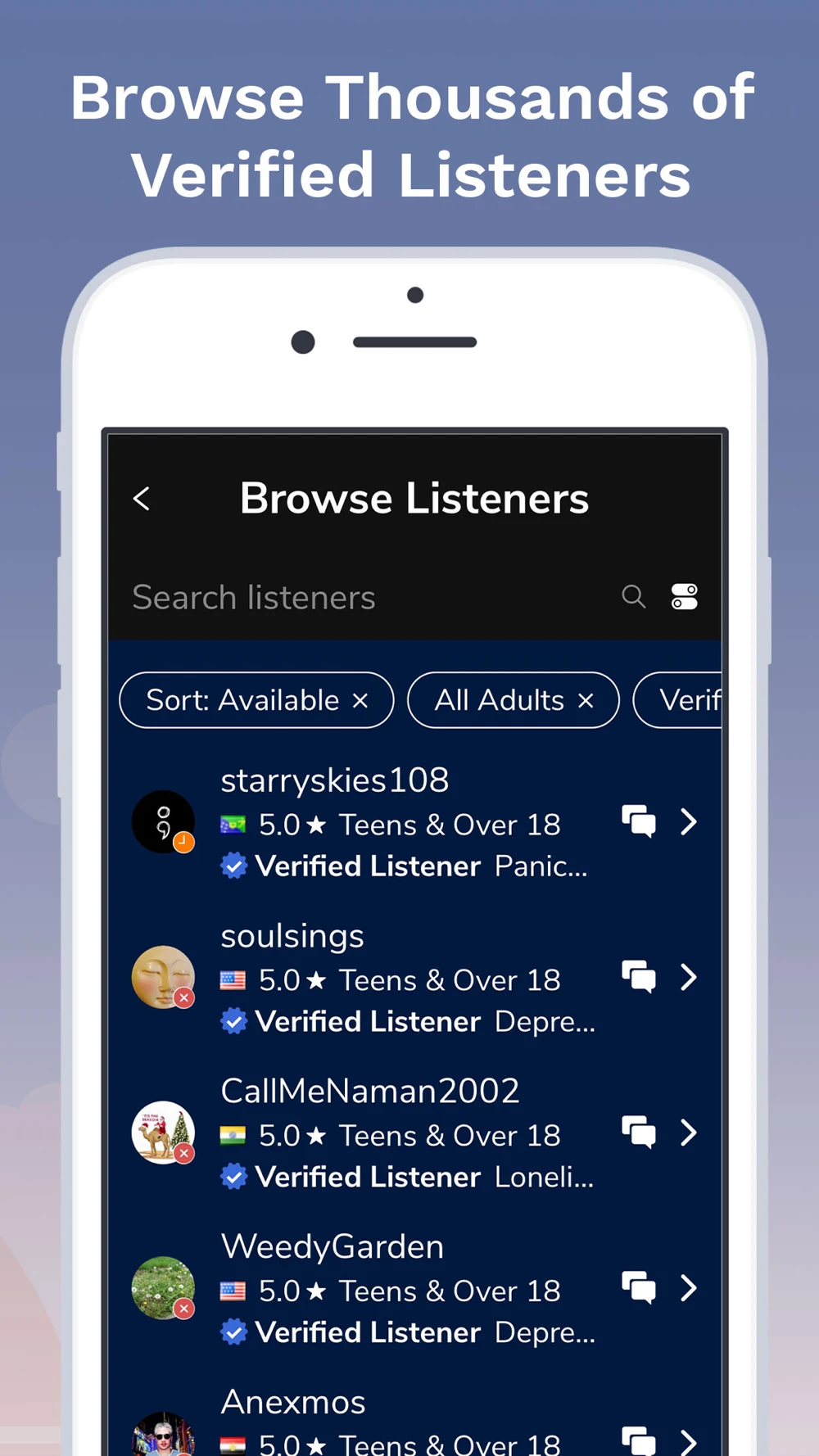
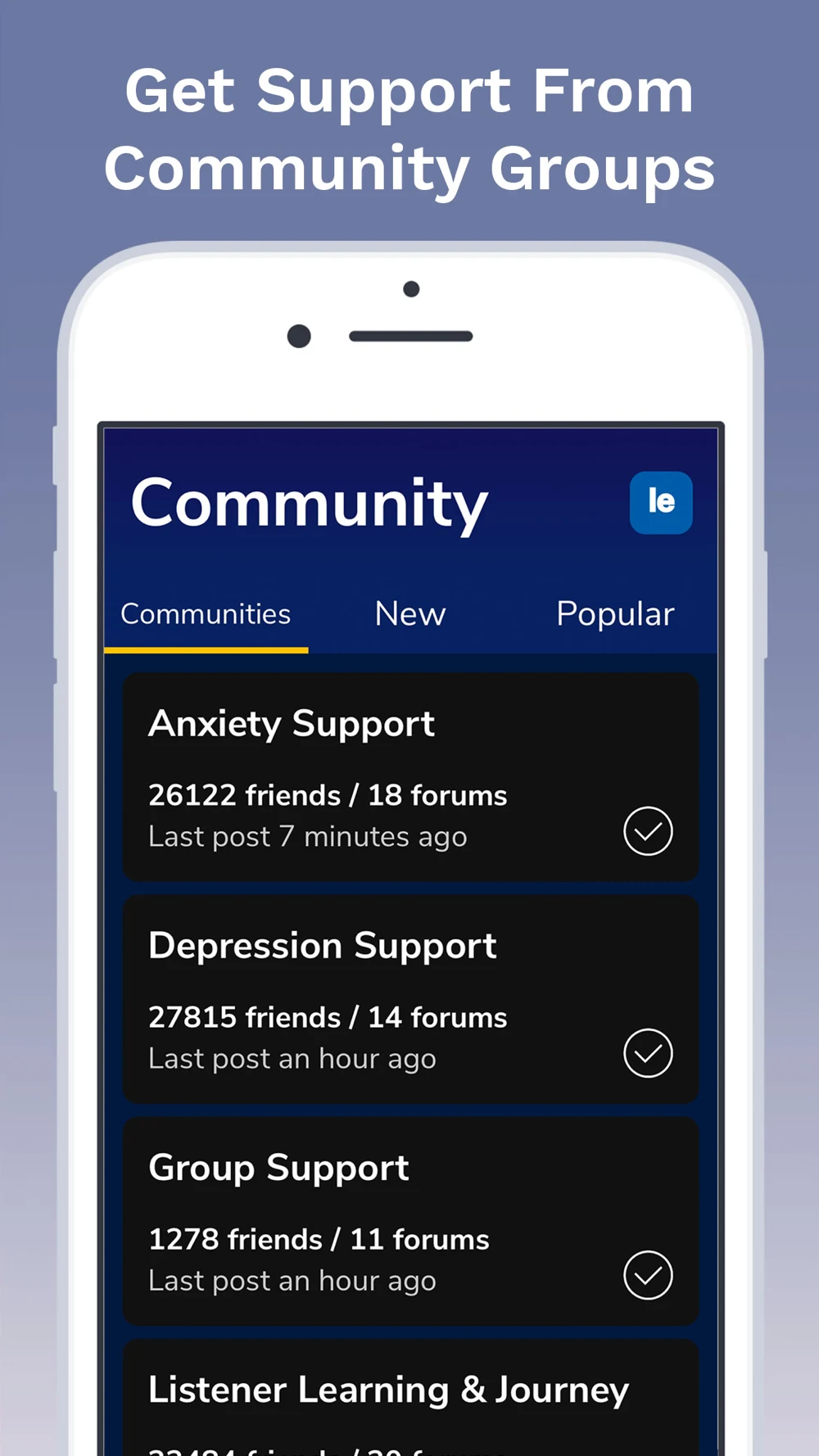
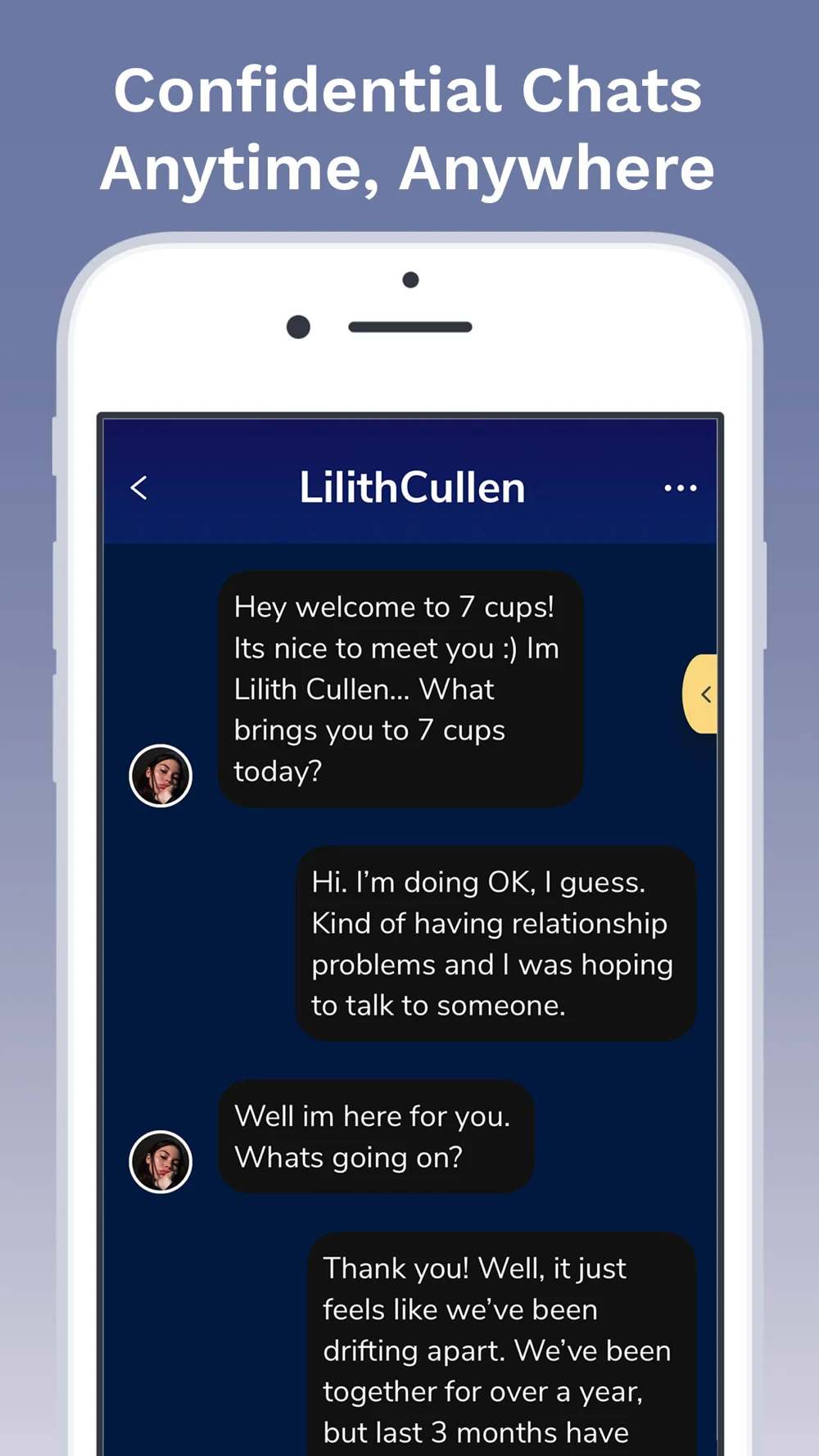
Source: 7 Cups on the US App Store · captured 27 October 2026.
What the screenshots show: The first panel is largely text describing broad support and counseling. The next shows listener profiles with badges, ratings, languages and availability indicators. The third shows community groups and participation counts. The fourth displays a long chat under broad confidentiality and availability language. There is useful product proof, but the listener list is busy and the chat is dense.
What I would test: Give a volunteer-listener journey its own opening, visibly naming the role. Show a real availability state and a readable exchange. Explain licensed therapy as a separate offer where applicable. Distinguish public groups, private conversation and identity controls without treating “anonymous” as an absolute privacy guarantee. This is a clarity test, not a finding about the platform’s clinical quality. Performance remains unknown until tested.
Lesson 1 — Name who or what provides the support.
- SELF-GUIDEDPrompts and exercises the user completes
- AIAutomated conversation with visible limits
- PEERA listener or community member with a stated role
- CLINICIANA licensed professional within an eligible service
Lesson 2 — Let the title identify the actual product.
- NAMERoomNote: Thought Journal
- SUBTITLEGuided Reflection & Mood Log
- PROOFOne editable thought record
- ACTIONStart a reflection, without implying therapy
Lesson 3 — Sending now does not mean receiving a reply now.
- CHANNELMessage, scheduled call or automated chat?
- AVAILABILITYWhen can the user submit or book?
- RESPONSEWhat reply timing is actually supported?
- LIMITNo implied emergency response or monitoring
Lesson 4 — Show the task before the reassurance.
- OPENA specific action the product supports
- DEMONSTRATEReadable fields, choices and next step
- EXPLAINThe role and boundaries of the tool
- SUPPORTAccurate credentials or evidence in context
Lesson 5 — Turn a privacy claim into an understandable decision.
- AUDIENCEWho can see the entry or conversation?
- STORAGEWhere is it kept and when does it leave?
- CONTROLWhich real settings can the user change?
- LIMITExplain exceptions instead of an absolute promise
Lesson 6 — Make a return visit feel possible.
- ARRIVALNo accusation about missed days
- CHOICEOne manageable optional action
- CONTROLSkip or pause reminders
- MEASUREUseful voluntary return, not maximum time spent
Lesson 7 — Separate an entry from an inference.
- RECORDA person reports a feeling or event
- SUMMARYThe app organizes those entries
- INFERENCEAny interpretation needs its own support and limits
- CLAIMDo not turn activity counts into recovery evidence
Lesson 8 — Keep the same support model from query to first use.
- SEARCHA person asks for a thought diary
- LISTINGShows a self-guided editable record
- FIRST USEThe role and task are understood
- REVIEWAssess relevant use without exporting intimate content
Each diagram explains a decision, without invented performance data. Build the story with screenshot strategy, then refine order, copy and readability. Check the actual store-sized image, not only the full-size export.
MENTAL HEALTH SUPPORT APP ASO
Worked titles, copy, screenshot story and CTAs for one precise product.
RoomNote is a fictional product brief. Assume it offers self-guided thought records, editable mood logs, optional small daily actions, saved history and pausable reminders. It has no therapist, peer listener, AI conversation, diagnosis or clinical monitoring. Do not use the AI keyword cluster for this example: AI generated the artwork, not the fictional app’s responses. Verify every feature before adapting the copy to a real product.
Swipe horizontally to compare all columns →
| Field | Worked example | Characters / limit |
|---|---|---|
| iOS name | RoomNote: Thought Journal | 25 / 30 |
| iOS subtitle | Guided Reflection & Mood Log | 28 / 30 |
| iOS keywords | diary,self,care,feelings,emotions,check,in,wellbeing,notes,patterns,prompts,record | 82 / 100 |
| Google Play title | RoomNote: Thought Journal | 25 / 30 |
| Google Play short description | Record a thought, log your mood and choose one small self-care action. | 70 / 80 |
Opening copy: Make room for one thought. RoomNote gives you a simple place to describe a situation, write what went through your mind and consider another perspective in your own words. Save the reflection, edit it later or skip a prompt.
Supporting copy: Add a mood check-in when it is useful to you. Review your own dated entries without turning missing days into a score. Choose a small self-care action, or leave it for another day. Reminders are optional and can be paused. This is a self-guided journal: no therapist or AI chat reads and responds to your entry.
Feature detail for longer copy: Keep situation, first thought and another perspective in separate editable fields. Find saved reflections in your history. Log a feeling with an optional note. Choose a manageable task from the actual available options. Review or change reminder settings. Before launch, replace this fictional feature list with the real storage, account, export and payment details; none of those capabilities should be inferred from a screenshot.
Why the fields differ: The name identifies a thought journal. The subtitle adds structured reflection and mood logging. The screenshot demonstrates one record. Longer copy explains the optional nature of the task and the absence of a responder. The keyword field uses complementary supported language rather than brand names or unrelated therapy-service terms.
Swipe horizontally to compare all columns →
| Panel | Headline to test | Required product proof | Useful action |
|---|---|---|---|
| 1 | Make room for one thought | One readable structured record, visibly self-guided | Start a reflection |
| 2 | Put the situation into words | Editable neutral example and optional prompts | Save reflection |
| 3 | Keep your own mood record | Actual dated entries and visible gaps | Add a check-in |
| 4 | Choose one small action | Real choices with a clear selection state | Choose my next step |
| 5 | Come back without catching up | Genuine no-streak-penalty return behavior | Continue or skip today |
| 6 | Set reminders on your terms | Actual schedule and pause controls | Review reminders |
CTA choices: “Start a reflection” names the immediate task. “Save reflection” means the entry will be saved. “Skip for now” must let the person move on. “Get support” is too ambiguous if it merely opens an empty text field. “Talk to someone” is inappropriate when no human service exists. Test what people expect after the tap before testing the button color.
Preview direction: Show the real situation → thought → optional perspective → save flow at readable speed, followed by the saved entry. Use neutral fictional data and label it appropriately. Keep the self-guided role visible. Avoid a before-and-after emotional transformation, invented chat responses or a rising mood chart presented as a product outcome.
Connect the value proposition to the actual task. Use first-screenshot strategy and storytelling to decide what deserves a frame. Read the long-description guide when expanding this brief into a complete localized listing.
MENTAL HEALTH SUPPORT APP ASO
Ten mistakes that can attract the wrong expectation.
Swipe horizontally to compare all columns →
| Mistake to investigate | Example or visible communication risk | Specific correction to test |
|---|---|---|
| Hiding the responder | A friendly mascot appears before an obvious AI role label in the captured Wysa opening | Name AI beside the first demonstrated interaction |
| Leading with reassurance alone | The BetterHelp opener emphasizes brand and press before a booking task | Show the relevant matching or appointment state earlier |
| Making every plan sound identical | BetterHelp’s current description distinguishes plan-dependent features | Use the actual entitlement and payment context in creative |
| Shrinking the useful exercise | Clarity uses overlapping tilted devices in its journaling panel | Show one upright editable record with large prompts |
| Treating activity as recovery | A mood-history panel also reports check-ins and word counts | Label them as activity and explain the actual chart coverage |
| Making private and public support sound the same | 7 Cups shows listener conversations and community groups | Name the audience and role for each separate workflow |
| Assuming sending means receiving | Anytime-message copy does not establish reply timing | Explain the actual response arrangement near the channel |
| Using a lock as the whole privacy explanation | The Wysa artwork uses a lock and mascot | Show or explain a real control and its limits |
| Making social features the default story | The captured Finch sequence introduces friends before solo tasks | Match a solo or social opening to the supported search intent |
| Copying clinical terms into a journal | A self-guided app targets therapist booking without offering clinicians | Remove the unsupported cluster; show the actual reflection task |
These are editorial critiques and hypotheses about communication, not findings of harm, poor care or conversion loss. The screenshots do not expose every product feature. Recheck the current listing and actual app before proposing a change. Download the ten-test backlog, then use test hypotheses and prioritization to choose a bounded experiment.
MENTAL HEALTH SUPPORT APP ASO
Turn research into campaigns that promise the right kind of support.
Build Apple Ads search-results campaigns around the actual support model. RoomNote can test thought-journal, mood-record and gentle-routine intent. It cannot use therapist access, peer listening or AI chat as promises. The broader keyword bank is a research map for different products, not a campaign upload. No campaign or spend has been created.
Check the service and territory: Apple’s medical-services advertising policy has adult-audience and regional or placement conditions. Check the exact clinical service against the current policy. Do not assume every self-care journal has the same classification, or that a store age rating establishes ad eligibility. Source: Apple Ads policies.
Swipe horizontally to compare all columns →
| Campaign / group | Supported search family | Matching page opening | Meaningful next step |
|---|---|---|---|
| Category exact — thought journal | thought diary; guided thought journal; reflection prompts app | A readable self-guided record | Understands the task and voluntarily saves a first reflection |
| Category exact — mood record | mood diary; mood tracker with notes; mood calendar | Dated editable entry and explained history | Understands recording and adds a check-in |
| Category exact — gentle routine | small daily goals; flexible self care goals; self care without streaks | One optional action and pause control | Chooses a relevant task without forced disclosure |
| Brand exact — own brand | Actual product name and genuine variants | Recognizable brand and the core task | Relevant new or returning user journey, reported separately |
| Discovery — bounded broad | A few supported journal or mood seeds | General self-guided message with clear scope | Relevant search terms, reviewed before expansion |
| Discovery — separate Search Match | Platform-discovered queries for the actual listing | Same accurately scoped product story | Inspect queries for service mismatch |
| Conditional — licensed service | online therapy app; book therapy online | Eligible licensed service and response or booking arrangement | Qualified access or booking; only for a real therapy service |
Control the matching: Apple offers exact and broad positive matching. Exact can still match close variants, so inspect search terms. Keep broad and Search Match discovery separately bounded from selected intent groups. Move useful queries into the appropriate exact group after checking product fit. Apple’s campaign-structure guidance and match-type documentation explain the current mechanics.
Negatives for RoomNote: Investigate exclusions for unsupported searches such as “book therapist,” “online psychiatrist,” “prescription,” “volunteer listener” and “AI chat.” Exclude “free therapy” if no such service exists, but do not block every use of “free” if the journal genuinely has a useful free tier. Apple currently documents exact match as the default for negative keywords. Review the actual unwanted queries and applicable variants; do not assume one negative catches every related phrase. Maintain discovery routing exclusions and service-mismatch exclusions separately. Source: negative keywords.
- SEARCHA person asks for a thought diary
- LISTINGShows a self-guided editable record
- FIRST USEThe role and task are understood
- REVIEWAssess relevant use without exporting intimate content
Custom product pages: A thought-record page starts with the reflection form. A mood-record page starts with dated entries. A routine page starts with a small optional action. Keep the self-guided role and relevant limitations consistent across all three. Use only supported page and deep-link configurations, and confirm that a new user can reach the promised task without being sent past an essential explanation or paywall. See Apple custom product pages.
A bounded test: Choose one market, one supported intent and one opening hypothesis. Agree the maximum spend, evaluation window, minimum evidence and stop conditions before any campaign is authorized. Pause misleading creative immediately. Do not keep an ad running merely to find out whether confused users eventually convert. For performance analysis, use the predefined plan rather than repeatedly stopping when a result looks favorable.
Worked economics, entirely hypothetical: Suppose the product allows $12 in acquisition cost per retained paying subscriber after considering contribution margin and expected refunds. If 10% of new installs become such subscribers, the illustrative install ceiling is $1.20. If 30% of taps become installs, the tap ceiling is $0.36. These assumptions are not category benchmarks or a bid recommendation. Replace them with documented cohorts, costs, retention and uncertainty. A free-only product needs a different business model rather than an invented subscription value.
Measure usefulness without extracting the journal: Keep ad taps, downloads, role comprehension, optional first-task completion, return use and payment denominators separate. A privacy-reviewed aggregate completion event may be useful; the words written, mood labels, diagnoses and conversation content do not belong in ad parameters. Even generic events require review for the actual data flow. Avoid optimizing for maximum disclosure, dependence or time spent.
Feed learning back: A relevant query that brings appropriately informed users can inform the next copy test. It does not prove an organic ranking opportunity or a health outcome. Keep paid and organic traffic separate with source analysis, use consistent conversion definitions, and record changes in the metadata log. Track ASO KPIs alongside misunderstanding, cancellation and opt-out signals.
MENTAL HEALTH SUPPORT APP ASO
Current patterns worth investigating, without inventing a growth story.
Swipe horizontally to compare all columns →
| Pattern in the reviewed sources | Dated evidence | What to investigate |
|---|---|---|
| AI and human roles coexist in the category | Wysa and Clarity describe automated tools; Talkspace describes clinician services and supporting AI tools | Whether the first screen makes the responder and feature role understandable |
| A single brand can have different entitlements | BetterHelp’s current description distinguishes insurance and self-pay feature availability | Whether a payment-specific visitor sees the right feature promise |
| Self-care can use a playful motivation system | Finch’s captured art combines pets, social actions and small tasks | Which concrete action makes the playful story useful for each search intent |
| Records and summaries compete with service access | MindDoc, Moodfit and Clarity emphasize logging or reflection tools | Whether a summary is presented as a record or mistaken for an assessment |
| Peer support and therapy can share a storefront | 7 Cups describes listener/community support and licensed therapy | Whether people can distinguish the paths before committing |
| Privacy is part of the acquisition message | The reviewed listings and Wysa artwork prominently discuss privacy | Whether people understand the actual audience, controls and exceptions |
These are patterns in primary listings reviewed on 27 October 2026, not measured market-growth trends. The eight linked listings above support the observations. No evidence here establishes market share, clinical effectiveness, keyword demand or superior conversion. Revisit the same sources over time before describing a change as a trend.
A useful research question is whether role-first creative improves comprehension for mixed-model brands. Another is whether a specific self-guided task makes a broad wellbeing claim easier to understand. Both need testing. A feature appearing in several listings is a reason to investigate; it is not a reason to copy it into an unrelated product.
MENTAL HEALTH SUPPORT APP ASO
Use AI to make the task clearer, then inspect the details it invents.
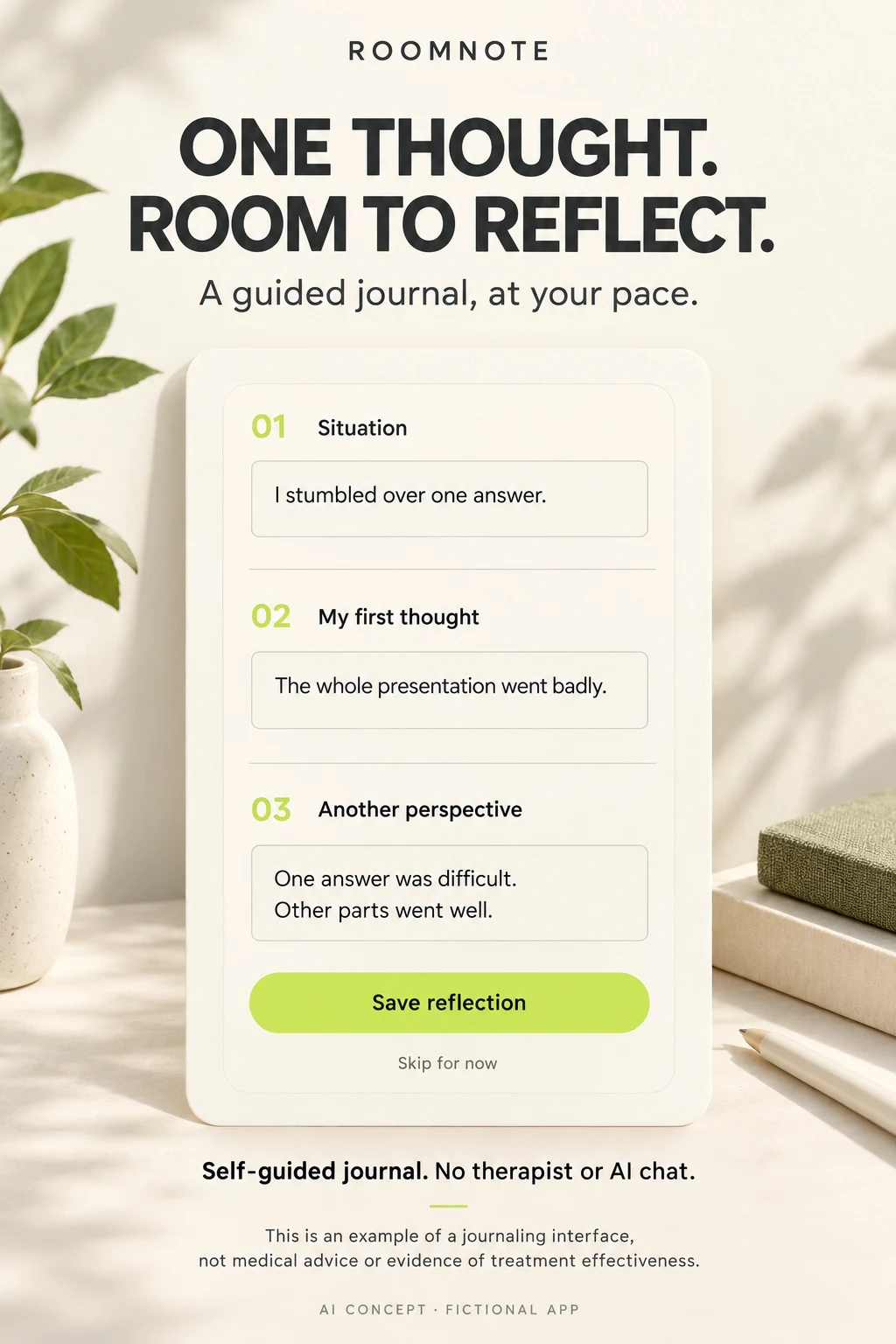
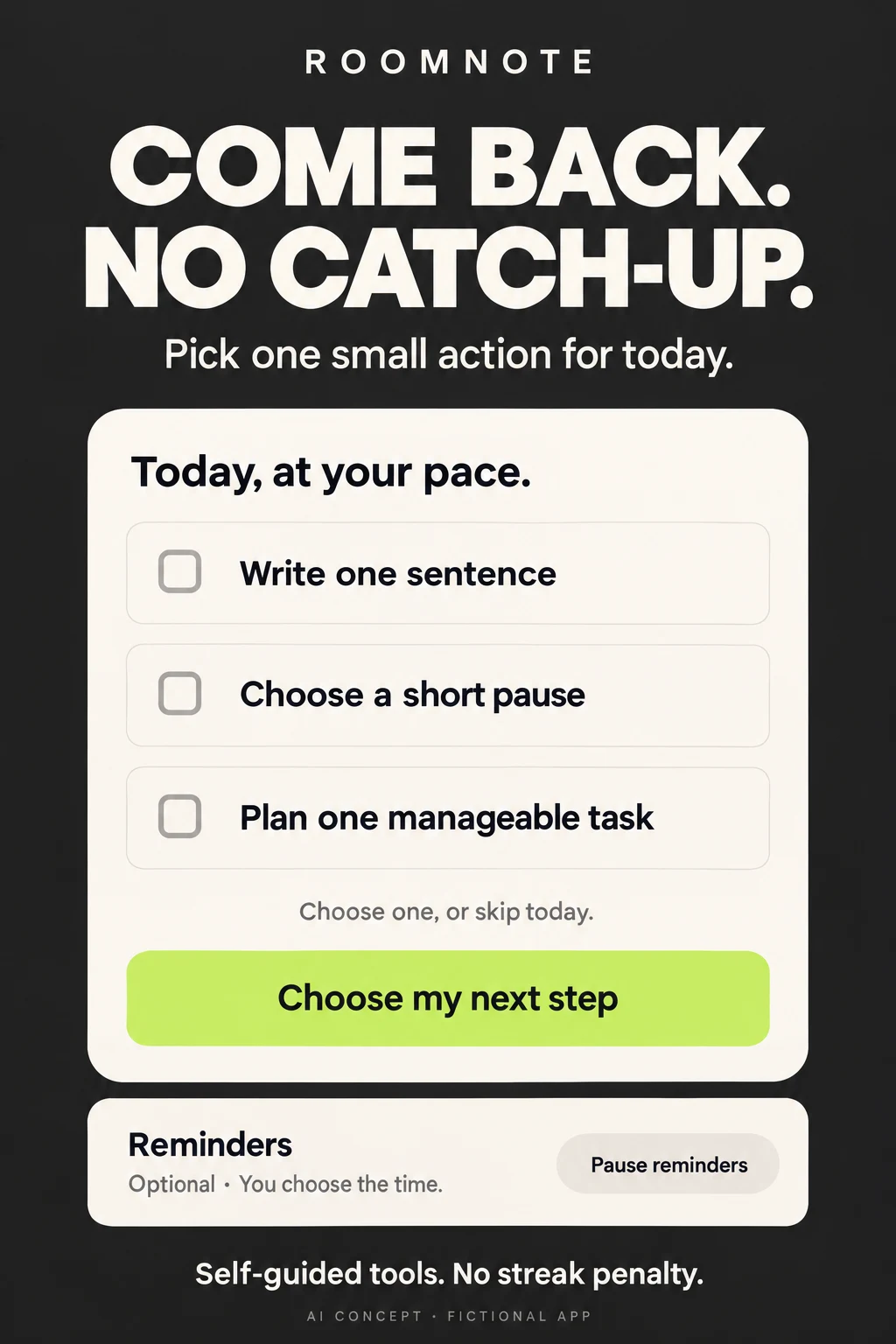
These are original AI-generated concepts for fictional RoomNote. They are not competitor screenshots, a working app, treatment guidance or tested improvements. The first explains a structured self-guided record. The second makes returning after a gap concrete. Neither implies that an AI or clinician responds to the user’s entry.
Swipe horizontally to compare all columns →
| Workshop task | Approved inputs | Useful prompt direction | Human verification |
|---|---|---|---|
| Clarify the role | Actual provider model and supported feature inventory | Explain one self-guided task without implying a responder | AI, peer, clinician and self-guided labels are accurate |
| Improve the opening | Current asset and neutral synthetic demonstration data | Replace overlapping dashboards with one readable thought record | Fields and save behavior exist; no intimate user data used |
| Rewrite the action | Actual next screen and skip behavior | Name the immediate task in a short plain-language CTA | No false promise of relief, access or response |
| Explain a return | Actual reminders and task choices | Offer one manageable action and a real way to skip | No hidden streak penalty; pause control works |
| Explain privacy | Approved data-flow explanation and settings | Show one actual control and explain its scope | No invented encryption, anonymity or human oversight |
| Prepare an experiment | Control asset, audience and one hypothesis | Compare role comprehension before and after one revision | No fabricated uplift; stable remaining sequence and planned evaluation |
Concept A critique: The three fields make the product task easy to inspect, and the self-guided label is explicit. The example is fictional and should be reviewed as demonstration copy, not personalized advice. The generator added a plant/table setting and a large disclaimer block that compete with the task. The pale step numerals need a contrast check. For production, simplify the surroundings, use actual editable UI and keep the necessary role explanation concise and readable.
Concept B critique: The choices are concrete and the skip route avoids a forced catch-up task. However, empty square boxes suggest multiple selection while the copy says choose one. Use the actual selection control: a single-choice control if only one action is allowed, or different copy if several can be selected. Confirm that reminder pause really works and that no hidden streak or reward penalty contradicts the headline.
Make the pair consistent: The warm photographic setting in A and flat panel in B are separate art directions. Choose a single production typography, spacing, contrast and background system. Replace every invented control with real UI. Preserve the self-guided role across the sequence. AI can propose a layout; it cannot certify accessibility, clinical appropriateness, privacy or feature availability.
Test order: First ask people who responds, what is saved, whether skipping is possible and what happens after a missed day. Correct the design until the intended task is understood. Then compare one revised opener with the current control in an appropriate store experiment, using the predefined analysis plan. Follow store conversion with voluntary relevant use and misunderstanding checks. Do not call a more attractive composition a proven improvement.
MENTAL HEALTH SUPPORT APP ASO
Release the support model you can actually deliver.
Swipe horizontally to compare all columns →
| Area | Mental-health-support release check |
|---|---|
| Role | Self-guided, automated, peer or licensed role is visible and consistent throughout the journey |
| Eligibility | Real age, territory, language and service availability; a US download does not establish access to every clinician |
| Payment | Actual free tools, paid features, billing period, benefit check and plan-specific restrictions |
| Response | Sending availability, response timing, scheduled sessions and actual monitoring arrangements are distinct |
| Claims | No borrowed leadership, treatment, regulatory or privacy claim; substantiation reviewed for the actual function |
| Data controls | Audience, storage, deletion, optional sharing and notification visibility match the product |
| Language | Local terms for counselor, therapist and listener reflect the real role; interface language is separate from responder language |
| Accessibility | Readable text and controls, non-color-only states, supported assistive technology and usable optional input |
| Measurement | Defined cohorts and denominators; no intimate content sent to advertising; voluntary use and opt-out signals considered |
| Experiment | Single hypothesis, stable control, predefined evidence threshold, stop rule and rollback |
Localize the role and service, not just the word “support.” A translated interface does not create a local therapist network, qualified listener or culturally appropriate exercise. Use market prioritization, local keyword research, screenshot adaptation and localization QA to check the real market experience.
For adjacent work, the telehealth guide explains appointment access and payment, the symptom-tracking guide explains records and summaries, and the stress-management guide covers specific self-guided practice positioning. Keep the broader health category strategy connected without duplicating every page.
Start an ASO audit with one real support model and a visible first task. Connect evidence, metadata, creative and measurement through ASO services. A larger keyword list cannot repair uncertainty about who responds.
Research limits: US iOS public listings and screenshot assets, with official iOS and Google Play platform guidance. No Android competitor screenshot review, private app-account access, clinical-effectiveness assessment, independent privacy audit, verified search volume or conversion results. The purpose is to improve store communication, not to recommend mental-health treatment or rank providers.