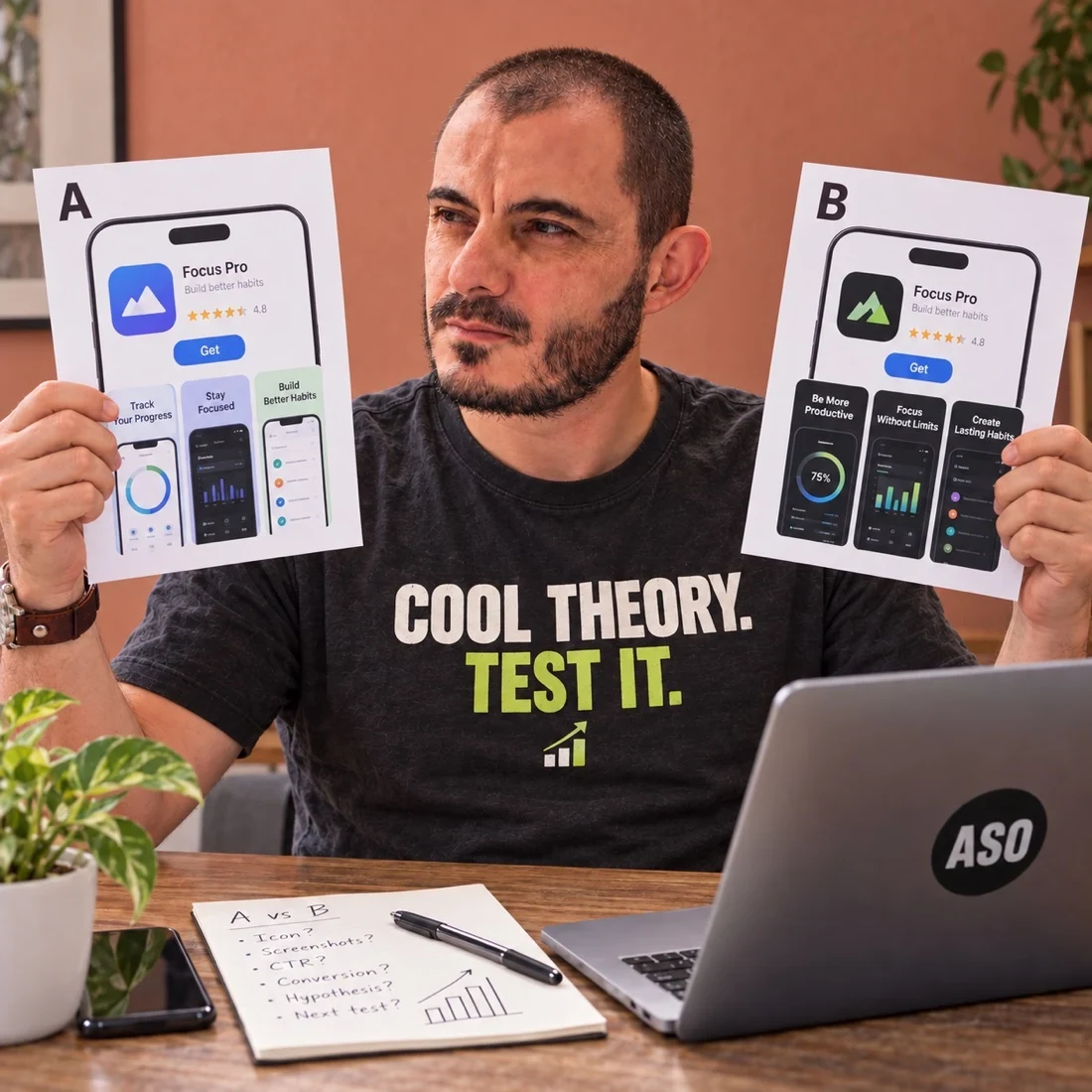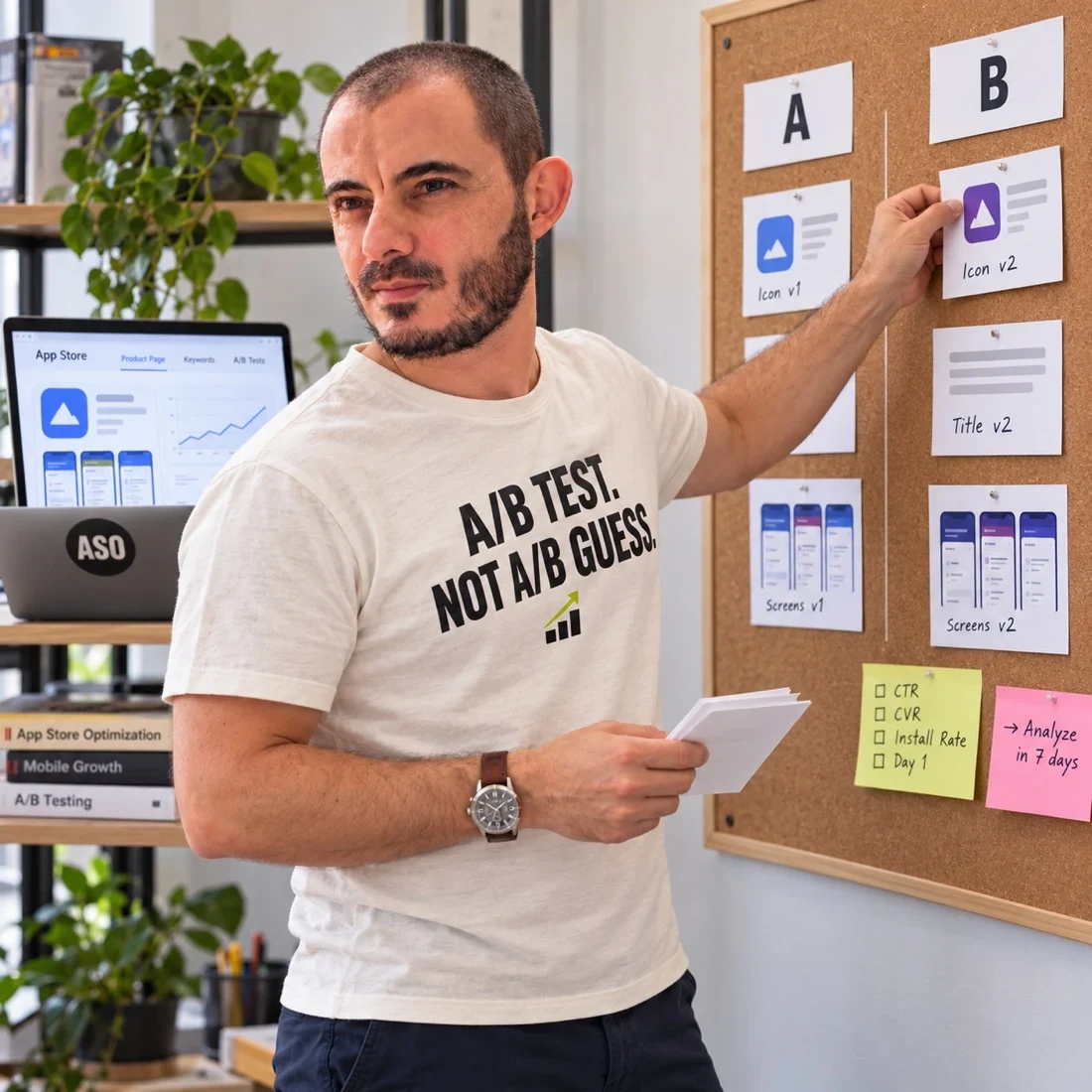
Separate corrections from open questions.
An outdated screen or inaccurate claim should be corrected through the appropriate workflow. It does not need to compete in an experiment backlog as if misleading and accurate variants were equally acceptable options.
Use the trust guide to review accuracy. Reserve experiments for genuine uncertainties between suitable alternatives.
Write the decision the test would inform.
Identify the audience, current obstacle and proposed change. Ask what the team would do differently if the evidence supported or contradicted the idea. If neither outcome changes a decision, the test may not be a useful priority.
The hypothesis builder helps articulate that question before production begins.
Compare importance and evidence separately.
A potentially important issue with weak evidence may deserve investigation before a creative test. A well-supported, narrow question may be ready to plan. Keep the uncertainty visible instead of hiding it inside a precise-looking expected uplift.
The matrix below illustrates how these dimensions can guide the next action. It does not assign numerical performance scores to hypothetical ideas.
Check readiness and measurement conditions.
Confirm that the required assets, approvals and supported platform setup are available. Review whether the traffic and metric can provide useful evidence for the question. A concept that cannot yet be implemented or evaluated may need preparation rather than a launch date.
Consult Apple creative testing or Google Play experiments for the platform workflow.
Keep the active queue manageable.
Assign an owner, next action and review condition to each selected idea. Preserve reasons for deferring other items. New product or audience evidence can change the order, and the record should explain why.
Use opening screenshots or sequence to develop specific creative questions. For hands-on support, explore conversion optimization services.