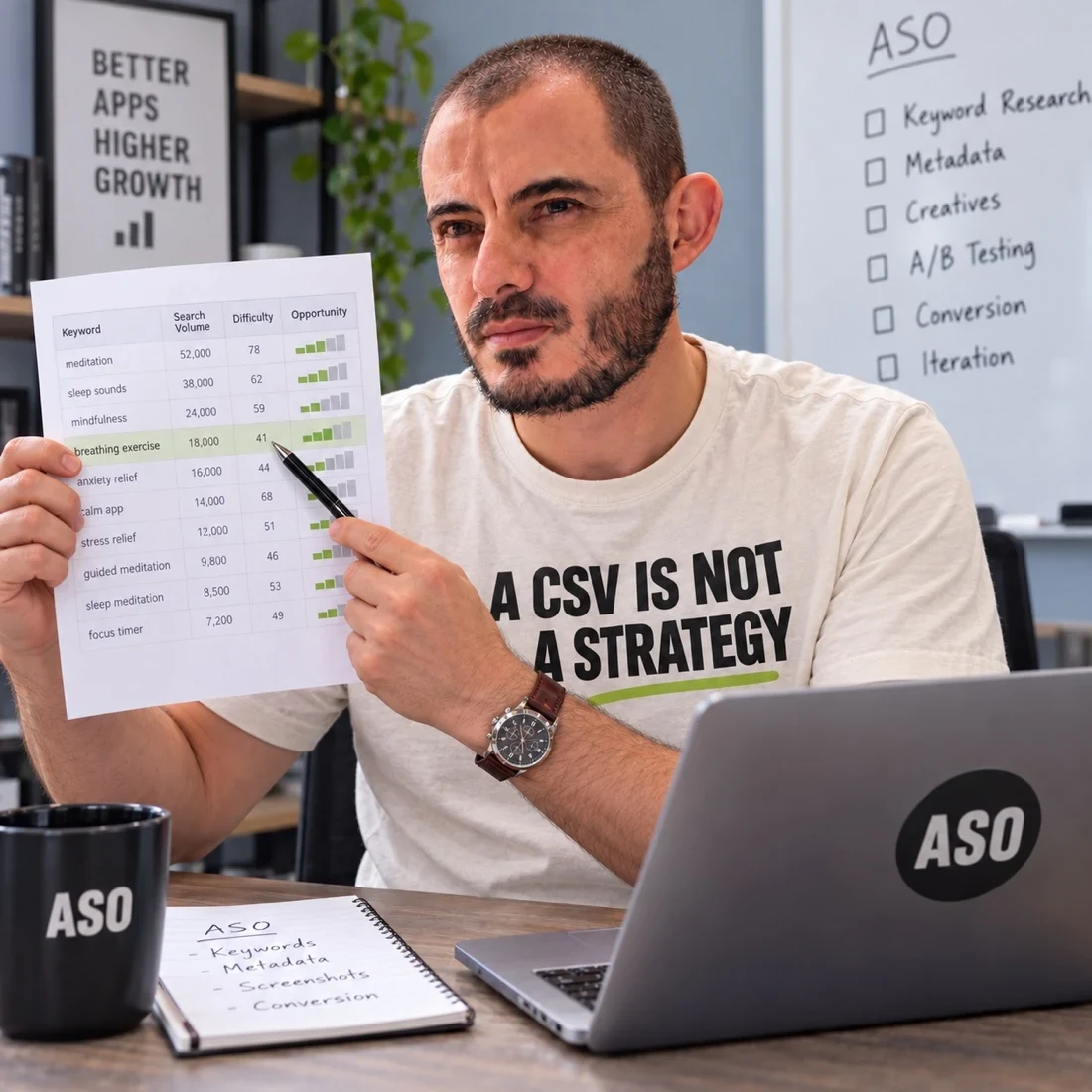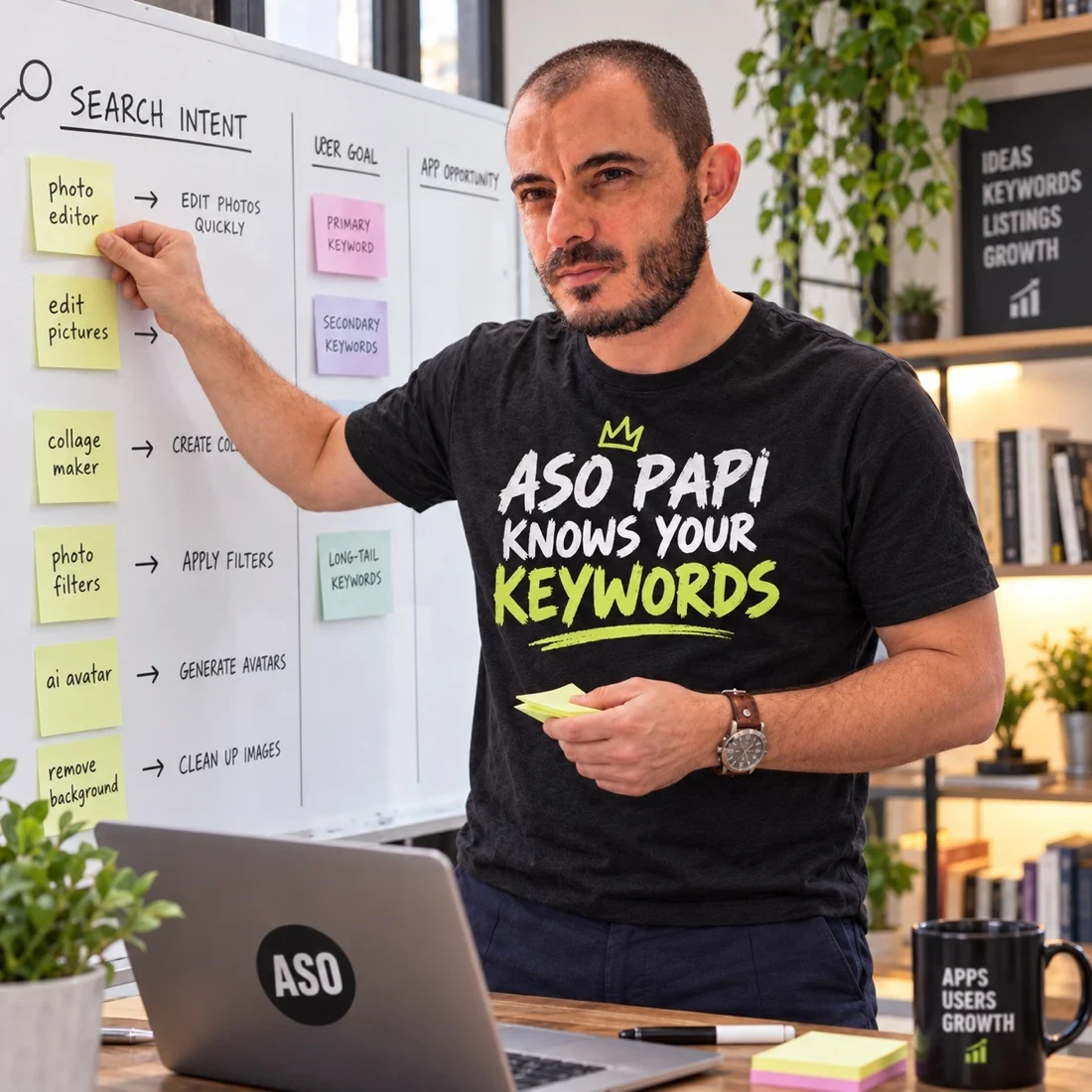
Start with the task, not a source-language winner.
Describe what the app helps someone do and which parts of that experience are supported in the target market. Give a local researcher the product, intended audience and examples of the journey. The goal is to discover useful language, not to preserve the shape of an English spreadsheet.
Translated source terms can be seed ideas, but they remain candidates. A phrase that looks equivalent may imply a broader feature set or a different user. Review those expectations against the actual product.
Collect language with context attached.
Record candidate wording from relevant local listings, public user discussions or qualified reviewer input. Note the source and the task it appears to describe. Avoid treating isolated phrases as representative of an entire language community.
Use seed research to expand systematically. Keep original wording and reviewer notes together so later copywriters understand why a term was considered, rather than relying on a literal gloss.
Separate meaning, fit and estimated demand.
Have a competent reviewer explain the phrase’s ordinary meaning in the intended context. Then check whether the product can fulfil that expectation. Only after those questions should demand or competition estimates help prioritise the candidates.
The relevance guide supplies the product-fit check. A large-looking index cannot rescue a misleading term. Keep uncertainty explicit when a phrase has several plausible meanings.
Prepare a handoff that preserves intent.
Group related candidates by task, identify preferred wording and explain rejected alternatives. Include the target store and locale, because implementation fields differ. A copywriter needs a reasoned brief, not a requirement to insert every candidate.
Connect the research to iOS metadata or Google Play translations. Keep titles and captions readable; coverage is not permission to write keyword soup.
Validate the final message and revisit the research.
Review the completed listing as a whole. A term can fit on its own yet distort the promise when combined with another caption or feature claim. Save the approved language and the evidence behind the decision.
After release, use available market-specific observations to refine the next question. Ranking movement alone does not establish that the right audience arrived or that a particular word caused a result. Preserve changes and competing explanations in the review record.