By Gabriel Machuret · US iOS competitor research · reviewed 27 October 2026 · iOS and Google Play guidance
AI-GENERATED EDITORIAL IMAGE · A MOMENT OF CONNECTION.
DATING APP ASO
Explain how people connect and what they control.
“Dating app” is a category, not a single promise. Some adults are looking for a long-term relationship; others want to meet people casually or explore at their own pace. A community-specific app may foreground belonging and identity controls. A swipe-led product, a prompt-led profile and a location-based grid create different expectations before anyone sends a message.
Start by describing the actual experience. What can a person express in a profile? How are profiles discovered? What conditions enable a conversation? Can someone pause, block or report? A screenshot of a happy couple may communicate an aspiration, but it does not explain the mechanics or guarantee that another person will be interested.
This broad category guide maps the differences that should drive specialized briefs. Relationship-focused, casual, LGBTQ and mature dating are distinct editorial opportunities, but each must be supported by its own evidence. The examples below do not infer intentions from gender, identity, age or appearance, and they do not present a single experience as suitable for every adult.
1. Name the experience before promising a relationship.
IntentWhich dating goals can people express?
DiscoveryHow do they find and consider profiles?
ConversationWhat starts a mutual interaction?
ControlsWhat can people manage or report?
Swipe horizontally to compare all columns →
Choose the experience before choosing a headline
Experience
What the visitor wants to know
Useful product proof
Avoid assuming
Relationship intentions
Can I express what I am looking for?
Real profile and intention options
Every member wants the same relationship
Flexible or casual discovery
Can I meet people at my own pace?
Actual discovery and communication rules
A particular identity means a particular goal
Community-focused dating
Will this space recognize how I describe myself?
Actual identity controls and community features
One label describes the whole community
Prompt-led profiles
How can I begin a conversation?
A readable prompt and response action
A prompt guarantees a reply
Location-based discovery
What location is used or displayed?
Real permission and visibility controls
A dense local community everywhere
Safety and privacy
What can I control if something feels wrong?
Actual report, block, visibility and help flows
Verification prevents all harm
Create a capability sheet with supported adult markets, age restrictions, identity and intention options, discovery rules, communication permissions, location behavior, verification scope, moderation, accessibility and paid-plan boundaries. Attach real screen evidence and an owner to each claim. That is the foundation of ASO strategy for a dating product.
This report compares eight public US iOS listings and twenty original Apple-served screenshot panels captured on 27 October 2026. It is not a ranking or an account-level safety audit. Android guidance is included, but Android competitor screenshots, private user experiences, measured keyword demand and conversion results were not audited.
DATING APP ASO
Understand the person’s goal without stereotyping them.
These are potential research groups, not measured demographics. Consider adult age bands, dating goals, self-described identity, life stage, language, local context, access needs and comfort with online discovery. No one characteristic tells you a person’s intentions. Avoid recruiting or classifying people by inferred sexual orientation or relationship status from their behavior.
Recruit through transparent, voluntary research and ask only what is needed. Use fictional profiles and avoid collecting private conversations, exact locations or sensitive identity information in a marketing worksheet. Ask participants what the product appears to do, who it seems to welcome and what controls they expect.
Swipe horizontally to compare all columns →
Adult audience hypotheses — not measured population segments
Potential audience
Job
Research dimensions
Question
Useful proof
Relationship-focused adult
Understand whether intentions are visible
Adult age band, preferences, relationship goals and local context
Can people express what they want without the app promising compatibility?
Real intent fields and profile examples
Adult exploring flexible dating
Meet people without a forced relationship label
Desired pace, location, communication style
Can someone describe their goals in their own words?
Optional intentions and actual discovery flow
LGBTQ adult seeking community
Recognize whether the community and identity controls fit
Self-described identity, local context, visibility preferences
Which identity and privacy options actually exist?
Real controls and inclusive representation
Adult returning to dating
Understand the first steps and how to pause
Prior app experience, life stage, device comfort
What happens after a profile is created?
Clear onboarding, matching and pause controls
Person who values conversation before appearance
Find a useful way to start
Preferred communication mode and accessibility
Can I respond to a prompt or voice answer?
Actual profile prompt and response action
Person exploring local discovery
Understand how location is used
City or rural context, travel and visibility preferences
What location is required, and what do others see?
Real permission and distance controls
Adult seeking community beyond dates
Find shared interests and events if offered
Interests, participation style, local availability
Is this a dating-only service or a broader community?
Can I pause, block or report, and what happens next?
Real controls and moderation explanation
Person comparing paid plans
Know what is available without upgrading
Budget, plan familiarity, desired feature
Which feature is included in which plan?
Current plan and feature boundaries
Person with accessibility needs
Read profiles and operate controls
Large text, screen reader, color and audio preferences
Can I understand a voice prompt without relying only on sound?
Real accessible alternatives and controls
Show three openings separately: an aspiration-led couple image, a profile prompt and a community feature. Ask what someone can do first, whether a match is required before messaging and what information is visible. Then show a report control and ask what it does and what happens next. Record misunderstandings rather than scoring a positive impression as proof of trust.
A person interested in privacy may want to understand visibility before creating a profile. A person who values conversation may want prompts before a photo grid. A community-focused adult may look for identity options and moderation, not only a rainbow color palette. These are research questions, not assumptions about entire groups.
Use search intent, value proposition and test hypotheses to connect a specific audience question to a creative comparison. A few interviews can reveal problems; they cannot establish market percentages or forecast relationship outcomes.
DATING APP ASO
Build a keyword map around intentions, mechanics and controls.
These 100 distinct phrases are unmeasured research candidates, not search-volume claims, rankings or recommended bids. Every cluster has a feature gate. Some terms describe a community or sensitive identity; they require genuine product support and respectful handling, not inferred personal targeting or a token visual treatment.
Product check: Use only for an adult dating product with the named discovery and messaging flow.
dating apponline dating appmeet new people datingdating profiles appdating and chat appmeet singles appdating profile discoverydating conversation appdating app for adultsonline matchmaking app
Relationship intentions
Product check: Show the actual intention options and community without promising an outcome.
relationship dating applong term dating appdating with intentionsserious relationship datingmeaningful dating appdating for relationshipsdating with shared goalsdating app relationship preferencesmeet people for relationshipsrelationship focused dating
Casual and flexible intentions
Product check: Verify supported intention choices and store rules; do not equate identity with a dating goal.
casual dating appdating without pressuremeet people casuallydating with flexible intentionsdating at your own paceopen to dating appdating intention optionsdating app for new connectionslocal casual datingdating goals on profile
Community and inclusion
Product check: Only claim communities and identity controls genuinely supported; validate local terminology and safety.
lgbtq dating appqueer dating applesbian dating appgay dating appbisexual dating apptrans inclusive datingnonbinary inclusive datingdating app with pronounsinclusive dating profilesqueer dating community
Profiles and expression
Product check: Verify each profile field and whether the feature is available in the target plan.
dating profile promptsdating profile questionsdating app voice promptsdating app profile interestsdating profile bio ideasdating profile with pronounsdating app profile preferencesdating app profile photosdating profile conversation startersdating profile personality
Conversation and matching
Product check: The actual product must support the named matching, response or messaging behavior.
dating conversation startersdating app message promptsdating app chatcomment on dating profiledating app match and chatdating app icebreakersdating app conversation ideasdating app mutual matchdating app text promptsstart a dating conversation
Location and availability
Product check: Validate active markets, location precision, permissions and travel features without implying local density.
local dating appmeet people nearby datingdating app in my citydating location preferencesdating app distance settingsdating app travel modedating app location controlslocal singles datingdating app nearby profilesdating app location privacy
Controls and comfort
Product check: Explain the actual block, report, visibility, verification or moderation scope; never promise safety.
Product check: Do not infer preferences from age or identity; the named audience and features must truly be supported.
dating app for mature adultsdating after divorce appdating for single parentsdating for people over 40dating with shared interestsdating app for music loversdating app for outdoor interestsdating app with shared valuesdating app for newcomers to a citydating app interest filters
Narrow experience needs
Product check: Validate the whole journey and privacy implication rather than treating a search phrase as a promise.
dating app with profile promptsdating app with conversation questionsdating app with pause modedating app with visibility controlsdating app without public distancedating app in spanishaccessible dating appdating app with large textdating app with voice profilesdating app for shared relationship goals
Record storefront, country, language, date, returned product types and intended task. “Dating near me” raises a location-permission question. “Voice profiles” requires an actual audio feature and accessible alternatives. “Relationship intentions” requires the real profile options, not an assertion that everyone on the app shares one goal.
Use keyword research and relevance checks before interpreting volume estimates or difficulty estimates. Separate your brand, competitor names and unsupported features. Do not claim a community, local availability or verification method that the product cannot demonstrate.
Expand from supported tasks: profile prompt → respond to a prompt → mutual conversation, or location preferences → visibility settings → pause discovery. Do not append “safe,” “real” or “best” to every phrase. The CSV records the support gate and decision so an idea cannot silently become an unsupported promise. Use prioritization to document what to keep, test or reject.
DATING APP ASO
Choose a niche the product can demonstrate and support.
The most useful niche combines a clear adult audience or task with real product evidence. A dating app with prompts differs from a location-led grid; a pause control differs from a claim of total privacy. These opportunities remain hypotheses until current search results and actual product support have been checked.
Swipe horizontally to compare all columns →
Niche ideas with explicit feature and community gates
Niche angle
Candidate phrases
First-frame proof
Product question
Prompt-led connection
dating app with profile prompts; dating app with conversation questions
Real prompt and response control
How does a response become a conversation?
Visible relationship goals
dating app for shared relationship goals; dating with intentions
Actual optional intention fields
Can people change or omit their goal?
Location discretion
dating app without public distance; dating app location privacy
Actual distance and visibility settings
What location information is required or displayed?
Taking a break
dating app with pause mode; dating app pause profile
Real pause or discovery settings
What remains visible after the person pauses?
Voice expression
dating app with voice profiles; dating app voice prompts
Actual voice prompt with accessible alternative
Can a person participate without audio?
Community-specific experience
queer dating community; inclusive dating profiles
Real identity controls and community features
Does the community actually have the promised support?
Language continuity
dating app in spanish; dating app conversation ideas
Localized profile, safety and help controls
Is the full experience and support available in that language?
Accessibility
accessible dating app; dating app with large text
Actual large-text profile and controls
Has the journey been tested with the advertised access needs?
A narrow page should change the proof, not merely add a longer phrase to the title. If the product promises location discretion, show the real settings and explain their limits. If it promises community, show authentic features and approved representation. If it promises a prompt-led experience, show how someone responds.
Use long-tail research and gap analysis to evaluate the intent. The local dating pool, culture, privacy expectations and terminology vary. Do not present a keyword as proof that an audience is available or that a particular group behaves alike.
DATING APP ASO
Compare eight dating stories by audience and interaction.
Titles, subtitles, listed sellers and descriptions were checked against public Apple listings on 27 October 2026. These eight apps illustrate different product and audience stories. Inclusion is not an endorsement, ranking or claim that each audience or safety feature is identical.
Plenty of Fish : Dating App Subtitle: POF – Date, Chat, Meet Singles
Describes search, messaging controls and selfie verification.
Explain what verification and message restrictions actually do.
The descriptions contain community-size, ranking, verification and safety statements. We have not independently validated those claims or assessed their effectiveness. A badge, photo check or ID check has a specific scope; none should be generalized into a promise that every interaction is safe.
Treat the competitor review as a way to identify different mechanics and creative questions. Verify actual local availability, plan boundaries, community support and current terminology before adapting any idea. Do not imply affiliation with a competitor or present a publisher’s model photography as your own community.
DATING APP ASO
Design for adult eligibility, real controls and store requirements.
Swipe horizontally to compare all columns →
Platform considerations checked 27 October 2026
Surface
Current capability or rule
Dating-app implication
iOS name and subtitle
30 characters each
Name the dating task without unsupported ranking or outcome claims
iOS keyword field
100 characters
Use relevant supported mechanics and community terms
Apple review
User-generated content safeguards and differentiated dating experiences
Verify reporting, blocking, moderation and genuine product difference
iOS product page optimization
Tests icons, screenshots and previews
Compare one discovery or conversation hypothesis
Google Play text
Title 30; short description 80; full description 4,000 characters
Explain adult experience, controls and plan scope
Google Play policy
User-generated content and age-restricted functionality rules
Review moderation requirements and dating-app minor restrictions
See Apple’s product-page guidance and Google Play’s listing guidance for metadata limits. Apple’s App Review Guidelines include user-generated-content safeguards such as reporting and blocking, and state that new dating apps must offer a meaningfully different or improved experience. Review the current full guidelines with the product team.
Google Play’s user-generated-content policy describes terms, moderation and reporting requirements. Its age-restricted functionality policy includes apps whose core function is dating or matchmaking. Apply the current policy and tools to the actual app; this summary is not a complete compliance review.
Apple’s screenshot guidance emphasizes the actual app in use. Fictional AI concepts below are teaching proposals and require a real-UI rebuild. Do not turn store policy into a guarantee that a product is safe or approved.
DATING APP ASO
Look beyond couple photos and inspect the real interaction.
These five sets contain four original Apple-served iPhone panels each, inspected individually. Select a panel for the full-size original. The retrieved feed order may differ from a live storefront or paid page. The images are publisher assets, not AI reconstructions, and their people or profiles should not be treated as evidence of your own community.
Look at the headline, profile, action and control. Does the image show a real mechanic? Is a badge explained? What location or identity information is visible? Can someone tell whether chat requires a mutual action? Use readability guidance to assess the meaning at store size.
Tinder: A swipe-led story, profile prompts, a shared date and verification
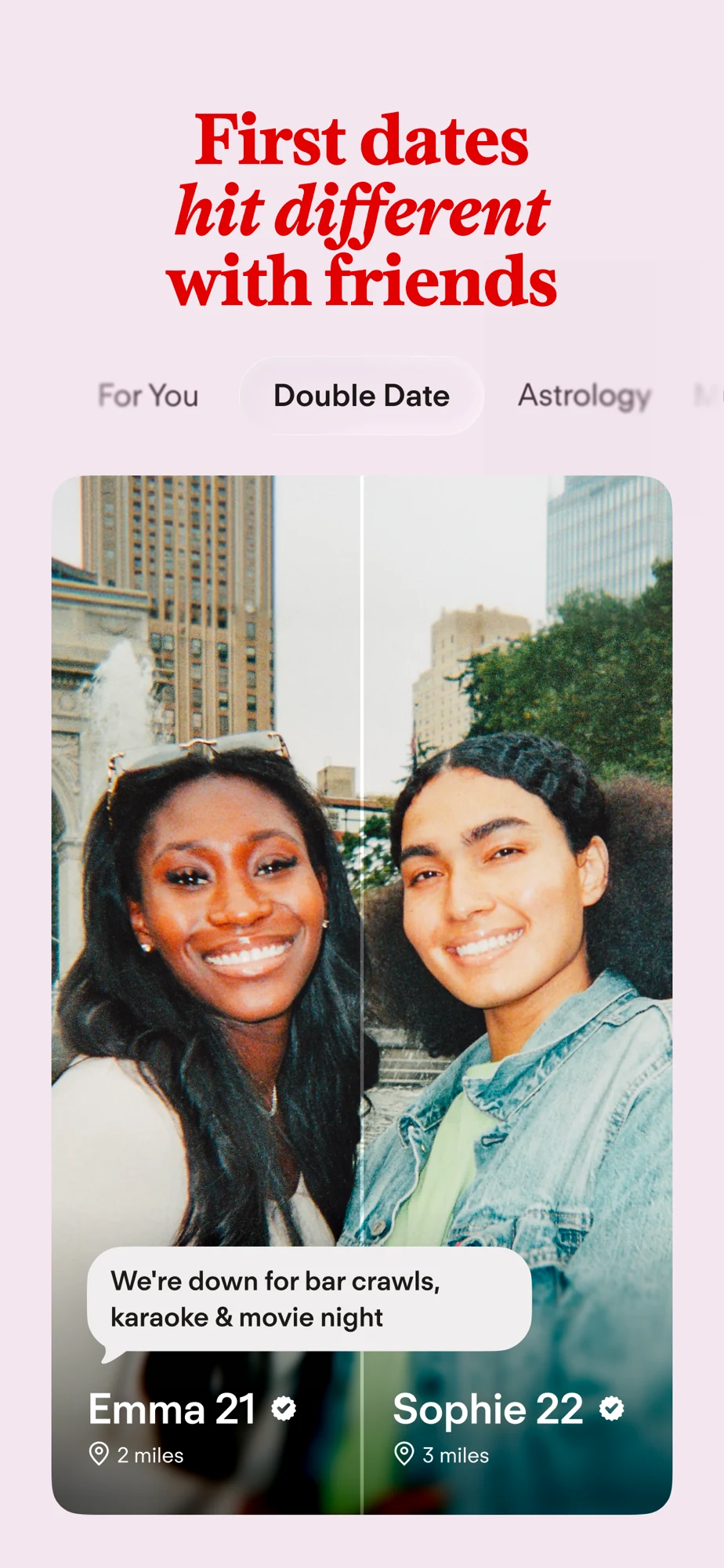
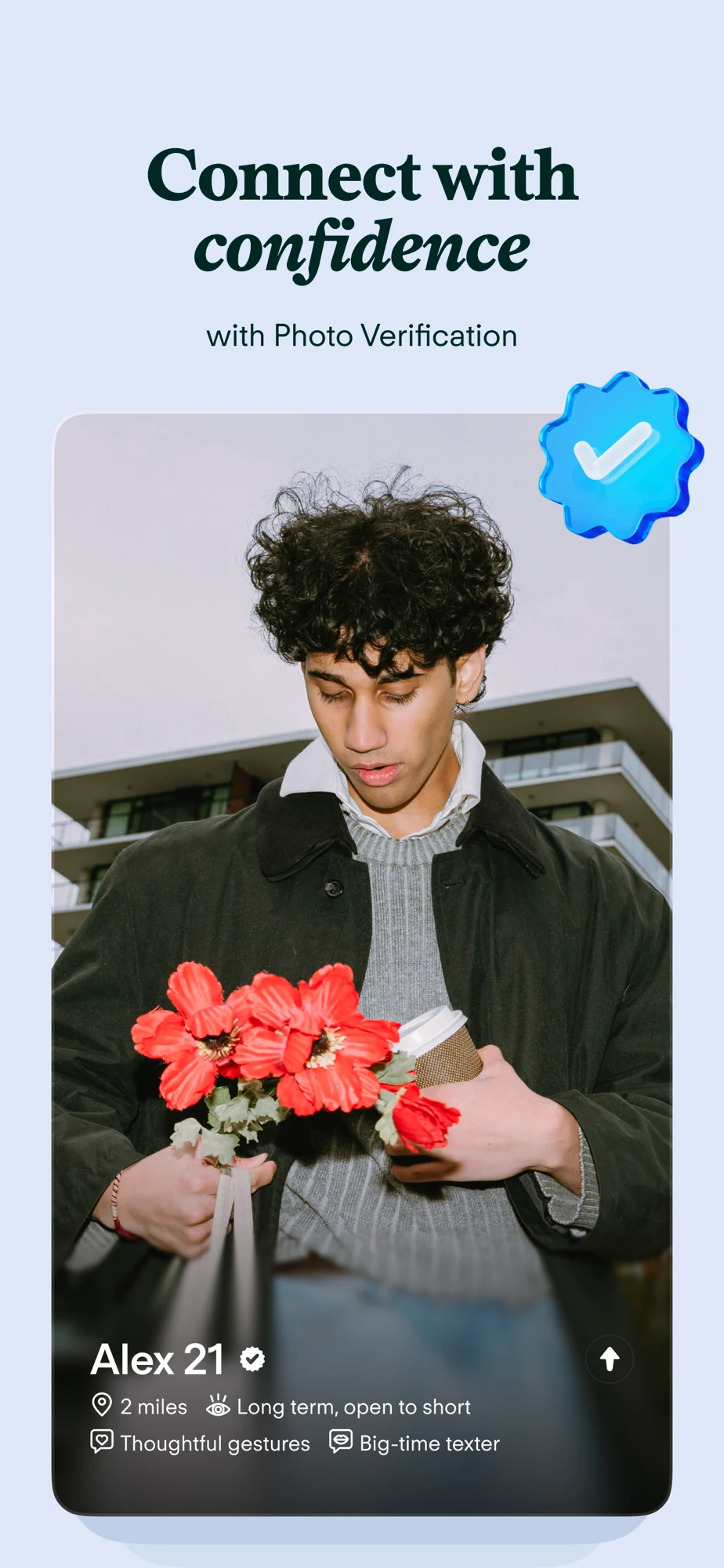
Panel 1 · A lifestyle opening presents a couple and a swipe-led positioning.Panel 2 · A collage pairs adult portraits with profile-prompt snippets.Panel 3 · A double-date profile introduces a shared discovery experience.Panel 4 · A profile and large badge highlight photo verification.
The opening communicates an aspiration before showing the product. Test a real prompt or discovery action earlier for people asking how it works. The verification frame needs the actual method and limits; a badge should not become a claim that every person or interaction is safe.
Bumble: Relationship stories alongside profiles and interests
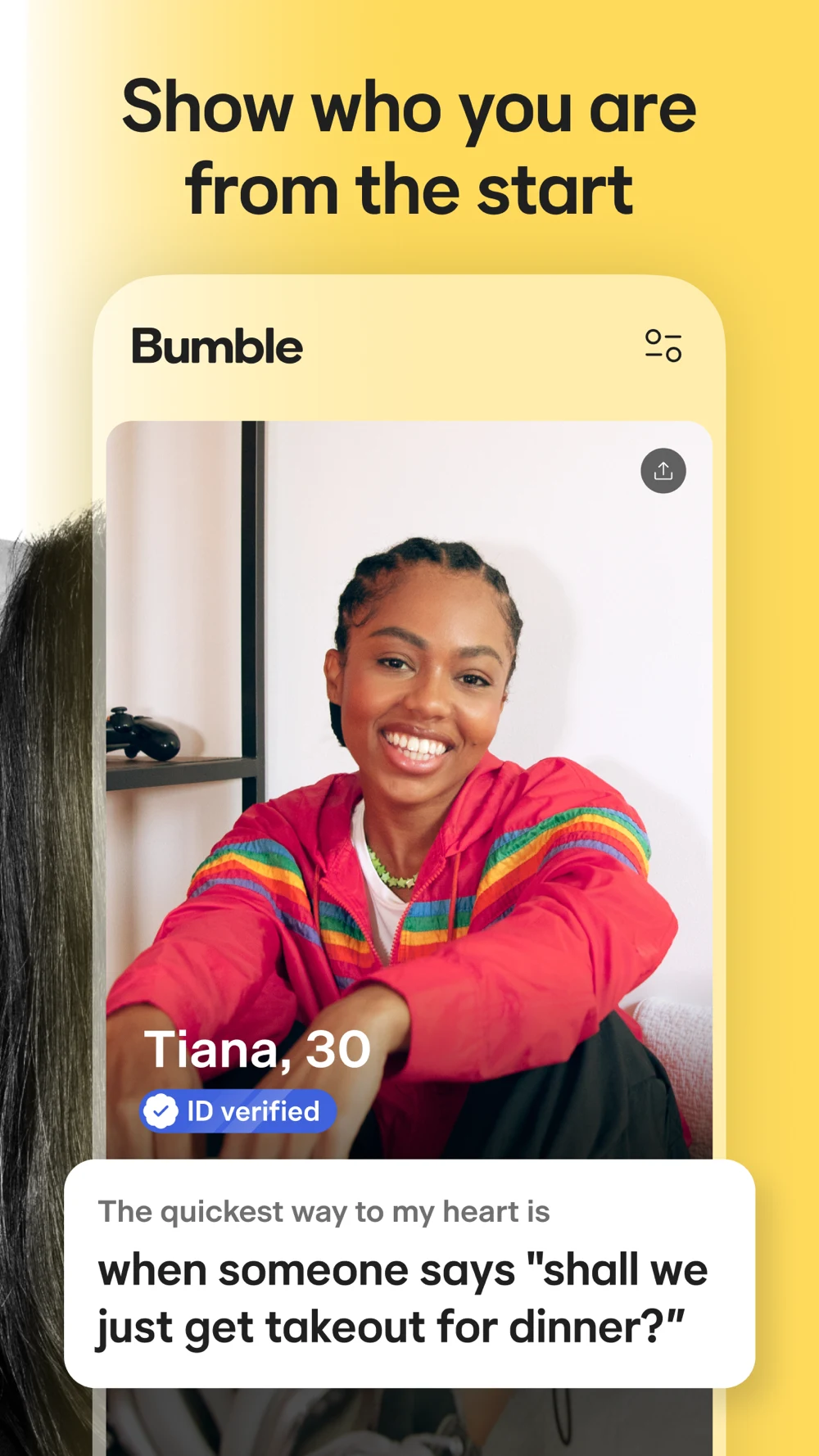
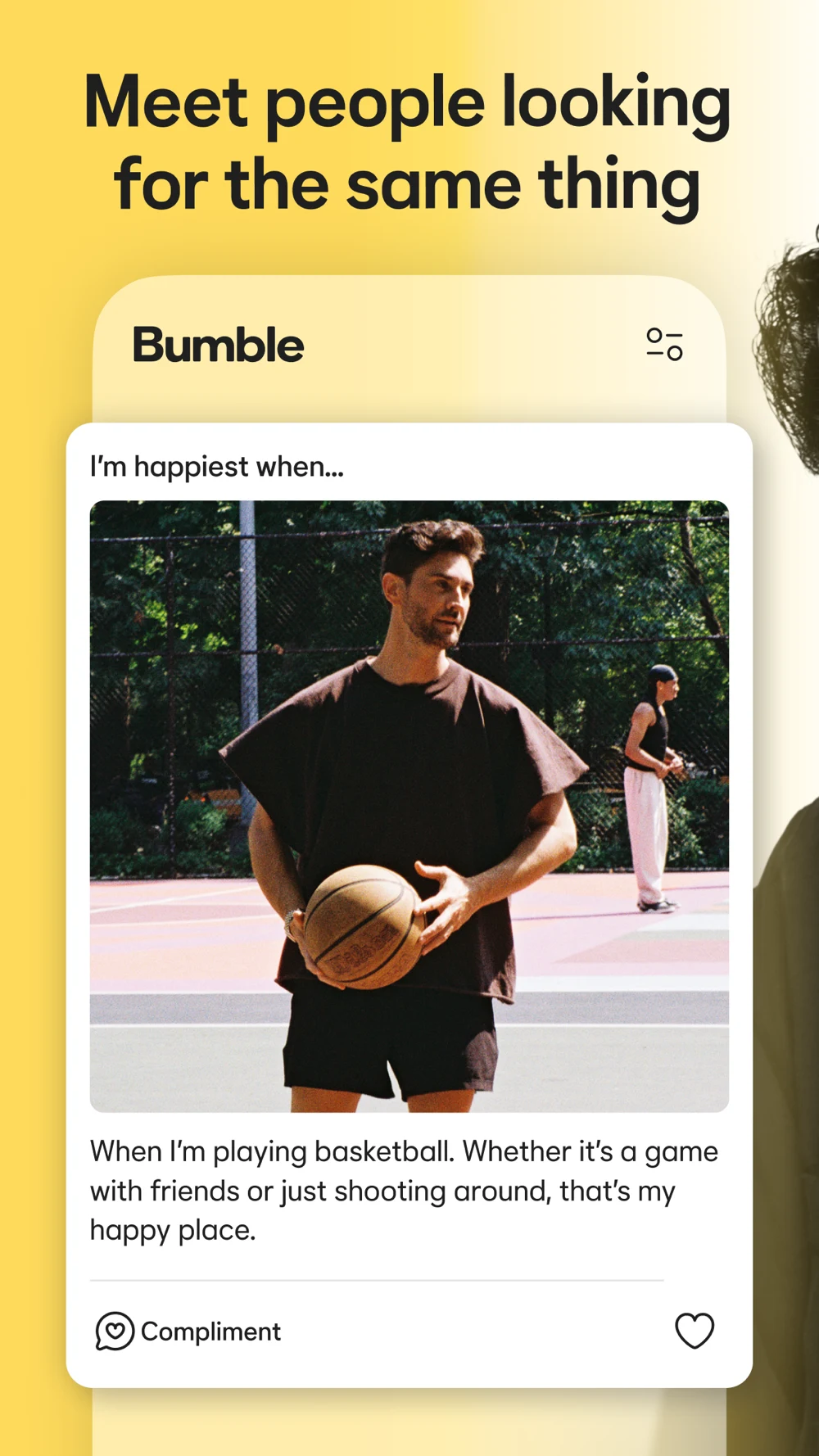
Panel 1 · A couple-led opening presents a relationship story.Panel 2 · A profile example combines a prompt with an ID-verification label.Panel 3 · A profile card illustrates interests and a compliment action.Panel 4 · A second relationship story uses a couple portrait and attributed quote.
The profile cards show more of the experience than the lifestyle frames. Test a prompt or control earlier for feature-led searches. A specific verification label is more informative than a generic shield, but its actual scope, eligibility and availability still need explanation.
Hinge: A relationship goal, intentions and voice prompts
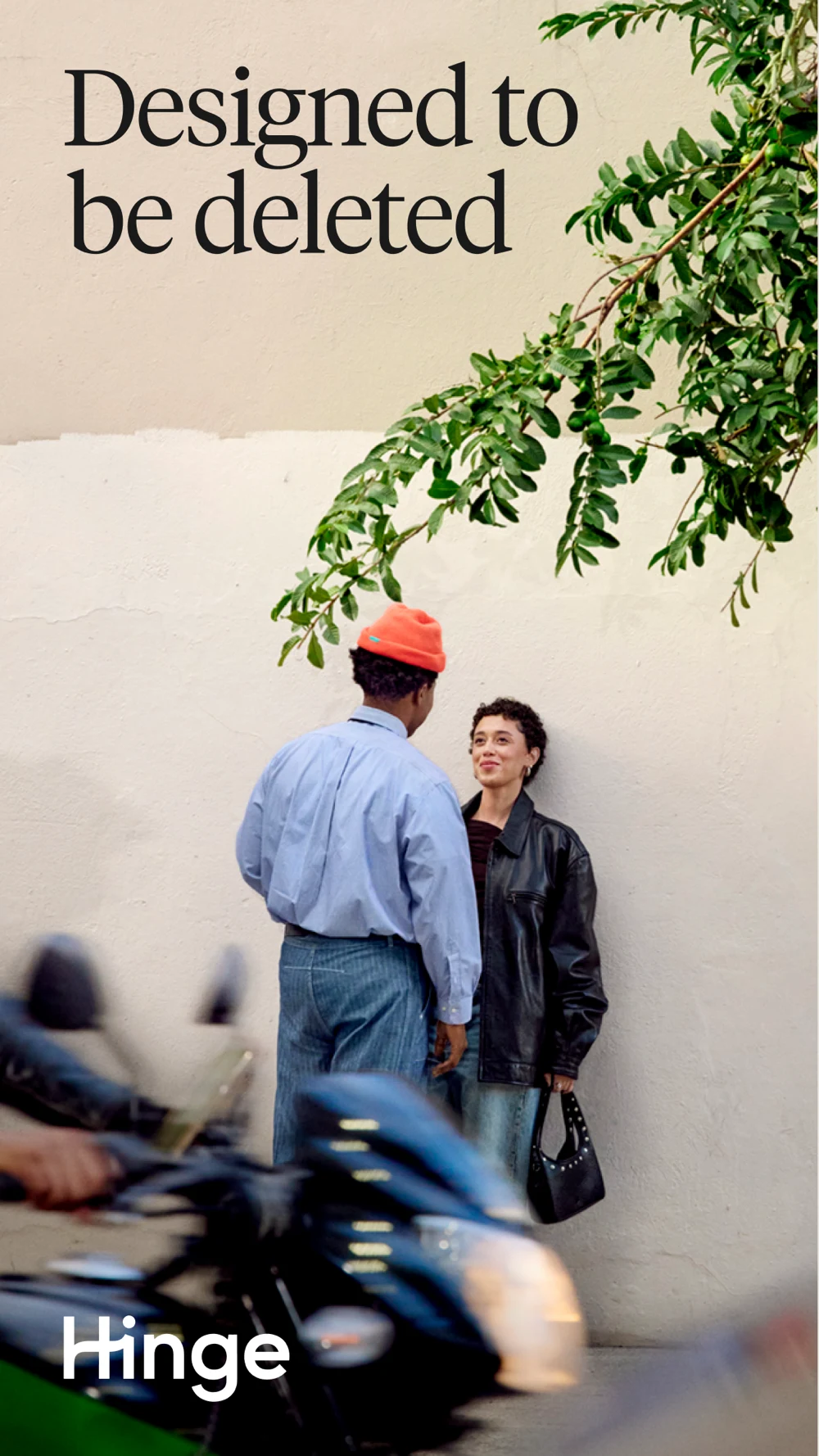
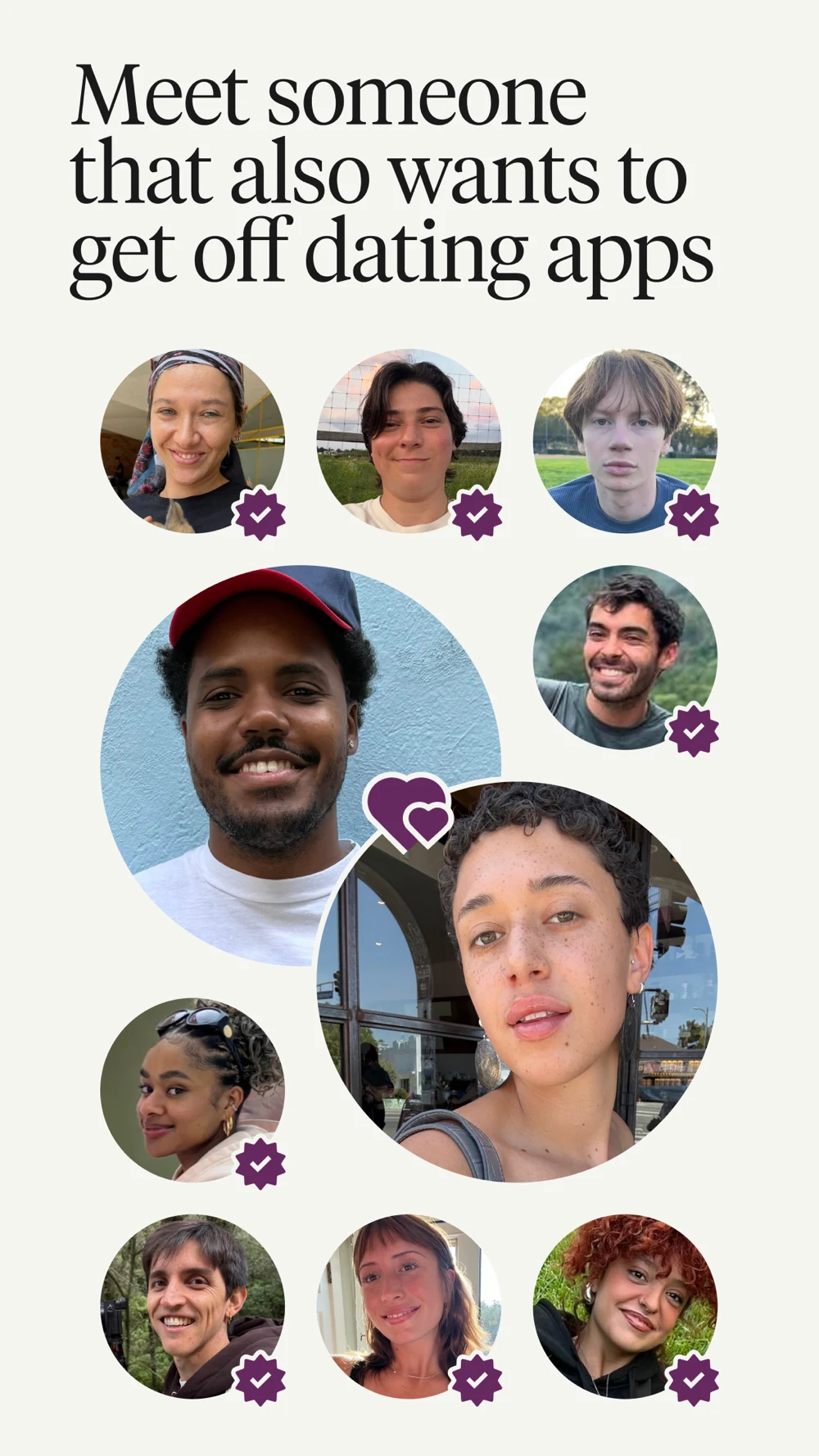
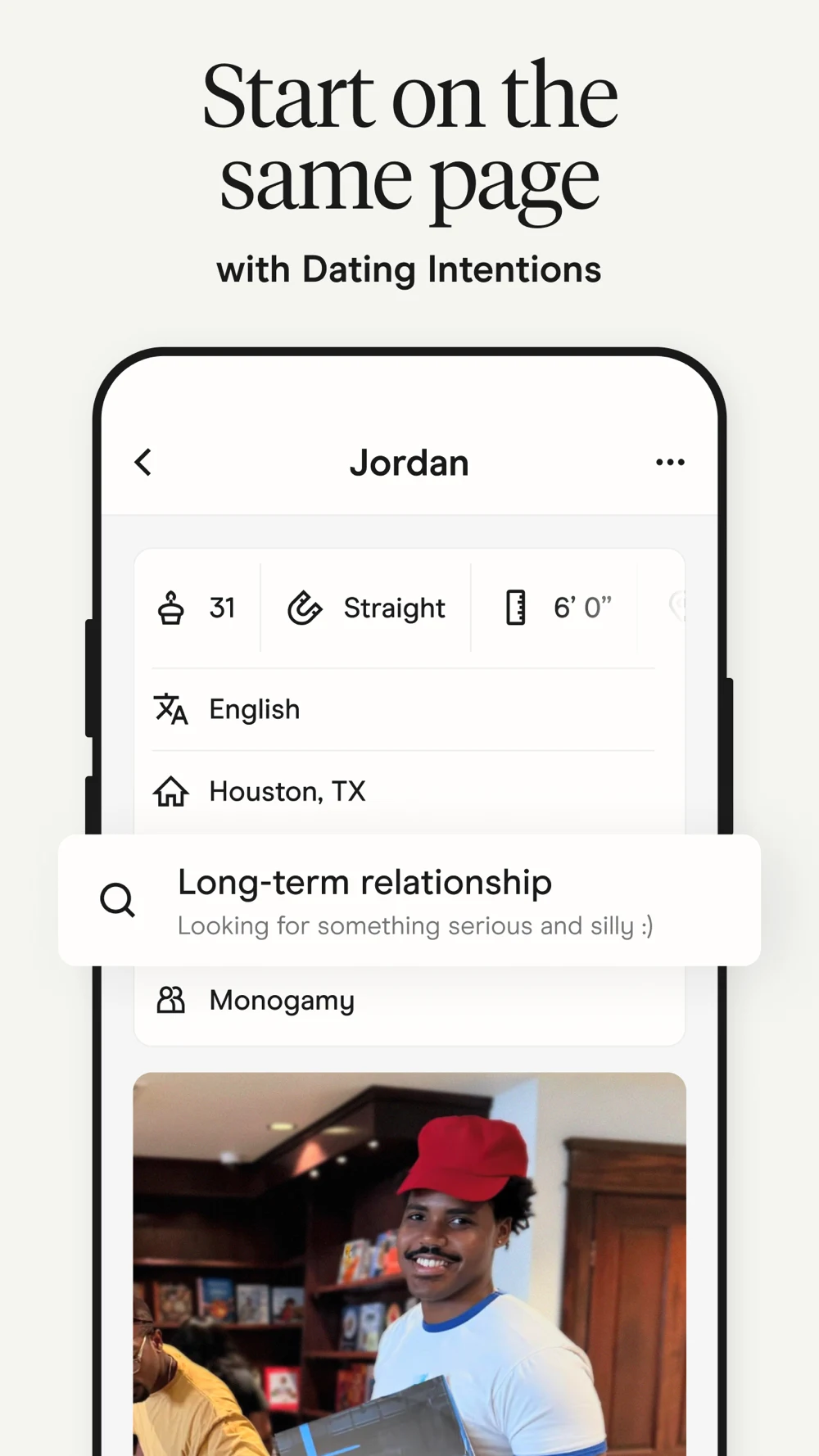
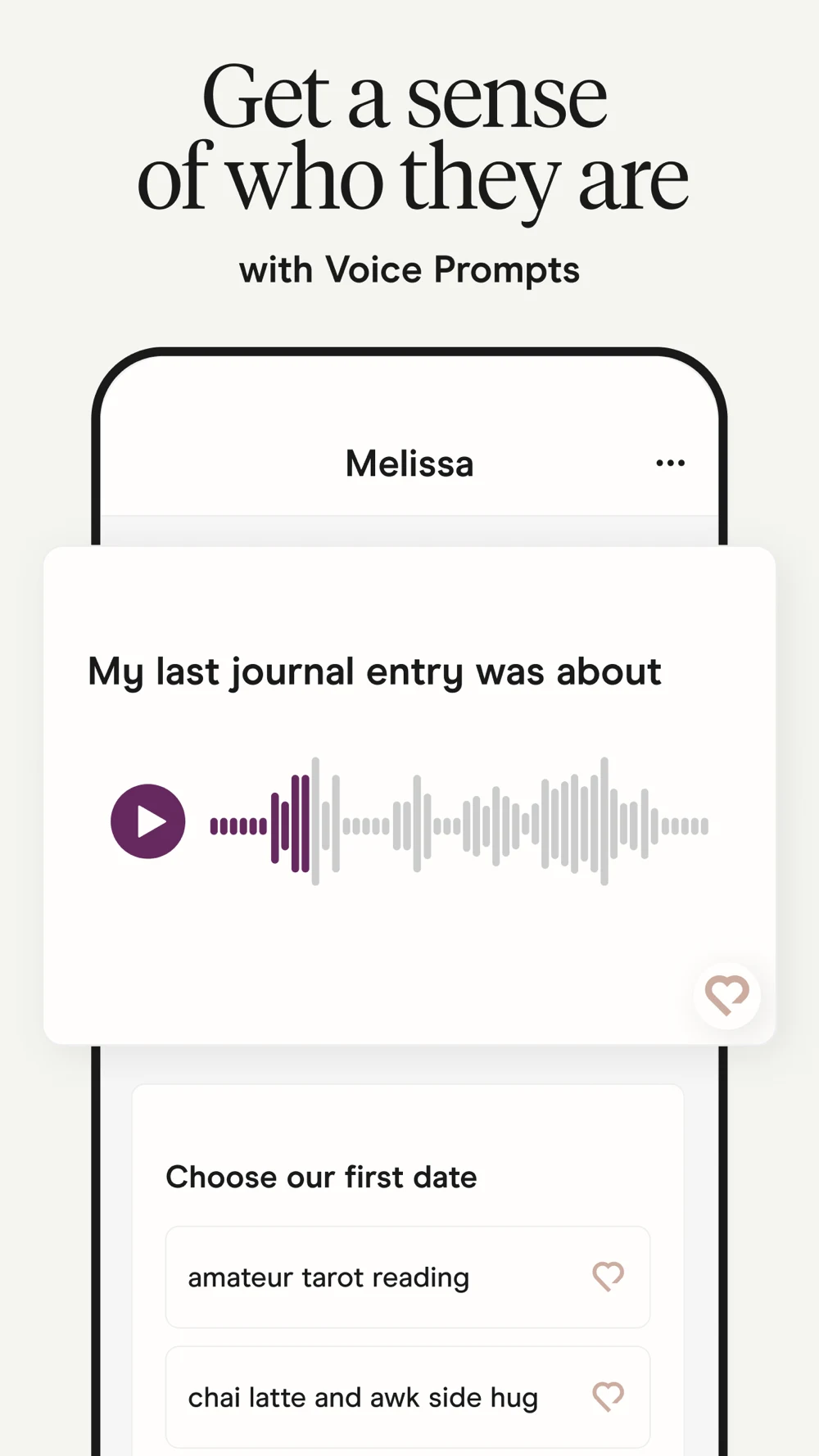
Panel 1 · A lifestyle opening presents the brand’s relationship-focused positioning.Panel 2 · A collage uses portraits and verification-style marks to suggest a community.Panel 3 · A profile highlights a long-term intention and relationship-type field.Panel 4 · A voice prompt and first-date options demonstrate profile expression.
The third and fourth frames make intention and voice features tangible. Test a readable profile action earlier while preserving the optional nature of profile fields and accessible alternatives to audio. The community collage does not establish member outcomes or that all profiles are verified.
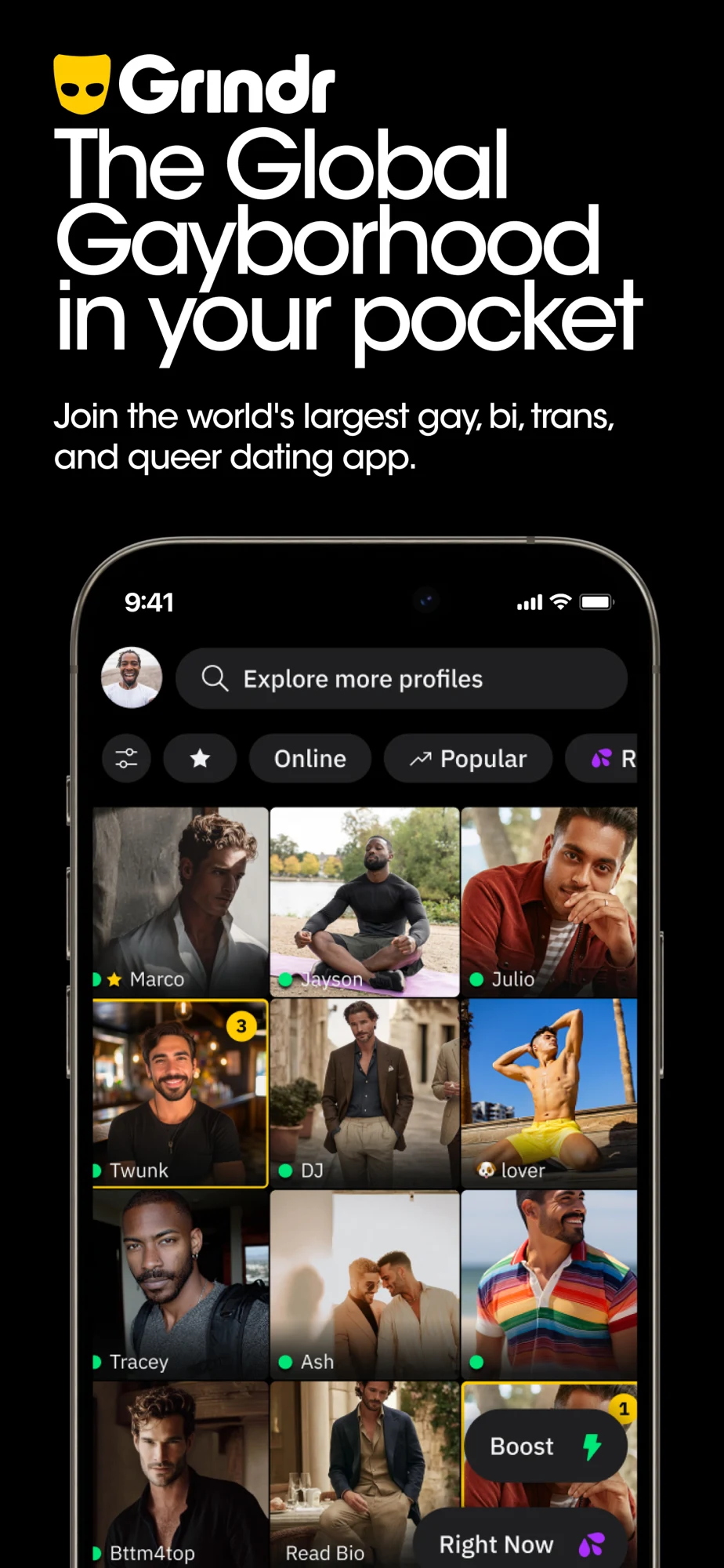
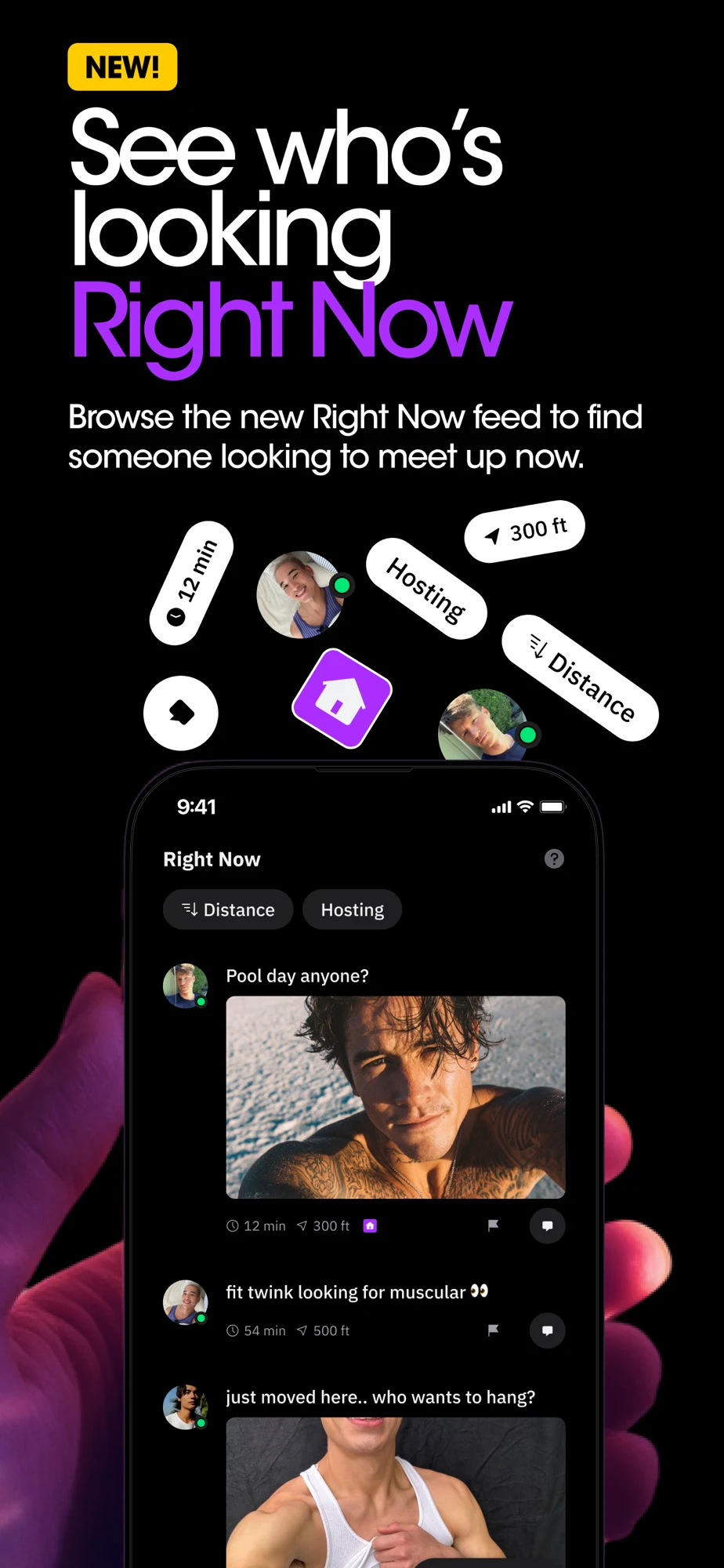
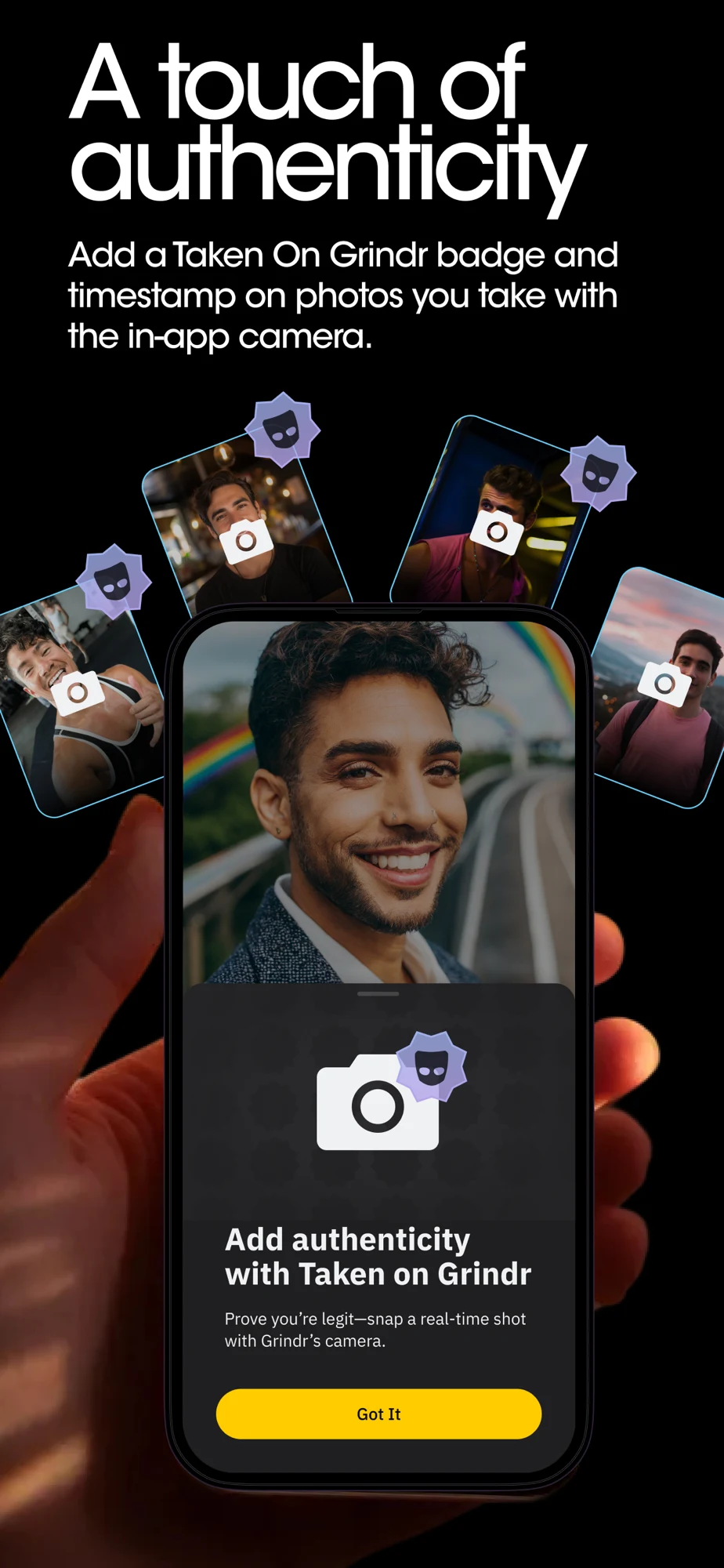
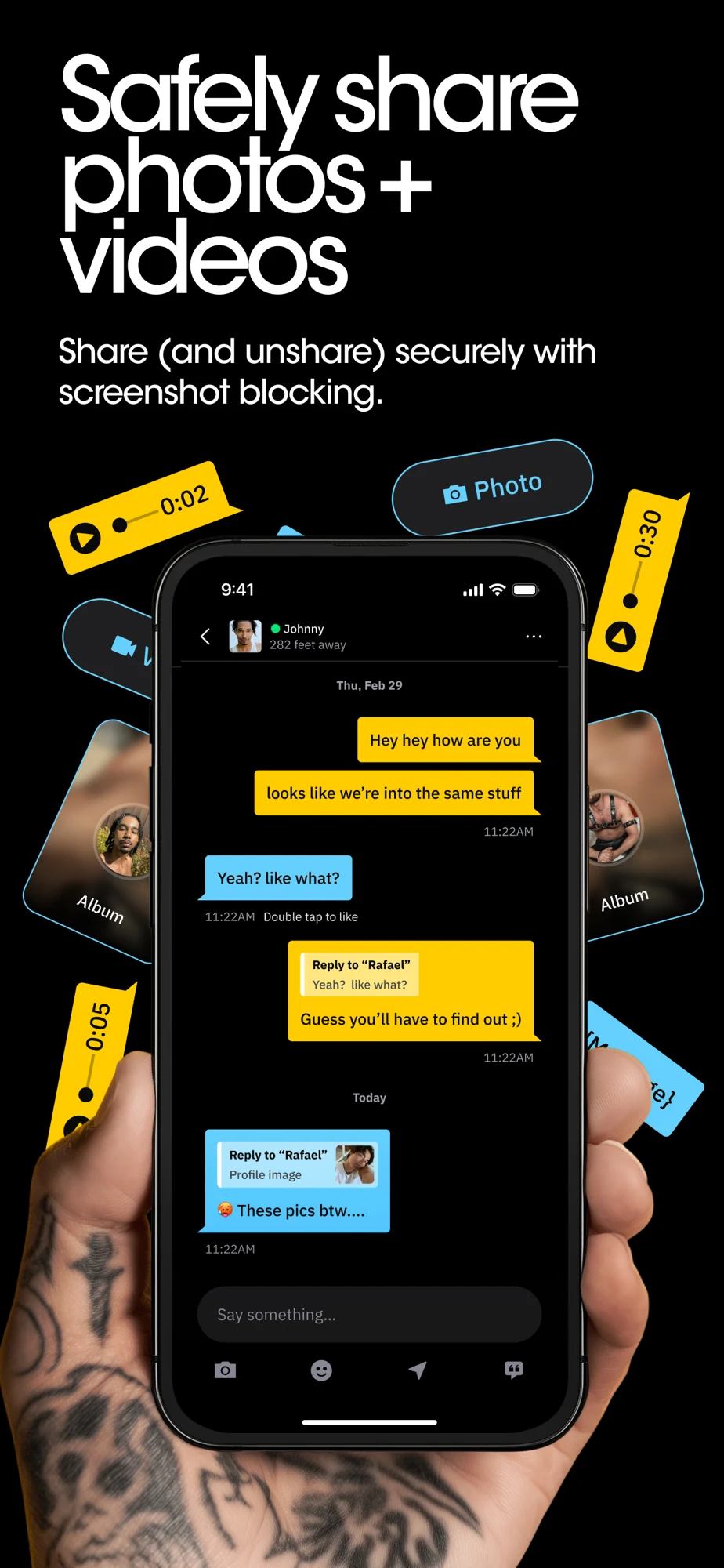
Grindr: Community, location-led discovery and sharing controls
Panel 1 · A profile grid introduces the app’s LGBTQ community and discovery model.Panel 2 · A feed illustrates people seeking to meet and uses distance and timing labels.Panel 3 · An in-app camera badge is presented as an authenticity feature.Panel 4 · A chat frame highlights photo and video sharing and unsharing.
The grid and location cues make the discovery mechanic concrete. Test clearer permission and visibility explanations alongside those cues, particularly for people who do not want precise location displayed. A camera timestamp or screenshot-blocking claim has specific technical limits and should not be treated as a guarantee of identity or privacy.
HER: Community positioning, identity expression and conversation
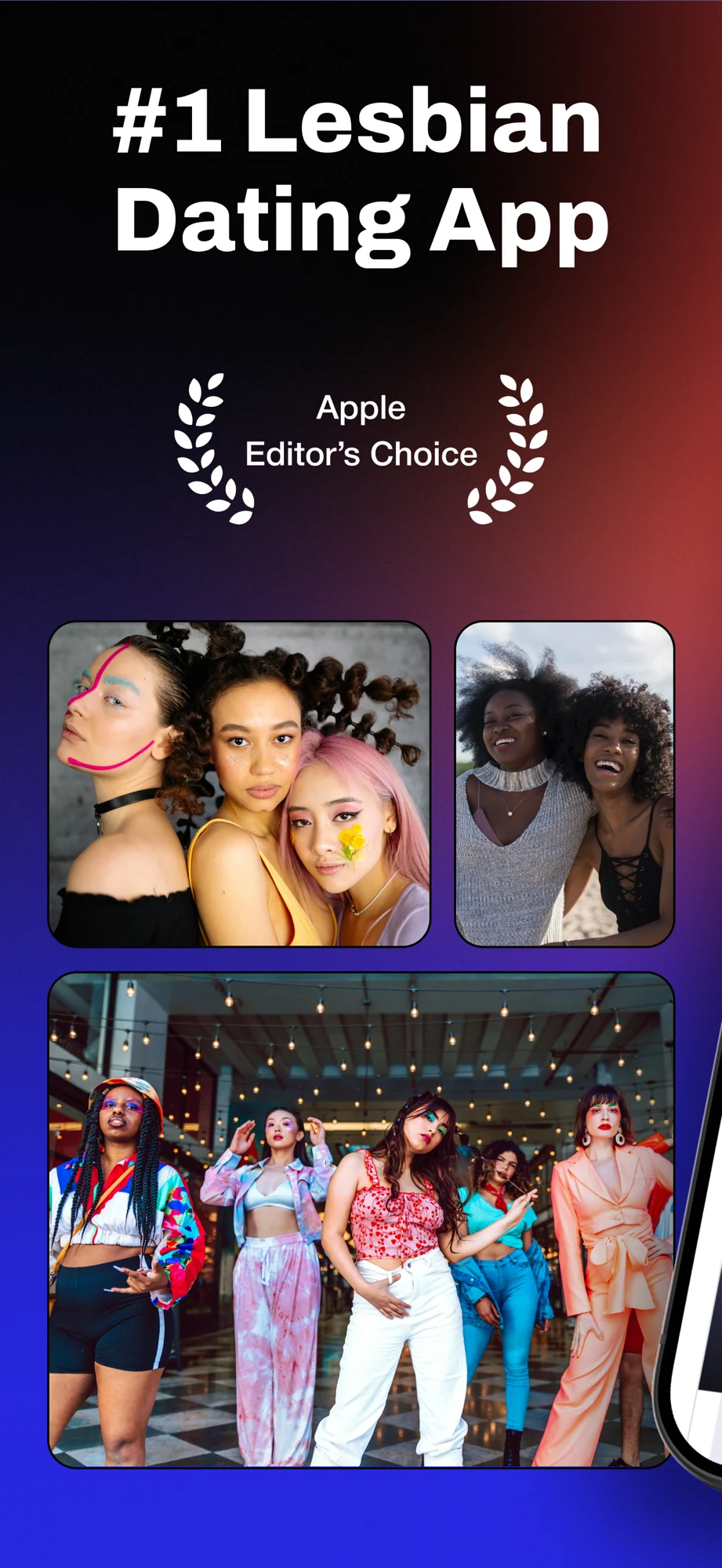
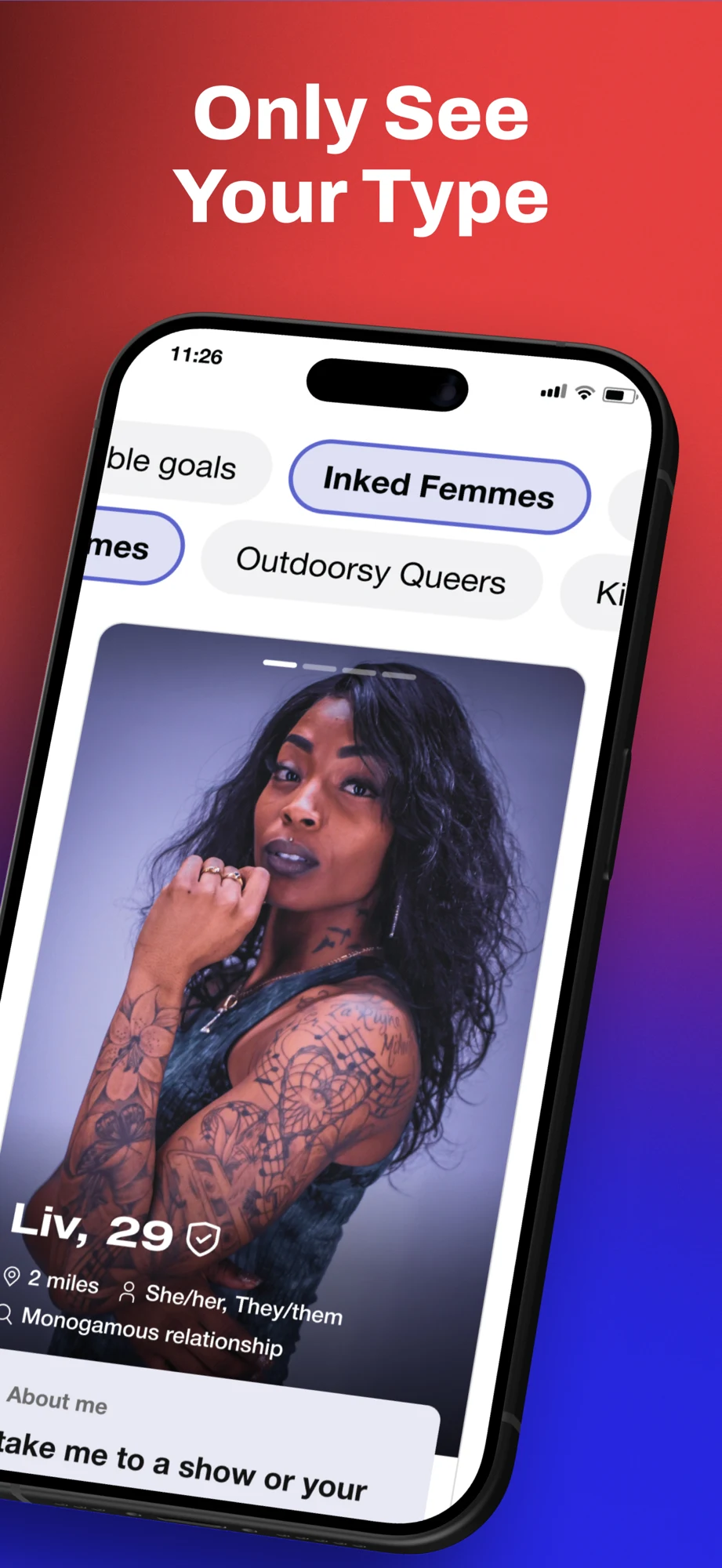
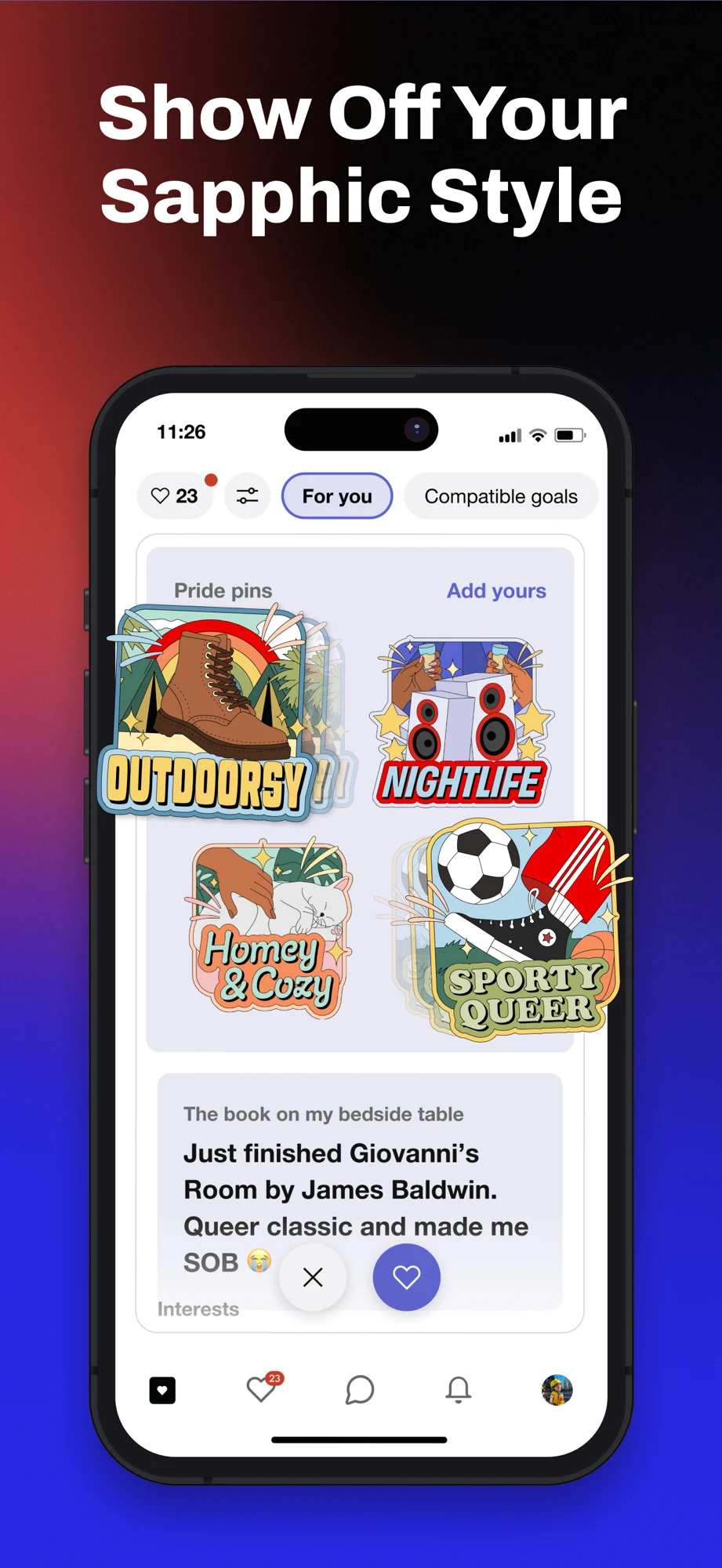
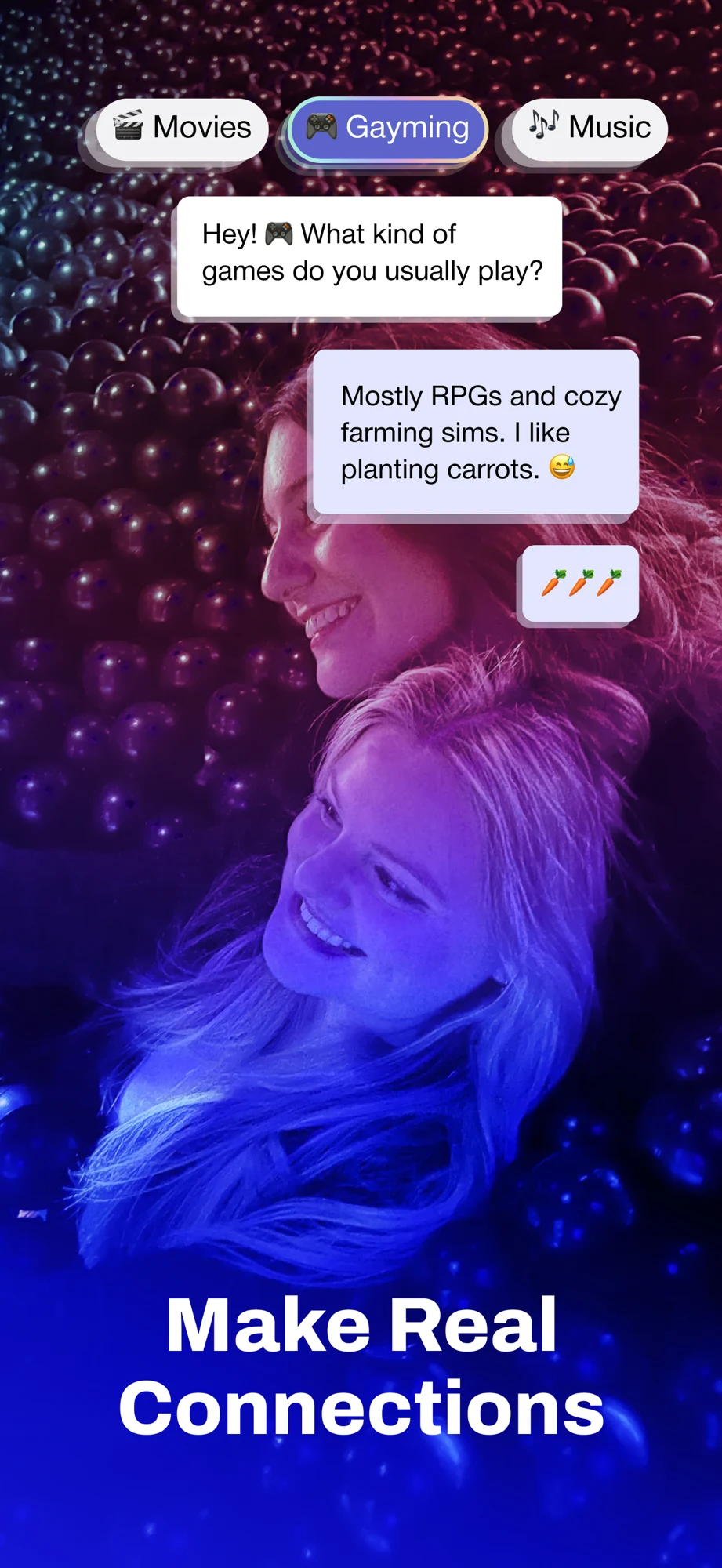
Panel 1 · An award and category-leading claim appear above community imagery.Panel 2 · A profile card combines an identity-related filter, pronouns and relationship information.Panel 3 · Pride-pin illustrations and a written profile prompt communicate interests.Panel 4 · A staged conversation and lifestyle image emphasize shared interests.
The profile and prompt panels demonstrate more than an award claim alone. Test a readable profile interaction earlier, with consented assets and actual identity controls. Do not repeat publisher ranking claims without independent substantiation, and do not assume one identity label or relationship style represents the whole community.
DiscoverPeople browse according to the actual rules.
ConnectA mutual action enables the stated interaction.
ControlVisibility, block and report remain available as implemented.
The diagram is an explanatory framework, not a universal dating-app flow. A product may allow different discovery or communication rules. Use its actual sequence and do not imply that a like produces a match, a conversation or a date. A fictional profile should be marked as fictional; real user photography or messages require appropriate consent and permissions.
Test an aspiration-led first frame against a product-led one only after confirming both accurately represent the community. Ask people what happens when they respond to a prompt and what they can do if they want to stop contact. Use screenshot copy and sequence planning to preserve the relevant context.
A safety feature should be shown as an action with a defined scope. “Report a concern” explains more than a generic safety badge, but the product must actually accept reports and have the described response process. Do not infer moderation quality or conversion effects from a public screenshot alone.
DATING APP ASO
Write copy that explains the experience instead of guaranteeing a result.
Hello Demo is a fictional adult dating product for this exercise. Assume it offers profiles, optional relationship intentions, prompts, mutual messaging and visibility controls in a supported market. It does not promise a match, a date, universal verification or a particular local community size. Confirm the actual features, age eligibility and plan before using this copy.
4. Let the title identify dating. Show how conversation begins.
TitleHello Demo: Dating
SupportProfiles, prompts & chat
FrameStart with a profile prompt
ProofAn actual prompt and response control
Swipe horizontally to compare all columns →
Illustrative metadata — validated character limits
Explore adult profiles, respond to prompts and manage your visibility.
70 / 80
The name identifies dating; the subtitle explains the experience. The keyword field adds relevant supported concepts rather than repeating the name or inserting competitor brands. These phrases are not measured demand. Use the keyword-field guide and verify the real community and feature scope before release.
A description that explains the first interaction
Illustrative opening: “Make a profile that sounds like you. Hello Demo lets adults share supported interests, answer prompts and choose what they want to say about their dating intentions.”
“Explore profiles and respond to a detail that catches your attention. When the product’s mutual-connection rules are met, continue the conversation using the available messaging tools.”
“Choose the visibility and communication controls available in your plan. Pause discovery, block contact or send a report through the actual product flow. Availability, features and pricing depend on the market and plan.”
This is teaching copy, not a substitute for exact messaging rules, paid features, privacy settings, community standards or support information. If a feature requires a subscription, show that boundary. Do not use fictional profile examples as evidence of real members or their consent.
Swipe horizontally to compare all columns →
A prompt-led sequence for the fictional product
Frame
Headline hypothesis
Evidence needed
Question it answers
Opening
Start with a profile prompt
Actual profile and response control
What can I do first?
Intent
Share what you are looking for
Real optional intentions and edit controls
Can I express my goal?
Discovery
Explore profiles at your pace
Actual discovery and preference settings
How are profiles shown?
Conversation
Respond to a detail
Real mutual-connection and chat rules
When can a conversation begin?
Controls
Choose what you share
Actual visibility, pause and block controls
What can I control?
Help
Report a concern
Real reporting and support flow
What happens if I need help?
Use calls to action that describe the real next step: “Create profile,” “Respond to a prompt,” “Review visibility” and “Report a concern.” A button that says “Meet your soulmate” implies an outcome no app can guarantee. “Verified people only” is inaccurate unless the product actually enforces that rule in the relevant experience.
A preview can show a fictional adult creating a profile, choosing an optional intention, reading another fictional prompt and reviewing privacy controls. Explain the mutual action before a conversation starts. Do not animate an invented conversation, match or relationship as if it is a typical outcome.
For a community-focused or location-led product, create a separate brief with actual representation, features and privacy settings. Do not merely change the people in a generic template. The short description, long description and first screenshots should agree on who the product serves and how it works.
DATING APP ASO
Avoid promises that outpace the product or the community.
These are issues to check in your own listing, not claims that every competitor makes them. A public creative choice can suggest a question to test; it cannot establish harm, moderation quality or conversion loss. Identify the frame, possible interpretation and evidence needed before changing anything.
5. Explain a control without claiming guaranteed safety.
VisibilityDescribe what other people can see.
BlockExplain the actual contact restriction.
ReportShow where a concern can be sent.
ResponseDescribe the real moderation process and limits.
Swipe horizontally to compare all columns →
Dating-app creative mistakes to investigate
Potential mistake
Why it matters
Practical correction
Promising a relationship or a match
Another person’s choices and interest cannot be guaranteed
Describe the supported discovery and conversation process
Using a generic safety badge
A badge does not explain the actual control or response
Show the real block, report or visibility flow
Calling all members verified
Verification may be optional or limited in scope
Explain what the actual method checks
Equating a photo check with complete identity assurance
Different checks establish different things
Name the method and its limitations
Showing a nearby community without evidence
Availability and density vary by location
Verify active markets and avoid invented local counts
Assuming identity determines dating goals
People within a community want different things
Offer and show actual optional intention choices
Using community imagery without real support
Representation alone cannot establish an inclusive experience
Demonstrate real identity options, moderation and help
Using real profiles or messages without permission
Private content and identity information are sensitive
Use consented assets or clearly fictional examples
Hiding location behavior
People may misunderstand what is collected or displayed
Explain actual permissions, precision and visibility
Making paid features appear free
Plan boundaries affect the experience
Name the included and paid feature scope
Showing only aspirational couples
The visitor may not understand the app’s mechanics
Show a real profile and interaction
Using audio without an accessible alternative
Some people cannot or do not want to use sound
Demonstrate actual captions or other supported alternatives
Optimizing only for more messages
High activity can include unwanted contact
Measure voluntary engagement and relevant safety indicators
Ask participants to describe what a report, block or pause control actually does. A report may notify a moderation team; it does not establish a particular response time unless the service can support that claim. A block may prevent contact within defined boundaries. Visibility controls and location permissions need their own precise explanations.
For verification, ask what the badge represents. A photo check, identity-document check and moderation review are different processes. Do not use “100% safe,” “all real people” or “guaranteed authentic” as a replacement for an honest explanation of the actual method. Use trust signals and readability to make the scope visible.
Log the hypothesis, source UI, audience and change in a metadata change log. Use test prioritization to isolate one meaningful variable. A creative test that changes community positioning, price, image and targeting at once cannot identify which change mattered.
DATING APP ASO
Match search intent to a supported and respectful experience.
Use Apple Ads research to match a search with a supported adult dating experience. Prompt-led discovery, relationship intentions and location controls can be different creative hypotheses. Design around contextual search intent and actual product features, not inferred sexual orientation, relationship status or private user attributes.
6. Measure a respectful experience, not just a match count.
SearchSupported dating intent or feature
PageMatching evidence and eligible market
ActivationA completed profile or meaningful voluntary action
QualityPrivacy-aware retention and safety signals
Swipe horizontally to compare all columns →
Apple Ads blueprint — hypothetical planning, no campaign or spend created
Campaign role
Research input
Starting structure
Matching evidence
Own brand
Verified product name
Separate brand reporting
Official identity and appropriate returning-user route
Category: prompts
dating app with profile prompts; dating conversation starters
Focused exact group; Search Match off
Real profile prompt and response action
Category: intentions
dating with intentions; relationship dating app
Separate only if supported
Actual optional intention choices
Category: privacy
dating app profile visibility; dating app pause profile
Separate supported-control hypothesis
Actual visibility and pause behavior
Category: location
local dating app; dating location preferences
Restrict to actual supported markets
Real location permission and visibility settings
Competitor exploration
Relevant verified competitor brands
Separate bounded reporting
Your own product and identity, with no implied affiliation
Discovery
Supported seed terms and non-sensitive feature language
Separate broad match and Search Match exploration
Accurate general page and frequent term review
The fictional Hello Demo product can start with prompt-led discovery if that feature exists. A custom page for relationship intentions should show the actual optional field, not promise that every person wants a long-term relationship. Apple’s campaign-structure guidance supports separating brand, category, competitor and discovery purposes; product and market gates add discipline.
Exact match can include close variants, reordered words and translations. Broad match can extend to related searches. Inspect actual matched terms rather than assuming the keyword label is the entire user intent. Keep Search Match off in focused exact groups when the purpose is to isolate a hypothesis. Review Apple’s current match-type documentation.
Use custom product pages only to highlight supported features and eligible adult markets. A community-specific page needs genuine service and approved representation, not invented profiles or a claim that a group is available in a particular city. Review applicable advertising, privacy and store rules for the actual campaign before launch.
Work a search-term example
Suppose discovery matches “dating profile prompts,” “find friends app” and “anonymous random chat.” These are illustrative examples, not real account data. If Hello Demo supports prompts, inspect the result set and product flow before testing a focused exact group. A friendship-only app query may not fit a dating-only service. Anonymous random chat is not a substitute for a supported dating feature and requires careful policy review.
Apply appropriate negatives for irrelevant searches without excluding the broad word “dating” because one query was unsuitable. Apple’s negative-keyword guidance distinguishes exact and broad exclusions. Document the reason and examine what a broad negative would remove. Route useful terms into a controlled group only when feature fit and measurement are clear.
Feed real search language back into ASO: do people expect a prompt, a pause control or a location setting? Does a query suggest a different product entirely? A paid search term is a question to investigate, not permission to imply a community or feature that does not exist. Use keyword gap analysis to record evidence.
Define activation and quality before deciding on spend
A useful funnel may be eligible new install → voluntary account creation → profile completion → meaningful discovery action → a mutually permitted conversation → retained use. Define events with the product team and separate returning members. A match, message or date is not inherently a successful or safe outcome; include appropriate aggregated indicators such as unwanted-contact reports, blocking friction and support access without exposing individual sensitive data.
Set a ceiling from actual subscription or other contribution economics, expected retention, support and moderation costs, refunds and uncertainty. Do not assume all installs become paying customers or use match counts as revenue. Community balance and local availability can affect the experience, but do not fabricate demographic shares or use sensitive personal data to define a bid.
Illustrative arithmetic: if a business independently approves $20 per qualified activated account and 25% of new installs reach that milestone, the implied install ceiling is $5. If 30% of taps produce those installs, the implied tap ceiling is $1.50. These invented inputs explain multiplication only; they are not benchmarks, recommended bids or permission to spend.
Swipe horizontally to compare all columns →
A bounded hypothetical dating-app pilot
Pilot decision
Rule to agree first
Reason
Scope
One supported adult market and feature intent
Avoids promising unavailable local experiences
Budget
Approved cap and stop conditions
Keeps exploration bounded
Activation
Defined voluntary account and profile milestone
Separates relevant use from generic installs
Quality
Expectation fit, retained use and appropriate aggregated safety signals
Cheap traffic can still produce a poor experience
Privacy
No personal conversations or sensitive identity data in marketing exports
Protects people while evaluating the aggregate funnel
Confounders
Record plan changes, season, market availability and creative updates
The audience and experience can change independently
Decision
Expand, revise, stop or retain an inconclusive result
Prevents small differences from becoming false certainty
Attribution and privacy limits may prevent connecting each search term to an individual later interaction. Use authorized aggregate reporting and state what is observable. Align denominators with conversion definitions, separate search and browse, and define ASO KPIs with the product team.
A paid creative result does not establish an organic ranking effect or a relationship outcome. Test metadata and screenshots in their own contexts. The useful connection between ASO and acquisition is shared evidence about supported features, honest expectations and customer experience.
DATING APP ASO
Watch how dating apps explain connection and control.
These are patterns in the dated eight-app US iOS sample, not a market-share study or evidence of better conversion. They suggest questions for further research.
Swipe horizontally to compare all columns →
Creative patterns in primary evidence — reviewed 27 October 2026
Pattern in reviewed material
What to investigate
What remains unknown
Aspirational couples compete with interface screenshots
Does an early product action explain the experience better?
Performance for a particular audience
Prompts and interests appear as conversation aids
Can visitors understand what happens after a response?
Actual conversation quality or retention
Dating intentions appear directly on profiles
Can people express, edit or omit their goals?
How each audience interprets the options
Verification and authenticity badges are prominent
Does the visitor understand what the specific method checks?
Effectiveness or safety outcomes
Community and identity features appear alongside broad discovery
Do the actual product and moderation support the represented group?
Community experience across markets
Location and media-sharing controls support different discovery models
Can people understand what is visible and how to stop contact?
Privacy outcomes or local member density
The source listings and original panels show the positioning behind these observations. Publisher ranking, member-count and safety claims are not independently validated here. A small cross-section cannot establish a market trend or the behavior of any demographic group.
Maintain a claim register with feature, market, plan, source, consent status, owner and review trigger. Changes to location defaults, verification, moderation, available markets or a subscription should trigger a creative review. Recheck community terminology with people who actually understand the local context.
If a team wants a trend chart, collect a consistent time series with a defined sample and method. Until then, use explanatory diagrams instead of invented figures for matches, safety or conversion.
DATING APP ASO
Use AI to explain a feature without fabricating a community.
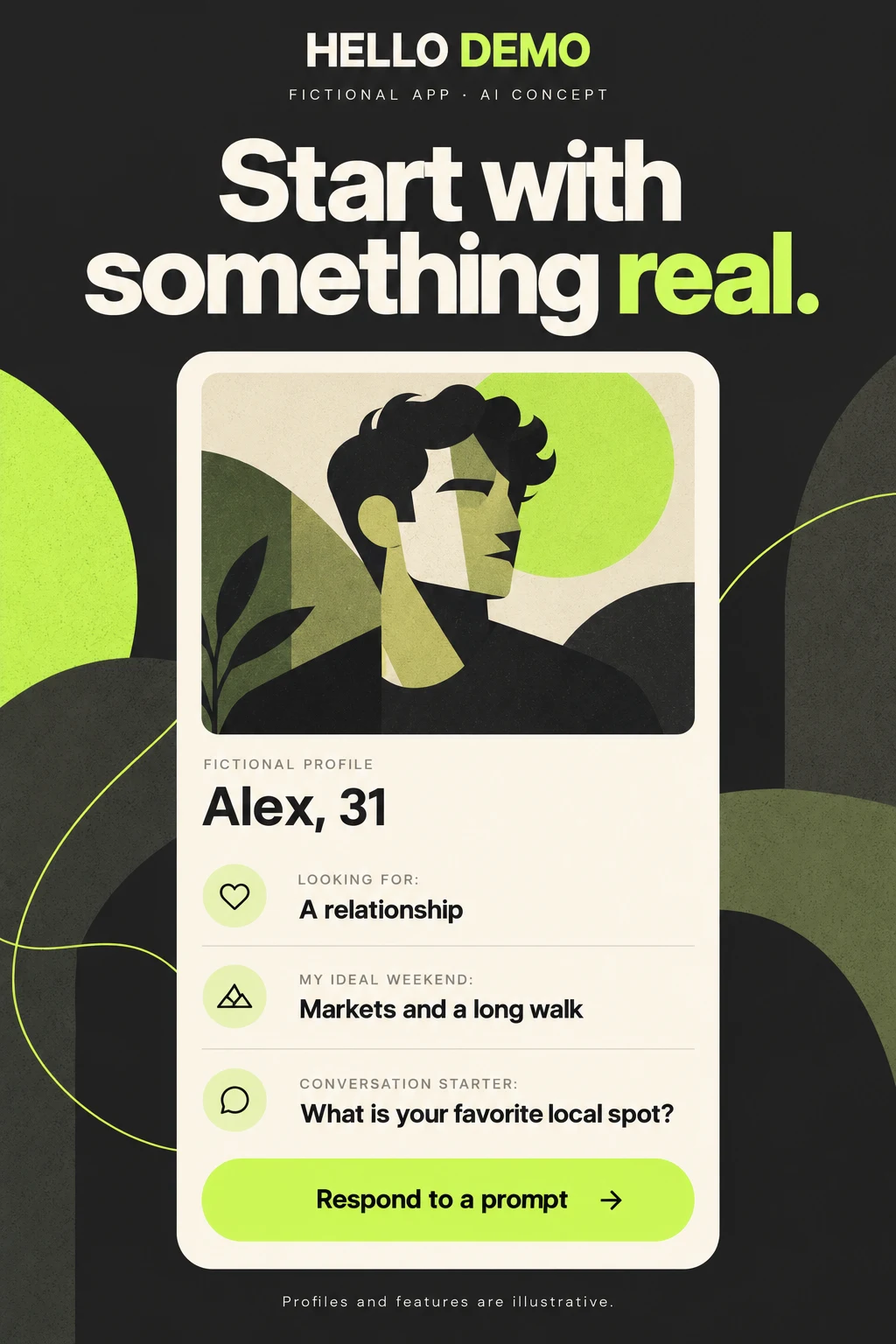
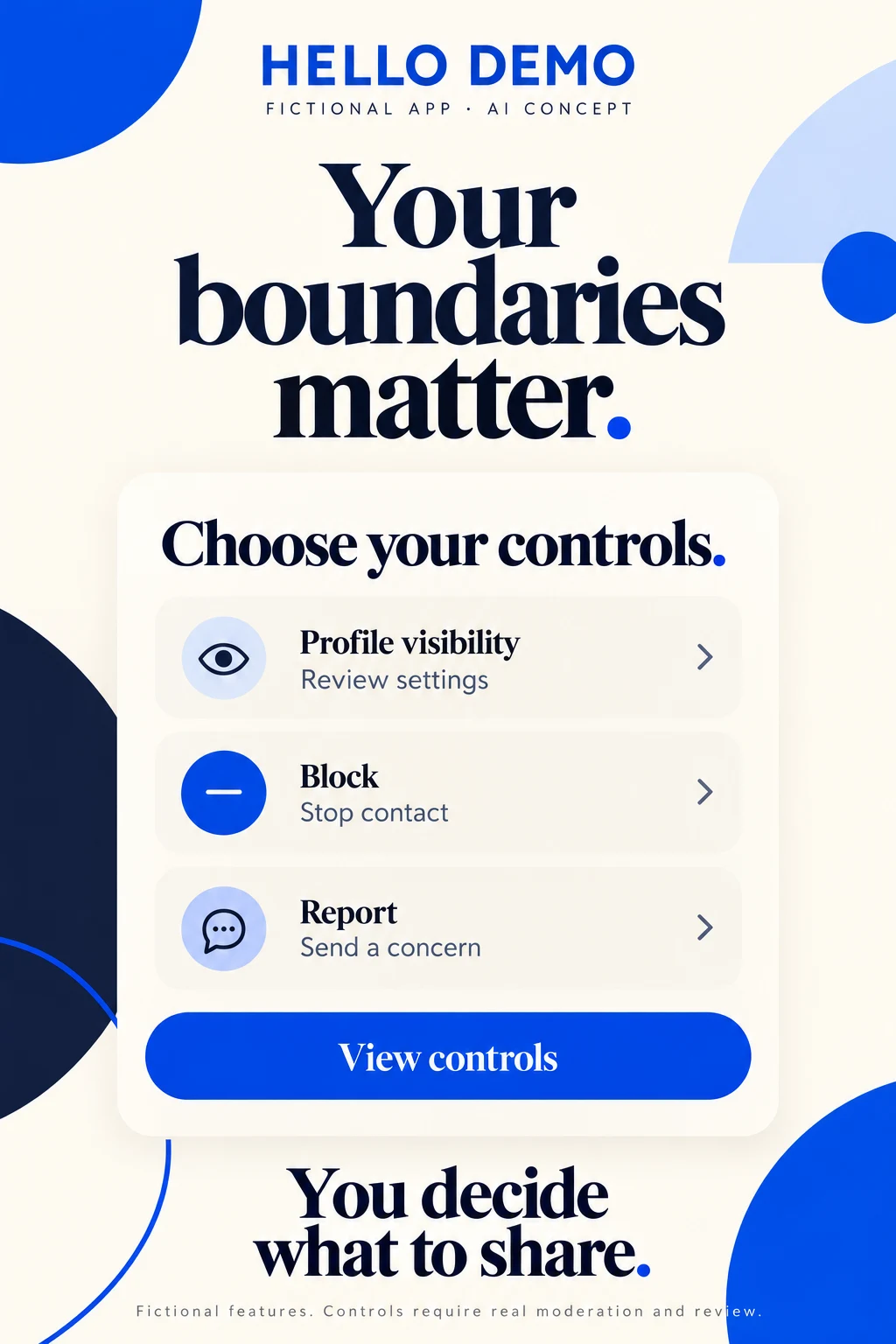
These two Hello Demo images are original fictional AI teaching concepts for an adult dating app. One shows a profile prompt; the other presents hypothetical visibility, block and report controls. They are not real member profiles, live app screens or evidence that a safety process works.
AI CONCEPT · A fictional profile shows how to begin · Open full size.AI CONCEPT · Explain visibility, block and report as controls · Open full size.
7. Use fictional creative without inventing a community.
SupplyApproved UI and consented or fictional assets
ConstrainNo fake testimonials, outcomes or safety claims
InspectCheck identity, controls and exact wording
RebuildUse real product evidence before testing
Swipe horizontally to compare all columns →
AI critique — product evidence and community care still matter
Concept
What works
What needs verification before production
Test question
Profile prompt
A clearly fictional adult profile gives a specific first action
Use actual profile and consented or fictional imagery; verify mutual-connection rules and optional fields
How does a response become a conversation?
Controls
Visibility, block and report are presented as actions rather than a safety guarantee
Verify actual settings, blocking scope, moderation response and plan availability; improve small footer contrast
What can the person control and what happens after a report?
The profile is intentionally illustrated and labelled fictional. Its single adult example cannot represent a community’s demographics or the actual local dating pool. A real campaign needs approved, representative assets and permission from anyone depicted. Do not use private profiles or conversations as prompt material.
The controls image is clear but its “stop contact” wording still needs verification against the real blocking behavior; it may not describe every channel or existing interaction. “You decide what to share” also needs to match the actual default visibility and data practices. The concepts use different visual treatments, so a production set should unify the approved identity and check the small-text contrast.
Give AI a specific, respectful task
“Using approved dating-app UI and fictional adult profiles, propose three readable screenshots showing an optional profile prompt and the actual response action. Do not invent matches, testimonials, community size, local availability or relationship outcomes. Preserve the real mutual-connection rule and flag missing details.”
For a controls frame: “Use the approved visibility, block and report screens. Describe each control’s real scope and show the next supported action. Do not promise complete safety, universal verification or a particular moderation response time. Use fictional examples and no personal conversations or precise locations.”
The production sequence is hypothesis → approved inputs → generated options → line-by-line review → real-UI rebuild → accessibility, community and privacy review → comprehension research → focused store test. The creative-brief guide helps keep source evidence and proposals separate.
Make the promise match the experience people can actually use.
8. Localize the language, community and controls.
MarketActual availability and adult eligibility
CommunityRespectful locally reviewed terms
PrivacyLocation and visibility defaults
ReviewTest the full localized experience
Swipe horizontally to compare all columns →
Dating-app ASO release checklist
Release check
Dating-specific detail
Evidence to retain
Adult eligibility
Age restrictions, supported markets and onboarding are accurate
Current platform policy and product eligibility review
Experience
Intentions, discovery and mutual communication rules match the product
Approved capability and journey map
Community
Identity options and community features are genuinely supported
Product evidence and appropriate community review
Representation
People and messages are fictional or used with permission
Consent and asset-source record
Location
Permission, displayed distance and visibility defaults are accurate
Current product and privacy definitions
Controls
Block, report, pause and support behavior match the UI
Approved moderation and support flow
Verification
Badge method and limitations are clear
Current verification specification
Plan access
Free and paid feature boundaries are correct
Current plan and market matrix
Localization and accessibility
Language, controls and alternatives work throughout the journey
Native-language, community and accessibility review
Measurement
Aggregate activation and quality metrics avoid sensitive data exposure
Event definitions, privacy review and cohort windows
Localize the community and product experience, not just the words. Identity terminology, dating norms, privacy expectations and legal context can vary. A translated store page does not prove that moderation, reporting or support works in the promised language. Use local keyword research, market prioritization, screenshot adaptation and localization QA.
Inspect the exported sequence at actual store size. Confirm that fictional labels are visible, that optional identity and intention fields are not presented as mandatory unless they are, and that a badge’s explanation stays with the relevant claim. Check location information and reporting flows with the people responsible for privacy and moderation.
After release, compare equivalent markets, plan tiers, traffic sources and mature cohorts. Record product, policy and community changes that can affect interpretation. A small result may remain inconclusive. Better understanding of a control is valuable research evidence, but it does not establish a guaranteed safety or relationship outcome.
Start with one supported experience: map the audience and mechanics, audit the first three screenshots and define one test. An ASO audit can connect the evidence; ASO services can coordinate research, copy, creative and measurement.
Scope: eight public US iOS listings, five original screenshot sets and current official Apple and Google Play sources. No Android competitor audit, private account testing, measured keyword demand or competitor conversion results. Audiences, keywords and fictional concepts are hypotheses. This is app-marketing guidance, not a safety certification or legal review.
INTEREST-BASED DATING ASO
Show what people have in common.
Explore niche keywords, real screenshots and practical ASO strategies for interest-led dating apps.