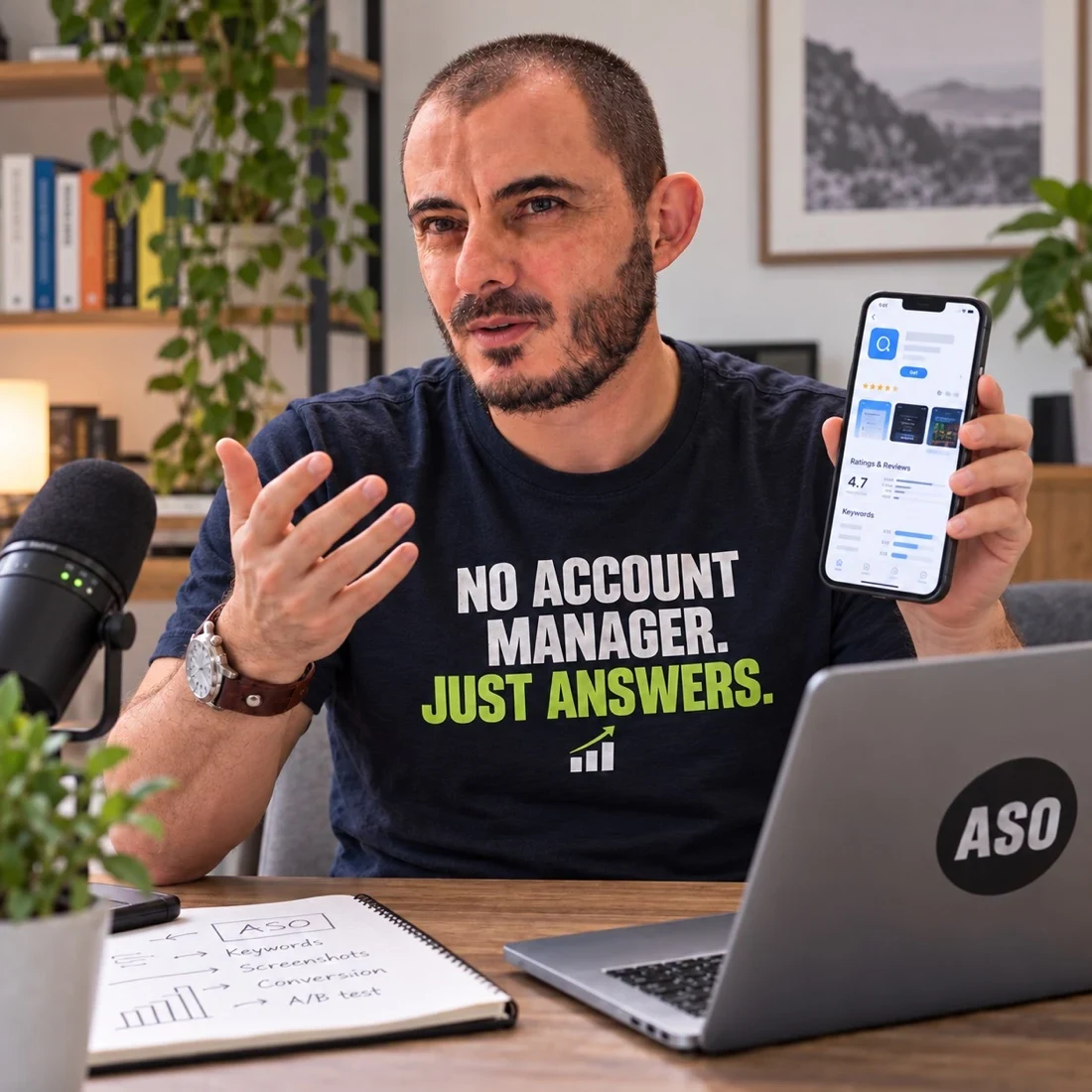
Define what managed actually includes.
The word managed can cover very different arrangements. Ask which tasks are planned, executed, reviewed and reported by the provider. Identify what still requires your team’s design, product or publishing input.
A freelance engagement can also include coordination, and a managed package can still exclude implementation. Compare the written scope rather than inferring coverage from the name.
Check handoffs between specialists.
If several people contribute, identify who briefs each task and reconciles their outputs. Keyword recommendations and screenshot messages should support the same product promise rather than arriving as unrelated files.
Use proposal evaluation to inspect the handoff. Clarify whether your team must translate recommendations into production briefs or receives implementation-ready assets.
Ask how continuity is handled.
Discuss availability, planned absences, documentation and escalation. A single point of contact can simplify communication but does not explain backup coverage. A larger team still needs a named accountable owner.
Ask what happens when the delivery person changes. Keep the decision record and approved versions available so continuity does not depend on remembering a series of calls.
Compare retained workload.
Estimate the approvals, production and coordination your team must perform under each proposal. A lower quoted fee can accompany more internal work, while a broader fee can include services you do not need.
Use cost-scope guidance. Compare total responsibilities, not a made-up universal hourly equivalence or a blanket claim about which model is cheaper.
Make acceptance and exit clear.
Define what completed work looks like, when it is reviewed and what is handed over at the end. Ask how unfinished items and scope changes are recorded.
Read engagement cadence alongside the delivery model. A recurring contract needs a continuing purpose, not just a repeated invoice and an activity list.