Define the question the audit must answer.
A public listing review differs from investigating a download decline with account reports and a release timeline. One evaluates visible presentation; the other may require reconciling several sources and testing explanations.
State the concern before comparing prices. Use the audit service page to understand a diagnosis-led scope rather than buying a slide count.
Identify the available evidence.
A public-only audit can examine copy, creative and visible competitor context. It cannot reveal private acquisition patterns. A deeper review may need agreed exports or appropriately scoped account access.
Record access assumptions in the proposal. Do not send passwords in a brief. Missing evidence should appear as a limitation, not be replaced by invented conversion or revenue estimates.
Compare depth and coverage.
Ask which stores, markets, fields and creative surfaces are included. Clarify whether competitor review, keyword research or testing recommendations are part of the audit or separate work.
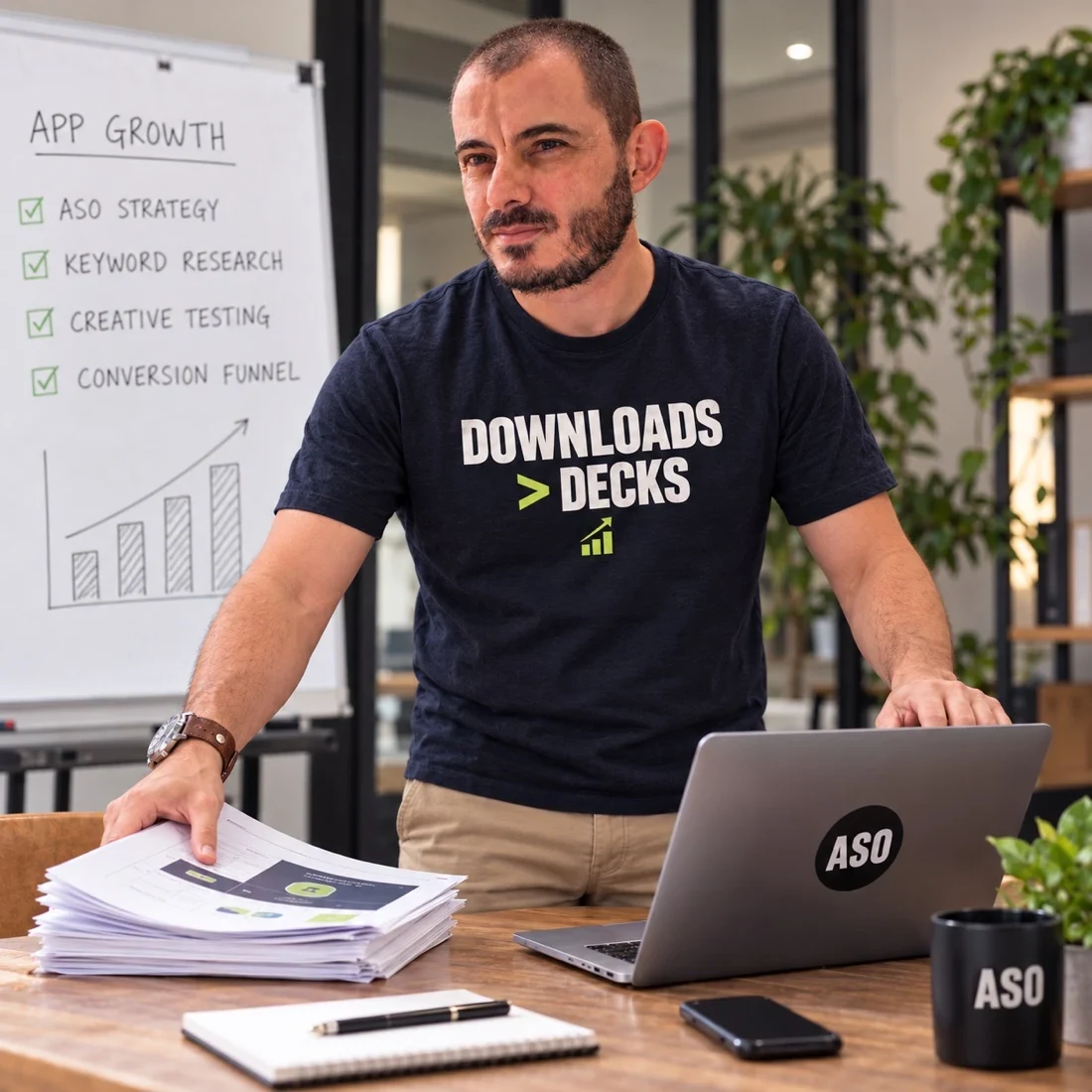
The comparison visual maps evidence to possible outputs; it does not rank packages or imply a fee. The more useful question is whether the scope can answer the problem you have.
Inspect the quality of the handoff.
A useful finding names the observation, interpretation, uncertainty and proposed action. Ask whether the deliverable includes priorities, a walkthrough and a chance to clarify the recommendation.
Use the audit guide to evaluate the reasoning. A large deck of generic suggestions is not automatically a deeper audit.
Keep implementation separate unless included.
Rewritten metadata, finished screenshots, publishing and ongoing monitoring should be explicitly scoped. An audit may recommend those tasks without delivering them.
Compare broader ASO cost and proposal details. Request a quote against the same evidence and output requirements rather than assuming all audits are equivalent.